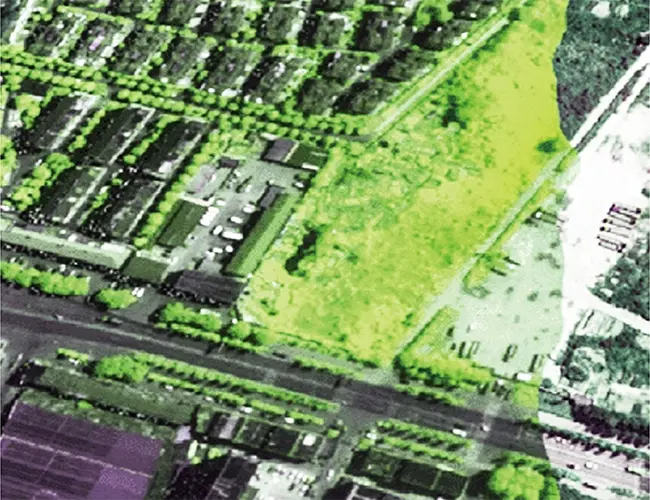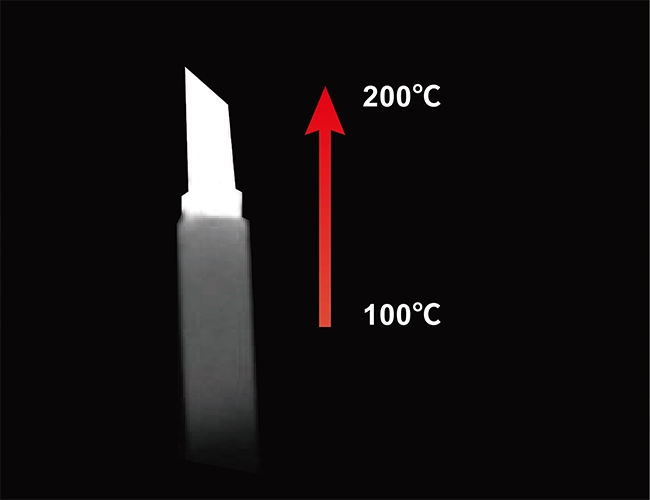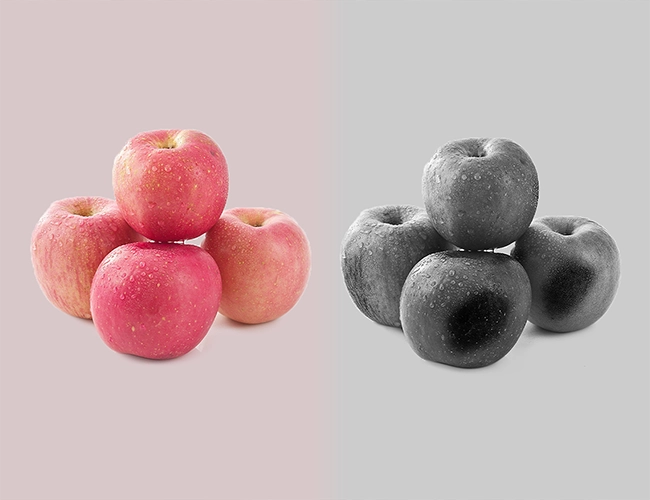

The SWIR1503B series camera is a compact short-wave infrared camera based on an InGaAs CMOS sensor, covering the 900–1700 nm spectral range with a resolution of 640×512 and a pixel size of 15 µm. It is uncooled features low power consumption. The camera supports selectable USB 3.0 and GigE interfaces, making it adaptable to diverse scenarios from laboratory R&D to industrial production lines.
| Features |
| 900–1700 nm spectral response,15 µm Pixel size |
| Multiple interfaces:USB3.0 / GigE |
| Global shutter, high-speed acquisition |
| 12-bit or higher ADC |
| Hardware ROI & external triggering |
| 512MB cache (Model-Dependent) |
| CE/FCC Cerifcation,Multi-platform SDK |
AttosView supports Windows® 7 (64-bit),10 and 11 operating systems.
The SDK supports development languages such as C/C++, C #/VB.net, Python, Java, etc,
Third-party support including LabVIEW, MATLAB, Micro-Manager, DirectShow, and TWAIN.
In the field of industrial inspection, this short-wave infrared camera supports high-speed material sorting, real-time process monitoring, as well as defect detection in wafers and semiconductor devices, helping to improve production line efficiency and quality control accuracy. In the field of laser measurement, the camera is suitable for laser spot analysis, beam profiling, and laser processing monitoring, providing precise near-infrared imaging feedback.
| Common Specifications | |
| Model | SWIR1503BU-NC, SWIR1503BG-NC |
| Sensor type | InGaAs CMOS |
| Spectral Range | 900nm – 1700nm |
| Color Type | Monochrome |
| Resolution | 0.33 MP (640×512) |
| Pixel Size | 15 µm x 15 µm |
| Sensor Size | 3/4″ |
| ADC | 14-bit |
| Image Buffer | 512MByte |
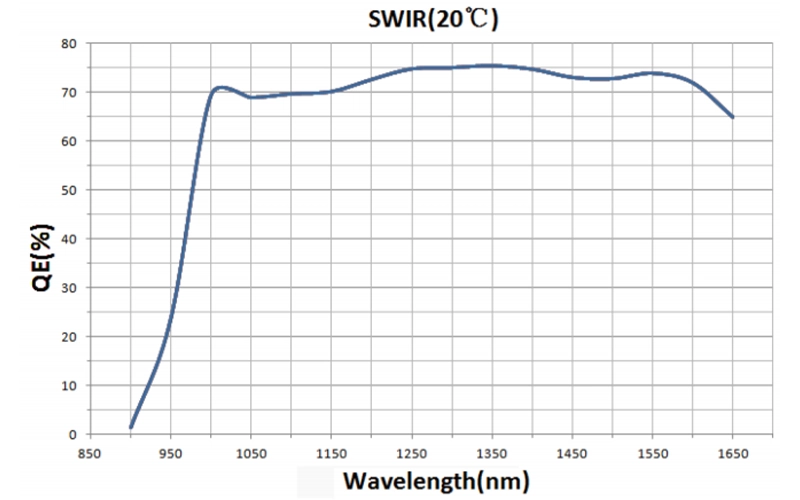
| QE | 75%@ 1350nm |
| Conversion Gain | 138.6e-/ADU(LG),5.54e-/ADU(MG),1.2e-/ADU (HG) |
| Dynamic Range | 70.59dB(LG),67.96dB(MG),47.98dB(HG) *1 |
| Readout Noise | 586.82e(LG),35.05e(MG),68.44e(HG) |
| Full Well Charge | 1986426.78e(LG),87649.83Ke(MG),17147.351e(HG) *1 |
| Maximum SNR | 62.98dB(LG),49.43dB(MG),42.34dB(HG) |
| Dark current | 30fa@0.1V&18℃ |
| Exposure Time Range | 16µs~5s |
| Shutter Mode | Global shutter |
| Digital I/O | 1 channel of optically isolated input, 1 channel of optically isolated output, 2 channels of non-isolated input/output port |
| Cooling Temperature Difference | 40°C below ambient temperature |
| Optical Filter | 400-1800nm (Standard) |
| Operating Temperature | -30 °C to +60 °C |
| Storage Temperature | -40 °C to +85 °C |
| Humidity | 20%-80% , non-condensing |
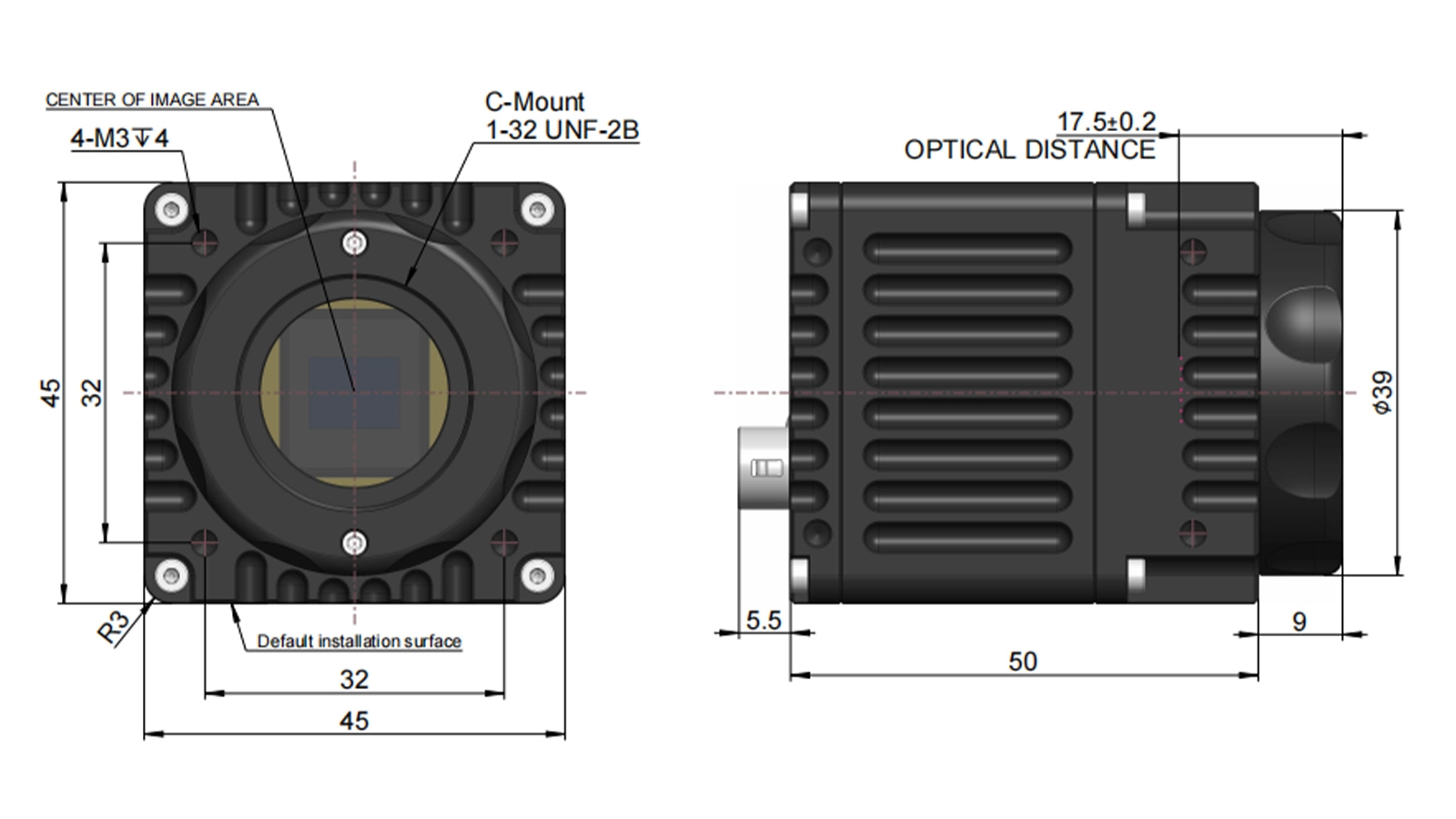
| Size | 45mm×45mm×50mm |
| Weight | 140g |
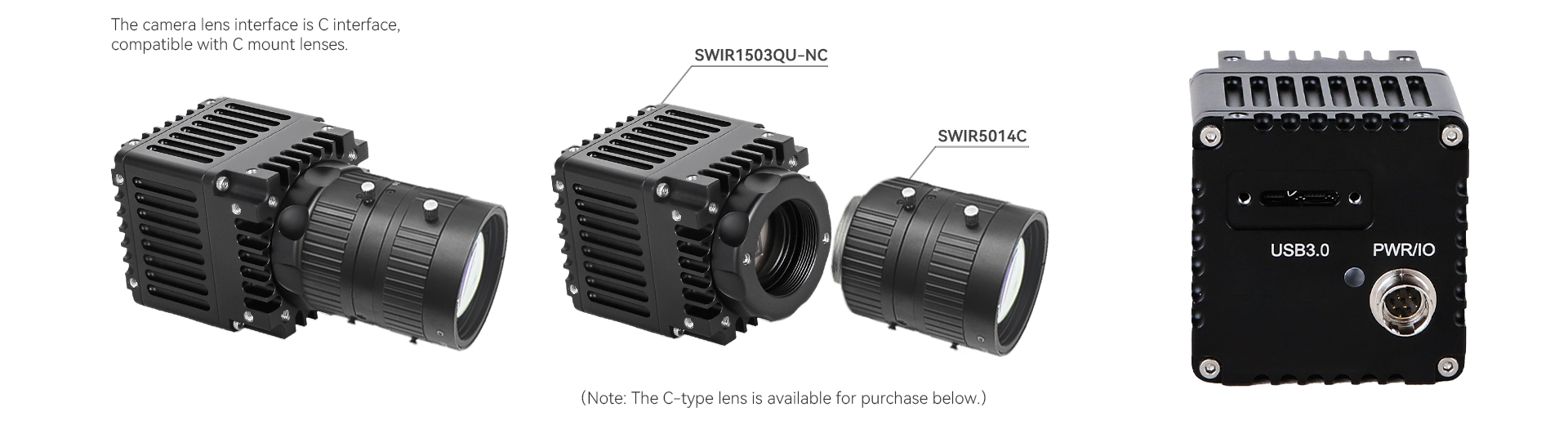
| Lens mount | C-mount interface |
| Software | AttosView / SDK |
| Parameter | Specification |
| Size | 45 × 45 × 50 mm |
| Mount | C mount |
| Item | Specification |
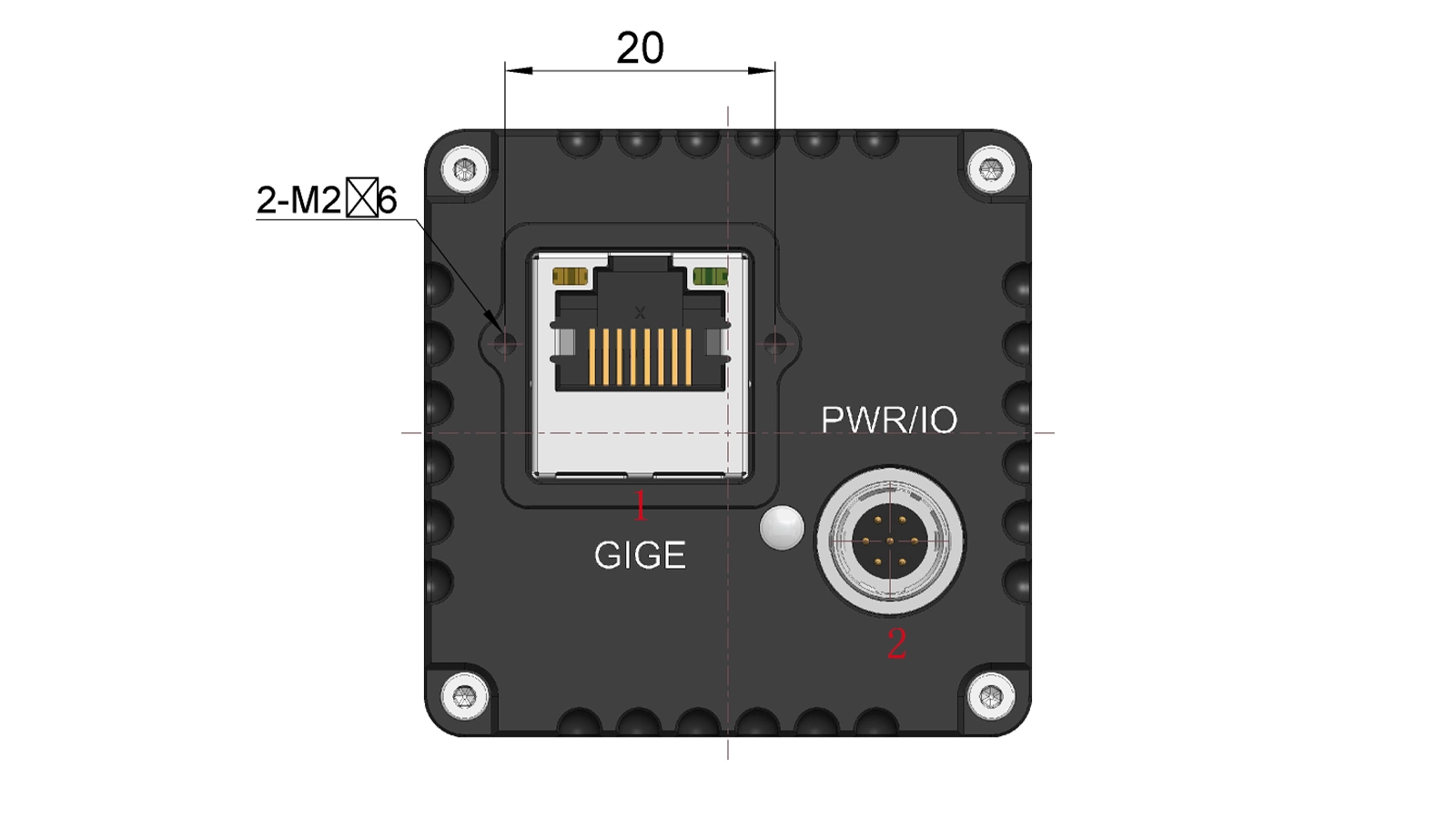
| 1 | USB3.0 port |
| 2 | External IO connection port |
| Parameter | Specification |
| Size | 45 × 45 × 50 mm |
| Mount | C mount |
| Item | Specification |
| 1 | USB3.0 port |
| 2 | External IO connection port |
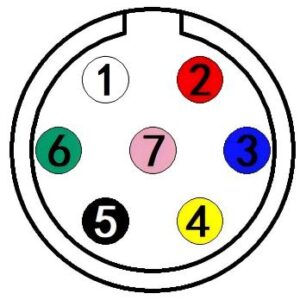
| Table1: USB port, GigE port, CL port refrigerated camera pin signal definitions | |||||
 | Color | Pin | Signal | Description of the signal | |
| White | 1 | GDN | Direct-coupled signal ground | ||
| Red | 2 | 12V | 12VDC power input | ||
| Blue | 3 | OPTO_GND | Opto-isolated signal ground | ||
| Yellow | 4 | DIR_GPIO0 | Direct-coupled General Purpose I/O (Software configurable input/output) (line2) | ||
| Black | 5 | DIR_GPIO1 | Direct-coupled General Purpose I/O (Software configurable input/output) (line3) | ||
| Green | 6 | OPTO_IN | Opto-isolated input signal (line0) | ||
| Pink | 7 | OPTO_OUT | Opto-isolated output signal (line1) | ||
Opto-isolated input circuit (line0)
Logic 0 input level: 0~2.2VDC (OPTO_IN pin)
Logic 1 input level: 3.3~24VDC (OPTO_IN pin)
Maximum input current:30mA
When the input level is between 2.2V and 3.2V, the circuit operation state is uncertain, please do not let SWIR camera work within this voltage range.
Input rise delay (TDR): 6us
Input fall delay (TDF): 6us

Figure 1:Input logic levels
Opto-isolated output circuit (line1)
The opto-isolated output maximum current is 30mA.

Figure 2: Output logic levels
The electrical characteristics of the opto-isolated output (external voltage 5V, external resistor 1K) are shown in Table 2.
| Table 2: Opto-isolated output signal’s electrical characteristics | ||
| Parameter name | Parameter notation | Parameter value |
| Output logic low | VL | 742mV |
| Output logic high | VH | 4.134V |
| Output rise time | TR | 4us |
| Output fall time | TF | 1.8us |
| Output rise delay | TDR | 12us |
| Output fall delay | TDF | 2us |
The output of the corresponding output current and VL when using different voltages and resistors in externalcircuit are shown in Table 3.
| Table 3:Opto-isolated output logic’s low levels parameters | |||
| External voltage | External resistor | VL | Output current |
| 3.3V | 1KΩ | 510mV | 2.82mA |
| 5V | 1KΩ | 742mV | 4.31mA |
| 12V | 2.4KΩ | 795mV | 4.68mA |
| 24V | 4.7KΩ | 850mV | 4.97mA |
Input and output I/O circuit (line2/line3)
1. Line2/line3 is set as input pin
Logic 0 input level: 0~0.6VDC (DIR_GPIO0/DIR_GPIO1 pins)
Logic 1 input level: 2.0~24VDC (DIR_GPIO0/DIR_GPIO1 pins)
Maximum input current: 25mA
When the input level is between 0.6V and 2.0V, the circuit action state is uncertain, please avoid the input voltage range working in this range.
To prevent damage to the GPIO pins, please connect the pin GND first, and then input voltage to the Line2 pin.
Input rise delay (TDR): 0.02us
Input fall delay (TDF): 0.02us

Figure 3: Input logic levels
2. Line2/line3 are set as output pins
The maximum current allowed through this pin is 25mA.
The external pull-up voltage is 5V, the pull-up resistor is 1KΩ, and the GPIO is configured to output the logic level and electrical characteristics as shown in Figure 4.

Figure 4: Output logic levels
When the ambient temperature is 25 degrees Celsius, the relationship between the external voltage, resistance and low-level voltage output is shown in Table 4.
| Table 4:Non-isolated output Logic’s low level parameters | ||
| External voltage | External resistor | VL(GPIO) |
| 3.3V | 1KΩ | 0.11V |
| 5V | 1KΩ | 0.167V |
| 12V | 2.4KΩ | 0.184V |
| 24V | 4.7KΩ | 0.385V |
| Table 5: Non-isolated output electrical characteristics | ||
| Parameter name | Parameter notation | Parameter value |
| Output rise time | TR | 0.08us |
| output fall time | TF | 0.02us |
| Output rise delay | TDR | 0.1us |
| Output fall delay | TDF | 0.04u |
AttosView support all Attostek UV-VISion and SWIR cameras ,it is a professional software that integrates camera control, image acquisition and processing, image browsing and analysis functions.
AttosView has the following characteristics:
ascamsdk support a variety of APIs, including: Native C/C++,.NET/C#/VB.NET, Python, Java, DirectShow, Twain, LabView, Matlab, etc. Compared with other APIs, Native C/C++ API as a low-level API is characterized by using pure C/C++ development without relying on other runtime libraries. The interface is simple and the control is flexible.
The SWIR cameras supports a variety of third-party interface software to facilitate user integration and development. Specifically, it includes SDK and demo programs for LabVIEW and MATLAB, as well as DirectShow plugins, Micro-Manager plugins, and TWAIN SDK plugins. These enable seamless compatibility with mainstream development environments and third-party software, significantly streamlining system integration and secondary development workflows.
For CameraLink interface cameras, we recommend using frame grabbers from the following brands: Magewell, FIREBIRD, and Hikvision.
Support all Attostek UV-VISion and SWIR cameras.
Click the button below to download the camera software.
LabVIEW SDK and demo programs:
MatLab SDK demo program:
DirectShow plugin:
Micromanager plugin:
TWAIN SDK plugin:
Only supports SWIR051ACL model
Magewell:
FIREBIRD:
Hikvision:
AttosView Recommended System Requirements | |
Operating System | Microsoft® Windows® XP / Vista / 7 / 8 /10 /11(32 & 64 bit), Mac OSX, Linux |
Processor (CPU) | ≥3.0 GHz Intel Core i5 or Higher |
Memory (RAM) | ≥8 GB |
Hard Drive | NVMe Solid State Drive (SSD) |
Graphics Card | Dedicated Adapter with ≥256 MB RAM |
Motherboard | USB 3.0 (-USB) Cameras: Integrated Intel USB 3.0 Controller or One Unused One Unused PCle3.0*16 Slot |
Connectivity | Internet Connectivity for Driver Installation |
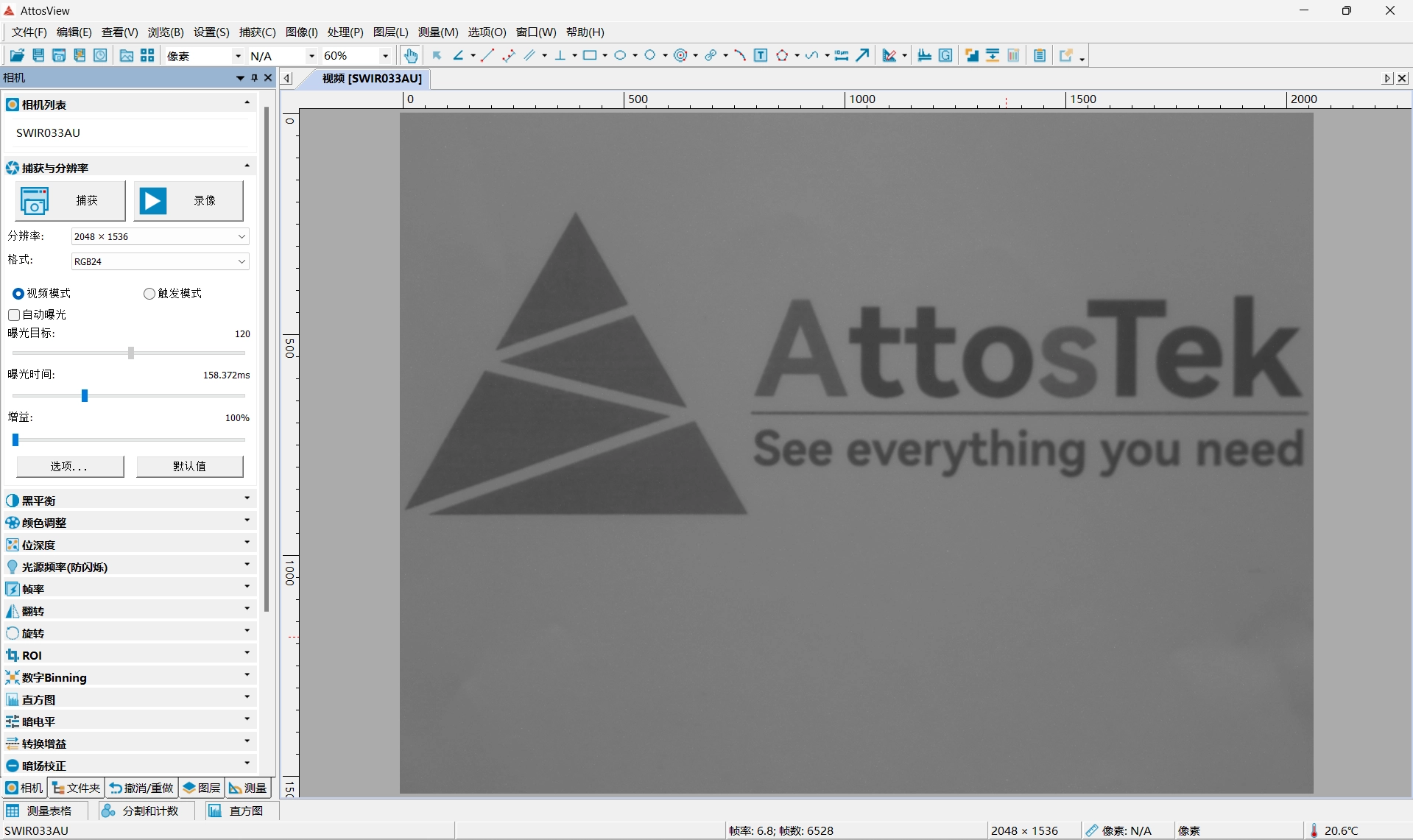
The image below shows the interface of the Attosview software. For more detailed information, please download the product manual.
Function | Function description |
Operating mode | Operating mode: video mode or trigger mode |
Denoise | The camera hardware incorporates denoise |
Automatic exposure | Automatic exposure or manual exposure function |
| Gain | HG, MG, LG 3 gain modes |
Frame rate | Supports precise frame rate control |
ROI | Supports single-zone ROI with a maximum frame rate of 8000fps after ROI |
| Flip | Supports Vertical/horizontal flip |
| Custom dark field correction | The hardware supports up to 12 groups of user-defined dark field correction image functions |
Timestamp function | Timestamps can be turned on or off. After the timestamp function is enabled, the low 8bits of 1-8 pixels, 9-16 pixels, and 17-24 pixels will be modified to: 0-7: frame number; 8-15: Frame time; 16-23: trigger signal count |
Firmware update | Supports firmware online update |
Pipette function | Supports the display of the gray value of the mouse pixel position |
Histogram display | Supports histogram display and statistics |
| Plane line function | Supports the function of viewing surface data |
Regional gray statistics | Support the average gray statistics function of user-defined areas |
Cooling system | 1) The cooling system of the camera uses a built-in TEC cooling chip for the sensor, with external heat dissipation structure and fan auxiliary heat dissipation, the working temperature can be adjusted to a specific value, the effective cooling temperature can be lower than the ambient temperature of 40℃, and the high-efficiency cooling system ensures extremely low dark current level; |
By adjusting the quantum dot size, a single chip can cover a broad spectral range from approximately 300 to 1700 nm, which can be further extended to 2500 nm, enabling broadband imaging from visible to short-wave infrared.
Their quantum efficiency, dynamic range, and signal-to-noise ratio are continuously improving. Some models already offer low-noise imaging at room temperature.
Yes. By precisely controlling the quantum dot size, the absorption peak of the CQDs material can be tuned. This enables optimization for specific spectral bands, providing customized spectral responses to meet diverse spectral imaging application needs.
CQDs CMOS cameras leverage next-generation materials such as Ag₂Te and InAs, which are RoHS-compliant and meet global green regulations. Compared to traditional technologies, the CQDs CMOS production process is more eco-friendly, supporting sustainability and making it ideal for applications with stringent environmental requirements.
| Product Model | SWIR1503BU-NC | SWIR1503BG-NC |
| Sensor type | InGaAs CMOS | |
| Spectral Range | 900nm – 1700nm | |
| QE | 75%@ 1350nm | |
| Frame Rate & Resolution | 400@640×512 | 8 Bit:350fps@640 x 512 14 Bit:175fps@640 x 512 |
| Data interface | USB3 | GigE |
| Data Format | Mono 8 / Mono 14 / Packet12 | Mono 8 / Mono 14 |
| Power consumption | 4.8W(TEC OFF), 5.5W(TEC ON) | 6W(TEC OFF), 6.5W(TEC ON) |
To meet the diverse application demands of short-wave infrared (SWIR) imaging, Attostek offer a series of high-performance SWIR lenses. This lineup covers focal lengths from 6mm to 100mm and features a wide aperture range of F1.4 to F2.0 as standard, ensuring high signal-to-noise ratio and superior image quality even in low-light conditions. Users can flexibly select different models based on field of view, working distance, and resolution requirements, providing high sensitivity and versatile scene adaptability for SWIR cameras in applications such as security surveillance, industrial inspection, and scientific research.