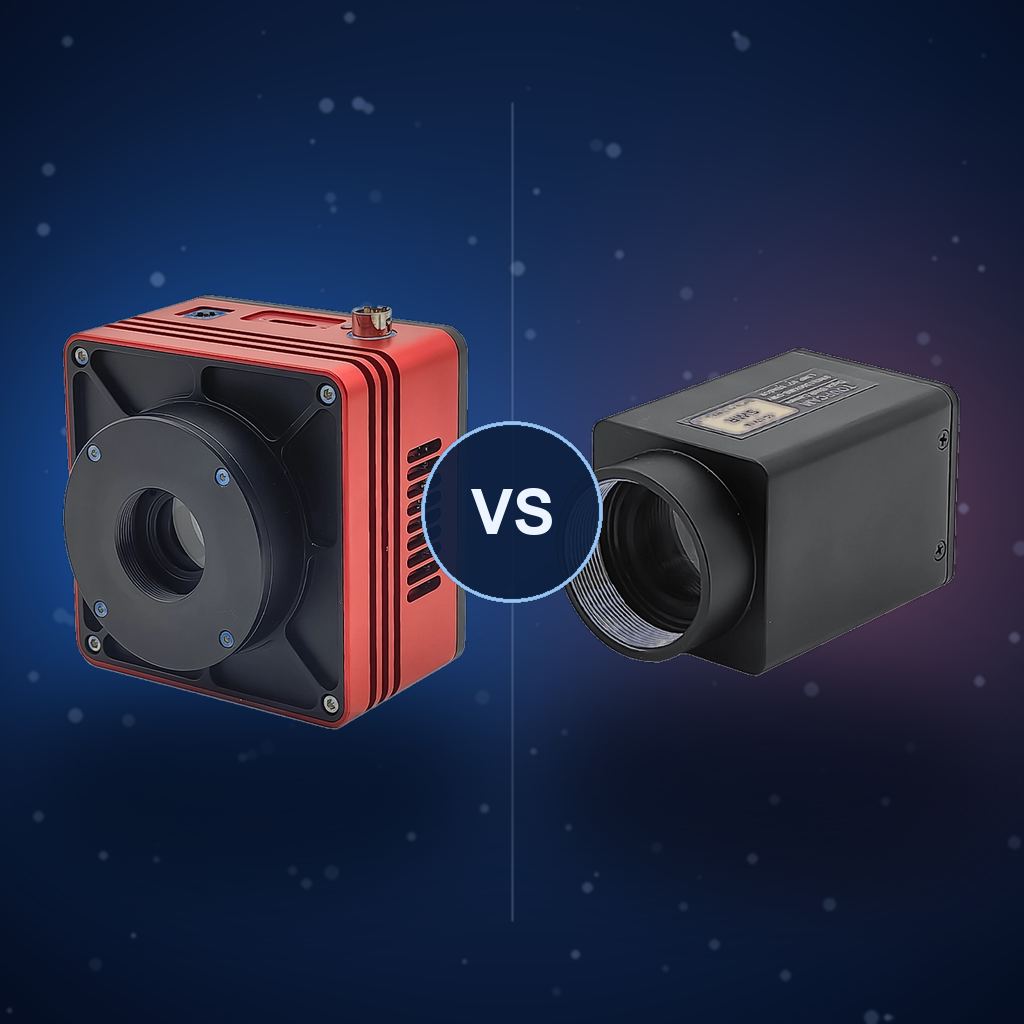
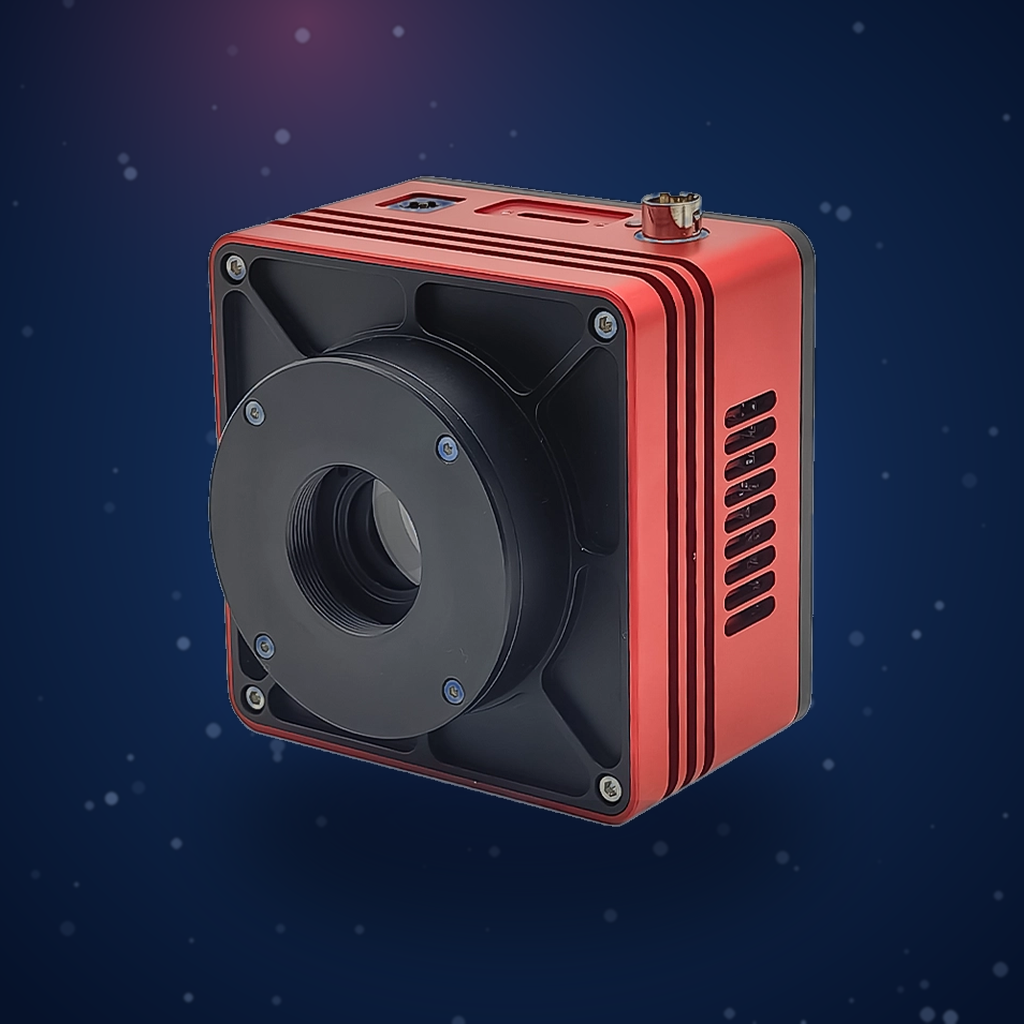
-80°C deep-cooled SWIR cameras stabilize the detector chip at ultra-low temperatures to effectively suppress dark current, making them a core choice for high-end applications such as scientific spectroscopy, semiconductor precision inspection, and life sciences imaging.
Below we have selected several -80°C deep-cooled SWIR cameras and consolidated their key parameters, product advantages, and applicable scenarios, providing a quick reference for researchers and industrial users in their selection process:
| Product | AttosTek SWIR1503BU-DCL | Teledyne NIRvana 640 | Photon etc ZephIR 1.7s | Raptor Ninox 640 SU |
|---|---|---|---|---|
| Detector Type | InGaAs | InGaAs | InGaAs | InGaAs |
| Resolution | 640 × 512 | 640 × 512 | 640 × 512 | 640 × 512 |
| Frame Rate | 300fps | ~ 30 fps | 250 fps | 100fps |
| Pixel Size | 15 μm × 15 μm | 15 μm × 15 μm | 15 μm × 15 μm | 15 μm × 15 μm |
| Spectral Range | 900-1700nm | 900-1700nm | 900-1700nm | 900-1700nm |
| Peak QE | 75%@1300nm | 85%@1350nm | 80% | 80%@1500nm |
| Cooling Temperature | -80℃ | -80℃ | -80℃ | -80℃ |
| Dark Current | 131.561 e⁻/s/pixel | < 100 e⁻/pixel/s | 150 e⁻/pixel/s | 300 e⁻/pixel/s |
| Readout Noise | 22.8 e⁻ | < 30 e⁻ | 28 e⁻ | 40 e⁻ |
| Dynamic Range | 58.3dB | 78dB | 51.1dB | 69dB |
| Data Interface | USB3.0 | USB 3.0/Camera Link | USB 3.0 / Camera Link | USB3.0/ Camera Link |
| Key Features | High speed, low dark current, low readout noise | Lowest dark, best choice for long exposures | High speed, low readout noise | High dynamic range, drift-free long exposures |
| Applicable Scenarios | Quantum optics, NIR-II in vivo imaging | Ultra-low-light spectroscopy, astronomical observation | Photovoltaic PL imaging, pharmaceutical molecular infrared imaging | Astronomical observation, single-molecule infrared fluorescence imaging |