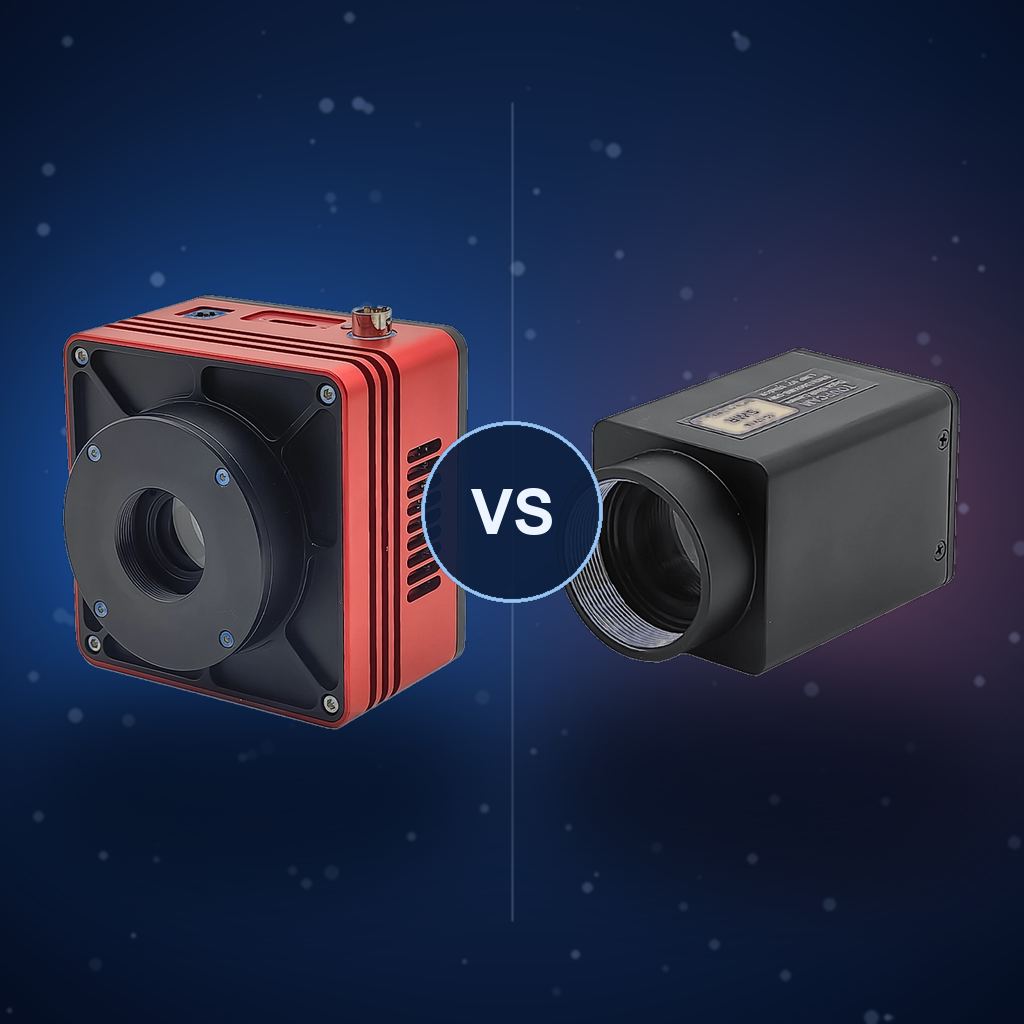
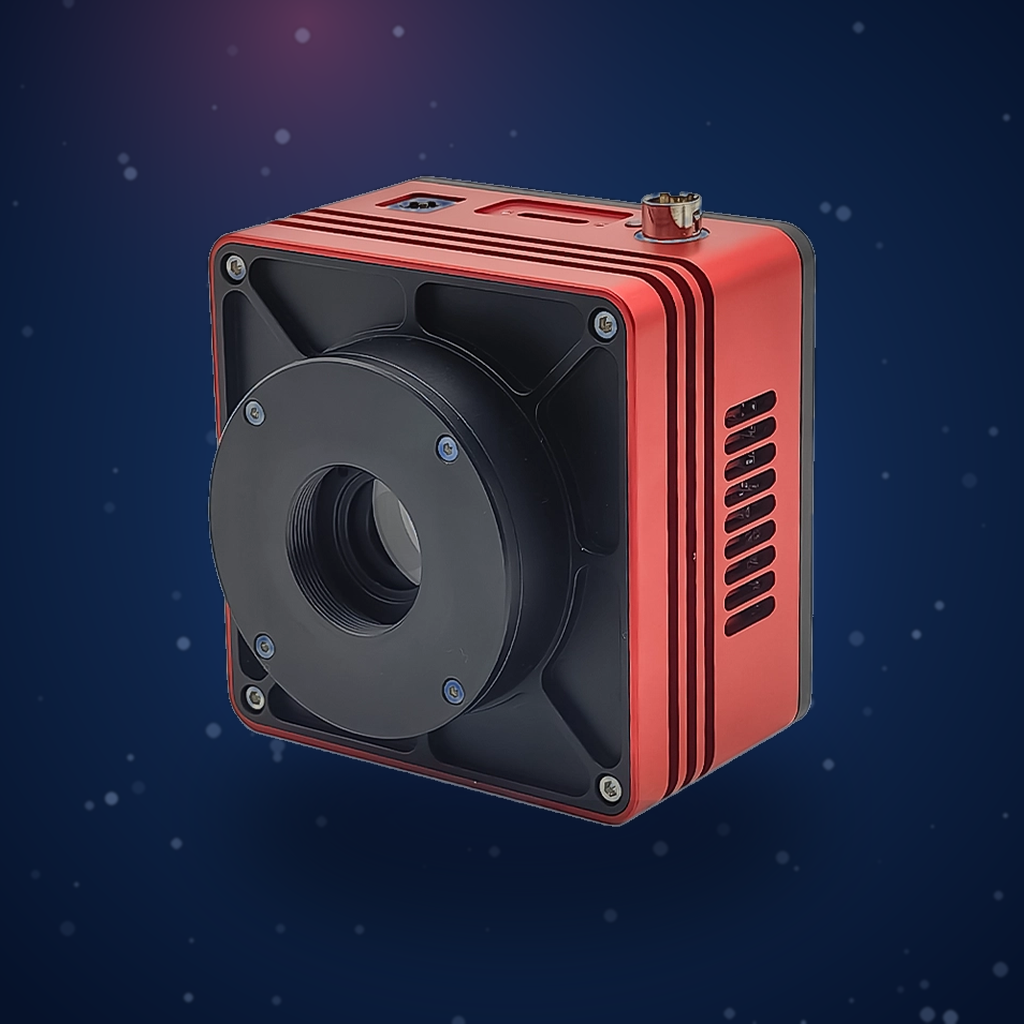
Deep-cooled SWIR cameras are scientific-grade imaging devices typically equipped with multi-stage TEC cooling modules that can lower the InGaAs detector temperature to well below ambient levels, effectively suppressing dark current. These cameras are widely used in life sciences, precision spectroscopy, astronomical observation, semiconductor industrial inspection, and other fields.
Below we have selected several deep-cooled SWIR cameras and consolidated their key parameters, product advantages, and applicable scenarios, providing a quick reference for researchers and industrial users in their selection process:
| Product | AttosTek SWIR1503BU-DC | Xenics Cheetah-640CL-TE3 | Hamamatsu C12741-11 | Andor C-RED 2 | Teledyne NIRVANA HS |
|---|---|---|---|---|---|
| Detector Type | InGaAs CMOS | InGaAs FPA | InGaAs FPA | InGaAs Scientific FPA | InGaAs |
| Resolution | 640 × 512 | 640 × 512 | 640 × 512 | 640 × 512 | 640 × 512 |
| Pixel Size | 15 μm × 15 μm | 20 μm × 20 μm | 20 μm × 20 μm | 15 μm × 15 μm | 20 μm × 20 μm |
| Spectral Range | 900–1700 nm | 900–1700 nm | 950–1500 nm | 900–1700 nm | 900–1600 nm |
| Frame Rate | 300 fps | 110 Hz | 7.2 fps | 600 fps | 250 fps |
| Peak Quantum Efficiency | 75% @ 1350 nm | 85% @ 1550 nm | 60% @ 1250 nm | 80% @ 1500 nm | 73% @ 1550 nm |
| Cooling Temperature | –50°C | –45°C | –70°C | –40°C | –55°C |
| Readout Noise | 22.8 e⁻ | 35 e⁻ | <30 e⁻ | 23 e⁻ | <60 e⁻ |
| Dark Current | 131.561 e⁻/s/pixel | <1k e⁻/s/pixel | 130 e⁻/s/pixel | 30 fA @ 0.2 V | 500 e⁻/pixel/s |
| Exposure Range | 16 μs ~ 5 s | Microsecond-level short exposure | 16.7 ms ~ 1 s | 1 μs ~ 10 s | 2 μs ~ 1 min |
| Data Interface | USB 3.0 | Camera Link | Camera Link | USB 3.0 / GigE | USB 3.0 |
| Key Advantages | –50°C air cooling, no water cooling required, simple lab setup; low dark current | Large pixel size, high-speed hardware triggering | –70°C cooling, lowest dark current, supports long exposure times | High frame rate (600 fps), professional astronomy/spectroscopy software suite | Supports long exposure times |
| Applicable Scenarios | Small animal NIR-II in vivo fluorescence imaging, brain science, vascular and other life science imaging | High-speed semiconductor wafer defect inspection, high-speed hyperspectral scanning, industrial production line non-destructive testing | Ultra-weak light single-photon detection, laboratory material characterization and other scientific research | Cutting-edge carbon nanotube research, high-end optical laboratories, laser beam analysis | Astronomical observation imaging, dynamic in vivo detection, luminescence spectroscopy |
| Procurement Cost | RMB 200,000 | Above RMB 350,000 | Above RMB 400,000 | Above RMB 450,000 | Above RMB 610,000 |