SWIR051 Series Motorized Zoom SWIR Imaging System

Key Features
- 900–1700nm SWIR imaging range
- Multi-range motorized zoom lenses: 14.4–360mm / 20–500mm / 26–1040mm
- Optical zoom: selectable 25X / 40X
- Imaging distance: 2m to infinity
- Interface: dual GigE + HDMI output, expandable with Wi-Fi/4G
- Modular design for easy integration and deployment


| Model | SWIR051-25X360 | SWIR051-25X500 | SWIR051-40X1040 |
| Spectral Range | 900nm~1700nm | 430nm ~ 1700nm | |
| Resolution | 1280 × 1024 | ||
| Pixel Size | 5.0 × 5.0 μm | ||
| Sensor Size | 1/2″ | ||
| Frame rate & Resolution | 8bit:90fps@1280×1024、253fps@640×512 12bit:45fps@1280×1024、135fps@640×512 |
||
| Exposure Time Range | 15μs-100ms | ||
| Optical Zoom | 25× | 25× | 40× |
| Focal Length | 14.4–360 mm | 20–500 mm | 26–1040 mm |
| Max Relative Aperture | 1:2.2 | 1:4.0 | 1:5.0 |
| Aperture Range | F2.2–Close | F4.0–F22 | F5.0–Close |
| Wide-Angle FOV (H×V) | 41.7° × 33.8° | 34.9° × 26.3° | 26.5° × 21.3° |
| Telephoto FOV (H×V) | 1.16° × 0.87° | 1.5° × 1.2° | 0.73° × 0.59° |
| Minimum Object Distance | 2 m | 2.8 m | 5 m |
| Data interface | GigE + HDMI output; optional Wi-Fi / 4G module | ||
| Digital I/O | 1 channel of optically isolated input, 1 channel of optically isolated output, 2 channels of non-isolated input/output port |
||
| Data Format | 8bit/12bit | ||
| Power Supply | Powered by a 12V DC power adapter | ||
| Working temperature | -10°C ~ +50°C (no condensation) | -20°C ~ +60°C (no condensation) | |


| Item | Specification |
| 1 | USB Mouse interface |
| 2 | USB3 interface |
| 3 | HDMI interface |
| 4 | IO1 interface |
| 5 | IO2 interface |
| 6 | IO3 interface |
| 7 | IO4 interface |
| 8 | LAN interface |
| 9 | TF card slot interface |
| 10 | DC 12V power interface |
| Sensor Model | Sony IMX990 InGaAs |
| Spectral Range | 400nm-1700nm |
| Pixel Size | 5.0μm×5.0μm |
| Sensor Size | 1/2” |
| Frame rate & Resolution | 8bit:90fps@1280×1024、253fps@640×512 12bit:45fps@1280×1024、135fps@640×512 |
| Conversion Gain | 42.8e-/ADU |
| Dynamic Range | 58.7dB |
| Readout Noise | 197.6e- |
| Full Well Capacity | 175.4ke- |
| Maximum SNR | 52.4dB |
| Sensitivity | 121mV |
| Dark current | 638e-/s@20°C |
| Gain range | 1x-15x |
| Shutter Mode | Global Shutter |
| Binning Mode | Software2×2~8×8 |
| Temperature | Working temperature: -20~60℃, Storage Temperature: -40~85℃ |
| Humidity | 20%-80%,no condensation |
|
Parameter |
SWIR051-25X360 Lens |
SWIR051-25X500 Lens |
SWIR051-40X1040 Lens |
|
Imaging Target |
1-Type (φ16.4mm) |
||
|
Spectral Range |
900–1700nm |
900–2300nm |
430–1800nm |
|
Optical Zoom |
25× |
40× |
|
|
Lens Focal Length |
14.4–360 mm |
20–500 mm |
26–1040 mm |
|
Max Relative Aperture |
1:2.2 |
1:4.0 |
1:5.0 |
|
Aperture Range |
F2.2–Close |
F4.0–F22 |
F5.0–Close |
|
Wide-Angle FOV (H×V) |
41.7°×33.8° |
34.9°×26.3° |
26.5°×21.3° |
|
Telephoto FOV (H×V) |
1.16°×0.87° |
1.5°×1.2° |
0.73°×0.59° |
|
Minimum Object Distance |
2 m |
2.8 m |
5 m |
|
Wide-Angle FOV Range (H×V) |
145.2 cm × 116.0 cm |
171 cm × 128 cm |
226 cm × 181 cm |
|
Telephoto FOV Range (H×V) |
15.4 cm × 12.4 cm |
7.4 cm × 5.5 cm |
6.2 cm × 5.0 cm |
|
Flange Focal Length (F.f) |
17.526 mm (in air) |
||
|
Operation Mode |
Focus / Zoom / Iris: Remote electric |
Focus / Zoom / Iris / Filter: Remote electric |
|
|
Operating Voltage |
Focus / Zoom / Iris: ±6 V DC |
Focus / Zoom / Iris: +12 V DC |
|
|
Lens Mount |
C Mount (Adjustable Lens Position) |
C Mount |
C Mount (Adjustable Lens Position) |
|
Filter Thread |
M77×0.75mm |
M82×0.75mm |
M95×1.0mm |
|
Weight |
Approx. 1.773 kg |
Approx. 1.9 kg |
Approx. 3.8 kg |
|
Operating Temperature |
−10°C to +50°C (non-condensing) |
−25°C to +60°C (non-condensing) |
|
Q1: How should I choose among the three models in this series?
The three models differ mainly in the trade-off between working distance and field-of-view (FOV) coverage.
- 25X360 is paired with a 14.4–360 mm lens; at the wide-angle end it offers a horizontal FOV of approx. 41.7°, making it ideal for large-area scanning over short to medium distances.
- 25X500 uses a 20–500 mm lens, extending the telephoto end to 500 mm while maintaining 25× zoom; its horizontal FOV narrows to about 1.5° at the telephoto end, better suited for confirming distant targets.
- 40X1040 is paired with a 26–1040 mm lens, delivering 40× optical zoom and the longest focal length; its telephoto-end FOV is only about 0.73°, targeting ultra-long-range detection of small targets. Note that its minimum object distance correspondingly increases to 5 m.
Select the model based on your specific imaging scenario.
Q2: What does 25× vs. 40× optical zoom actually mean in practice?
The optical zoom ratio defines how far the system can reach—the “span” between wide-area viewing and long-distance observation. A 25× lens means the longest focal length is about 25× the shortest; 40× means roughly 40×. A higher zoom ratio offers greater flexibility in switching from broad-area searching to small-target confirmation, but it typically comes at the cost of a smaller relative aperture (f-number) at the telephoto end:
- 25X360 — Max relative aperture (f-number): 1:2.2
- 25X500 — Max relative aperture (f-number): 1:4.0
- 40X1040 — Max relative aperture (f-number): 1:5.0
A smaller relative aperture limits light throughput at the telephoto end, so noise performance must be evaluated more carefully under low-light or short-exposure conditions.
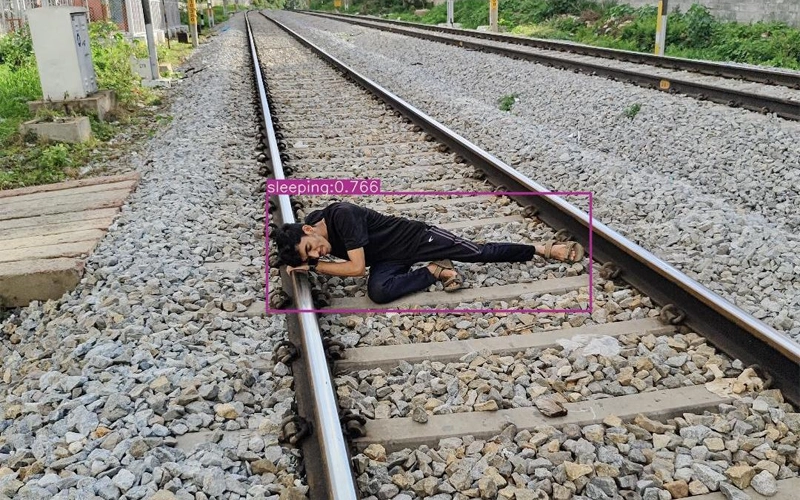
Q3: For railway line monitoring, what exactly does SWIR detect? Is this long-telephoto zoom system suitable?
The system’s focal-length configuration (up to 1040 mm) and strong telephoto capability make it well suited for wide-area, patrol-style observation of railway lines from a distance. It can be deployed along the line to detect anomalies from afar, and its working distance and zoom range match the requirements of this application.
SWIR051 Series Motorized Zoom SWIR Imaging System Model
SWIR051-25X360
900-1700nm spectral range, 14.4-360mm focal length, 25x optical zoom, F2.2-Close aperture range
SWIR051-25X500
900-1700nm spectral range, 20-500mm focal length, 25x optical zoom, F4.0-F22 aperture range
SWIR051-40X1040
430-1700nm spectral range, 26-1064mm focal length, 40x optical zoom, F5 Close aperture range