LWIR Camera
描述
聚焦公司最新动态,追踪光电行业前沿资讯。
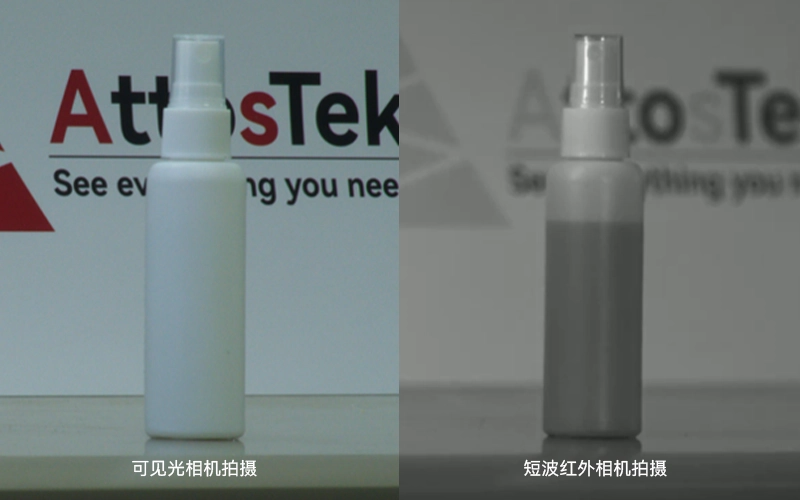
What Can Infrared Cameras Detect? Introduction to SWIR, MWIR, and LWIR Cameras
Infrared imaging technology captures infrared radiation invisible to the human eye, transforming "invisible" temperature and light information into visual images. It is an important branch of modern optical sensing. Depending on the detection wavelength, infrared cameras can be divided into three main categories: short-wave infrared (SWIR), mid-wave infrared (MWIR), and long-wave infrared (LWIR). Each of these three types of cameras has its own unique physical principles, performance characteristics, and application scenarios. The three types are introduced separately below. Short-Wave Infrared (SWIR) Cameras 1. Working Principle Short-wave infrared (SWIR) cameras typically operate in the wavelength range of 0.9–1.7 μm (extendable to 0.4–2.7 μm). They can penetrate silicon wafers, plastics, and haze to detect subsurface defects. Unlike MWIR and LWIR cameras, which rely on an object's own thermal radiation for imaging, SWIR cameras use reflection imaging as the core principle—similar to the working mode of visible-light cameras. When short-wave infrared light illuminates the surface of a target object and is reflected, the reflected light is collected by the optical lens and focused onto the sensor. The sensor material converts photon signals into electrical signals, which are then processed through analog-to-digital conversion and signal processing to ultimately generate a visual grayscale image. Due…
06/07/2026
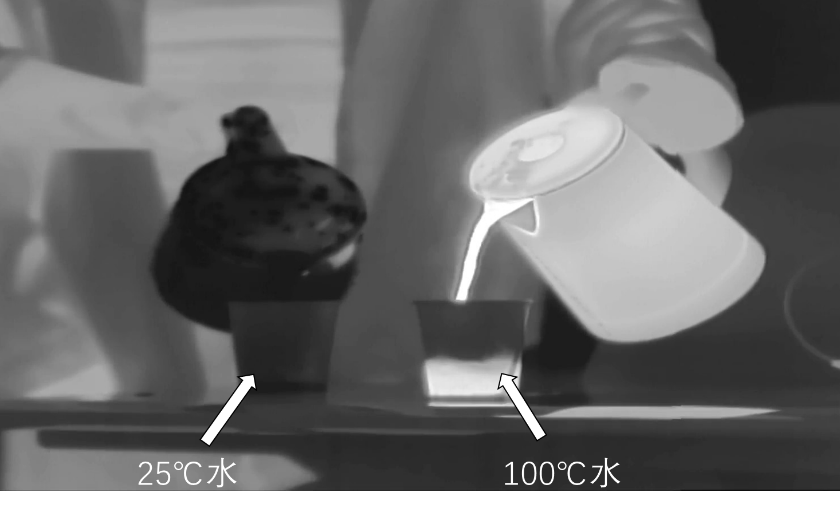
LWIR1203VC Long-Wave Infrared Camera Thermal Imaging Experiment on Water at Different Temperatures
I. Task Description A long-wave infrared camera captures images by detecting the thermal radiation emitted by objects themselves. Water at different temperatures emits different levels of thermal radiation. By using a long-wave infrared camera to photograph hot water and room-temperature water, distinct differences in imaging can be clearly observed. II. Introduction to Long-Wave Infrared Cameras 2.1 Technical Background Long-wave infrared (LWIR) cameras, often also referred to as thermal imagers, capture images by detecting the thermal radiation emitted by objects themselves. The peak thermal radiation of objects at room temperature (–20°C to 150°C) falls within the 8–14 μm range, which coincides with the long-wave infrared band.Depending on the differences in thermal radiation emitted by objects, images with varying brightness levels are formed. LWIR cameras are more suitable for everyday applications because they do not rely on sunlight or require supplemental illumination—they can capture images of objects regardless of lighting conditions.Therefore, darkness, shadows, and similar conditions have no effect on them, and they have strong smoke-penetration capabilities. Since most LWIR cameras do not require cooling, they are low-cost, compact, and power-efficient. 2.2 Application Scenarios LWIR cameras have a wide range of applications, for example: When using an LWIR camera to photograph hot…
06/07/2026