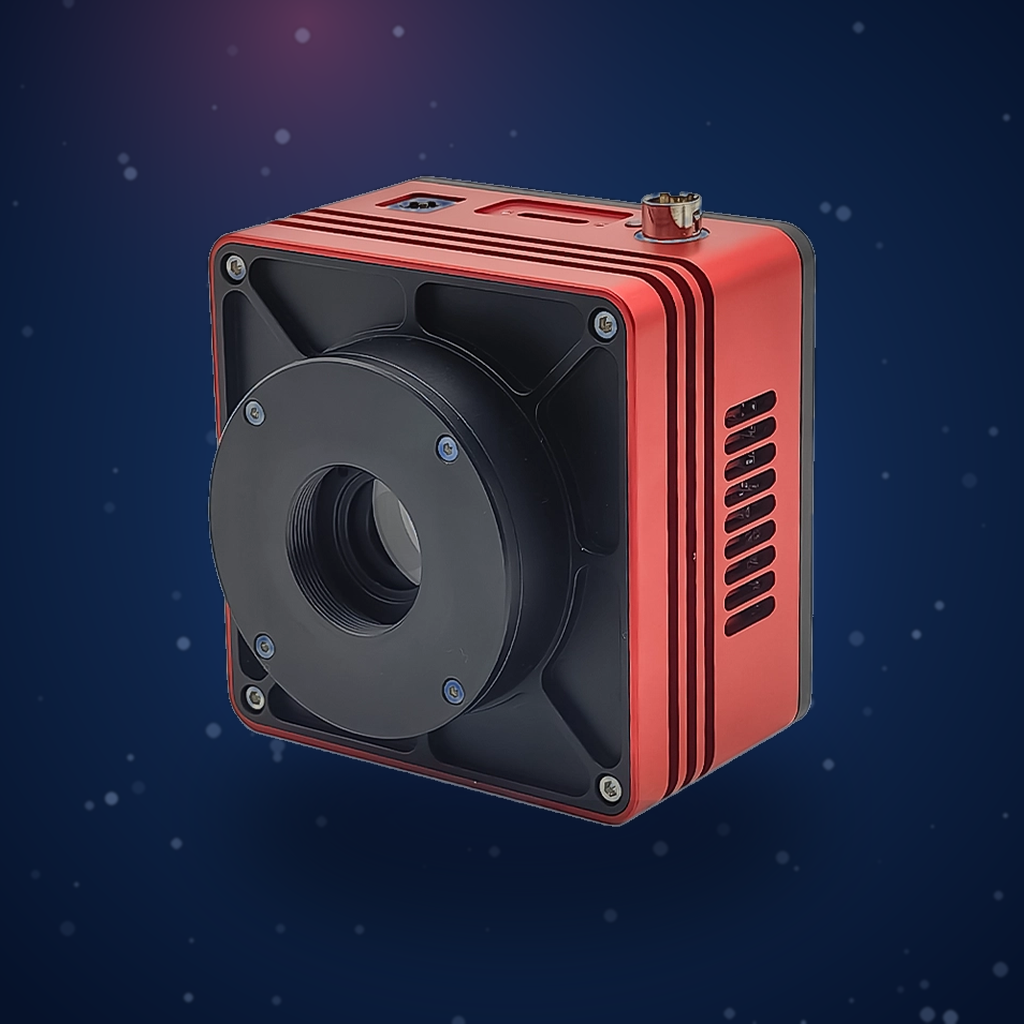
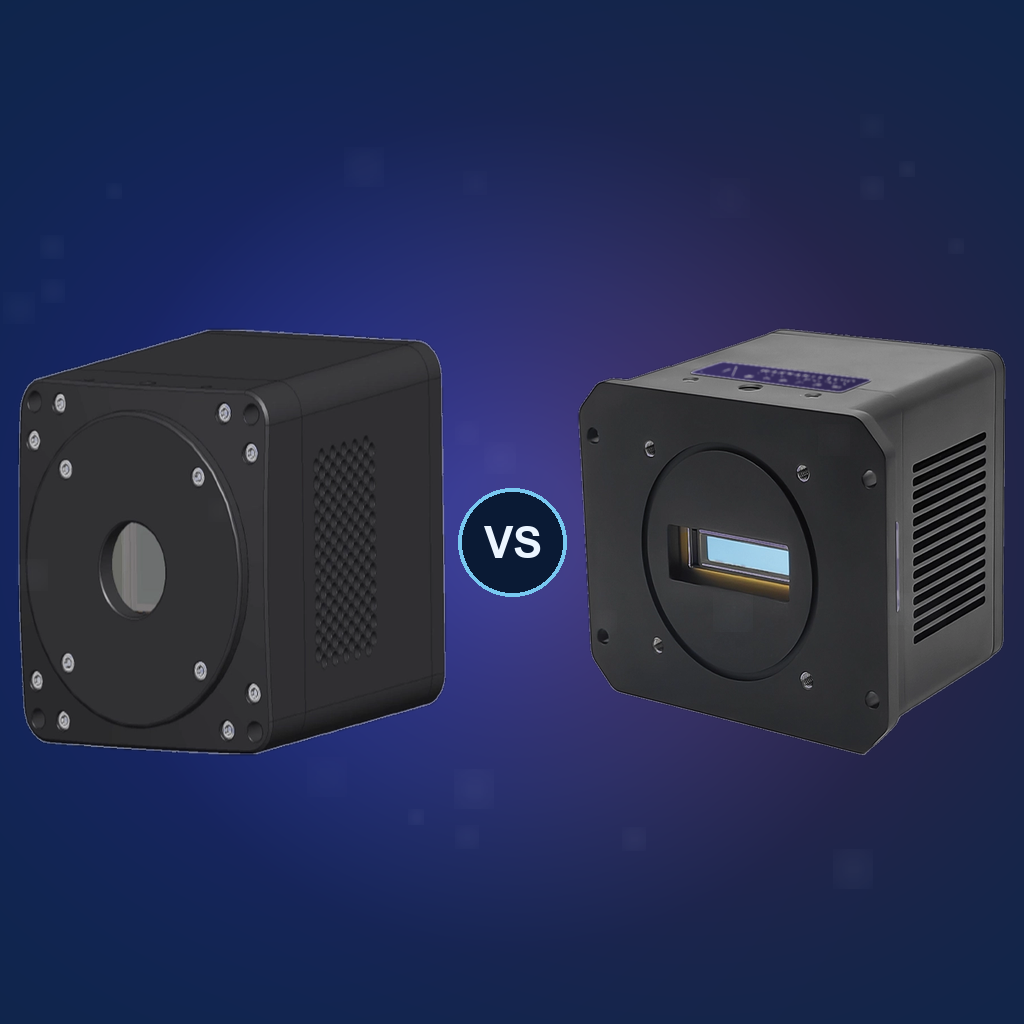
Infrared imaging technology captures infrared radiation invisible to the human eye, transforming “invisible” temperature and light information into visual images. It is an important branch of modern optical sensing. Depending on the detection wavelength, infrared cameras can be divided into three main categories: short-wave infrared (SWIR), mid-wave infrared (MWIR), and long-wave infrared (LWIR). Each of these three types of cameras has its own unique physical principles, performance characteristics, and application scenarios. The three types are introduced separately below.
Short-Wave Infrared (SWIR) Cameras
1. Working Principle
Short-wave infrared (SWIR) cameras typically operate in the wavelength range of 0.9–1.7 μm (extendable to 0.4–2.7 μm). They can penetrate silicon wafers, plastics, and haze to detect subsurface defects. Unlike MWIR and LWIR cameras, which rely on an object’s own thermal radiation for imaging, SWIR cameras use reflection imaging as the core principle—similar to the working mode of visible-light cameras. When short-wave infrared light illuminates the surface of a target object and is reflected, the reflected light is collected by the optical lens and focused onto the sensor. The sensor material converts photon signals into electrical signals, which are then processed through analog-to-digital conversion and signal processing to ultimately generate a visual grayscale image. Due to the reflective imaging mode, the resolution and detail rendering of SWIR images are comparable to those of visible-light images.
2. Core Sensors and Materials
The core technology of SWIR cameras lies in the sensor material. Currently, mainstream SWIR detectors use Indium Gallium Arsenide (InGaAs) material. By adjusting the alloy composition, InGaAs can achieve broadband response in the range of 0.87 μm to 3.5 μm, with outstanding advantages such as high quantum efficiency, excellent mobility, and high responsivity. InGaAs sensors typically do not require low-temperature cooling and can operate at room temperature, but the manufacturing process is challenging and costly. In addition, Mercury Cadmium Telluride (HgCdTe) and quantum dot (CQD) materials are also important detection materials in the short-wave infrared field.
3. Performance Characteristics
SWIR cameras have four irreplaceable advantages:
- All-weather and strong penetration capability: SWIR wavelengths are longer than visible light and are less affected by atmospheric scattering. They can penetrate fog, haze, smoke, and other obstructions, as well as thin materials such as silicon wafers, plastics, and glass, enabling defect detection beneath the surface.
- High-resolution and low-noise imaging: The characteristic of reflection imaging makes its image details comparable to visible-light grayscale images. Combined with TEC cooling technology and low-noise sensors, it can effectively suppress noise even in low-light environments.
- Low-light night vision capability: There is naturally weak “night sky light” in the atmosphere. SWIR cameras can acutely capture this light, enabling nighttime observation without active illumination.
- Spectral “fingerprint” identification: Different substances have unique absorption characteristics in the SWIR band. For example, water has a strong absorption peak near 1450 nm, allowing SWIR to accurately identify material composition like a “chemical eye”.
Visible-light and SWIR camera imaging of same-color oil and water
4. Main Applications
SWIR technology has a wide range of applications, covering industrial inspection, military and security, medical and biological fields, and more.
- In industrial inspection, SWIR cameras can be used for defect detection inside semiconductor wafers, photovoltaic quality inspection, plastic sorting, and food moisture detection, among others. The market growth of SWIR line-scan cameras is primarily driven by the demand for high-precision, high-speed imaging in fields such as industrial inspection, semiconductor manufacturing, photovoltaic quality inspection, and intelligent transportation systems.
- In military and security, SWIR is a key tool for night vision equipment, drone reconnaissance, and camouflage identification, capable of penetrating camouflage and providing clear images in darkness.
- In medical and biological fields, short-wave infrared photons have moderate energy and can penetrate biological tissues (skin, muscle, organs, etc.). By injecting SWIR probes into living organisms, and given that there is almost no tissue autofluorescence in the SWIR band, it enables dynamic, continuous, and quantifiable monitoring of physiological processes such as tissue regeneration and immune responses.
Mid-Wave Infrared (MWIR) Cameras
1. Working Principle
Mid-wave infrared (MWIR) cameras operate in the wavelength range of 3–5 μm. Unlike SWIR’s reflection imaging, MWIR cameras capture the thermal radiation emitted by objects themselves. High-temperature objects (such as industrial furnaces and jet engine exhaust flames) have significantly higher radiation intensity in the MWIR band compared to other bands, giving MWIR a natural advantage in high-temperature target detection.
2. Core Sensors and Cooling Technology
MWIR detectors mainly use Mercury Cadmium Telluride (HgCdTe), Indium Antimonide (InSb), and Type-II Superlattice (T2SL) materials. These detectors have high sensitivity and fast response speed, but typically require cooling to reduce dark current and thermal noise. Cooling systems mostly use Stirling coolers, which mechanically cool the detector to extremely low temperatures.
3. Performance Characteristics
MWIR cameras have the following notable characteristics:
- Precise capture of high-temperature targets: Extremely sensitive to high-temperature heat sources ranging from 100°C to over 1000°C, achieving a temperature resolution of ±0.1°C. For example, an MWIR thermal imager can detect an abnormal temperature rise of 0.3°C on the surface of chemical equipment, providing early warning of potential faults.
- Atmospheric transmission window advantage: The 3–5 μm band has good transmission characteristics in the atmosphere, suitable for long-distance imaging and long-range target identification.
- High sensitivity and fast response: Cooled photon detectors have extremely fast response speeds, capable of capturing transient thermal changes in milliseconds or even microseconds.
- Higher system complexity and cost: Due to the necessary cooling system, MWIR cameras are larger in size, consume more power, and are more expensive, which limits their adoption in low-cost civilian applications.
4. Main Applications
MWIR cameras play an irreplaceable role in high-end industrial, gas leak detection, and defense fields.
- In aerospace and long-range reconnaissance, MWIR can form high-contrast images between high-temperature targets (such as aircraft engines or vehicles) and cooler backgrounds from several kilometers away, used for airborne reconnaissance, maritime threat detection, and border patrol.
- In industrial process monitoring, MWIR is applied to temperature uniformity monitoring of glass and steel manufacturing furnaces, laser welding quality assessment, and thermal process control in semiconductor manufacturing.
- In gas leak detection, many gases such as methane, CO₂, and VOCs have strong characteristic absorption spectral lines in the MWIR band, allowing MWIR cameras to visually detect them.
MWIR camera imaging of an industrial furnace
Long-Wave Infrared (LWIR) Cameras
1. Working Principle
Long-wave infrared (LWIR) cameras operate in the wavelength range of 8–14 μm. At room temperature (approximately 300K), the peak thermal radiation of objects falls precisely within this band. This means that all objects at ambient temperature, including the human body, vehicles, buildings, and mechanical equipment, emit detectable thermal radiation in the LWIR band. LWIR cameras capture this thermal radiation and convert it into temperature distribution images, enabling non-contact passive temperature measurement and imaging.
2. Core Sensors and Uncooled Technology
The advantage of LWIR cameras lies in their uncooled operating mode. LWIR cameras mostly use materials such as Vanadium Oxide (VOx), Mercury Cadmium Telluride (MCT), and Type-II Superlattice (T2SL) as sensors. Since no cooling system is required, LWIR cameras have the outstanding advantages of small size, light weight, low power consumption, low cost, and long lifespan.
3. Performance Characteristics
The core characteristics of LWIR cameras include:
- Sensitivity to room-temperature objects: Designed specifically for room-temperature targets in the range of –50°C to 100°C, excelling in everyday inspection objects such as the human body, buildings, and equipment.
- No cooling required: Operates at room temperature without a cooling system, greatly reducing system complexity, cost, and maintenance burden.
- All-weather passive imaging: Does not emit any signals, relying solely on an object’s own thermal radiation, providing strong concealment and remaining unaffected by lighting conditions—performance is consistent whether at noon or late at night.
- Environmental penetration capability: The 8–14 μm band experiences less scattering from smoke, dust, and light fog, maintaining effective imaging even when conventional visible-light cameras cannot operate.
- Relatively limited resolution: Due to the longer wavelength, LWIR’s spatial resolution is generally lower than that of SWIR and MWIR, but it has an advantage in large-area thermal distribution detection.
4. Main Applications
LWIR technology, due to its low cost, good portability, and high reliability, has become the most widely used category in the field of infrared thermal imaging.
- In industrial electrical inspection, LWIR cameras can be used to detect overheating faults in electrical equipment (connectors, motors, distribution panels) and mechanical systems (bearings, conveyor belts), allowing maintenance personnel to conduct daily inspections with handheld devices.
- In building diagnostics and energy audits, LWIR helps assess building insulation performance and HVAC system status by detecting heat loss, air leaks, and more.
- In security surveillance, LWIR cameras enable 24/7 surveillance without lighting, clearly detecting intruders even in complete darkness, light fog, or smoky environments.
- In firefighting and search and rescue, LWIR can penetrate dense smoke, helping firefighters locate fire sources and trapped individuals, playing a critical role in forest searches and nighttime rescues.
- In automotive night vision, LWIR sensors are gradually being applied in advanced driver assistance systems for nighttime pedestrian and animal detection.
LWIR camera night vision imaging
Selection Guide
To determine what you want to observe:
- If you want to see material composition, internal structures, or clearly see objects at night or in adverse weather conditions, choose a SWIR camera.
- If you want to see the temperature of an object, require high temperature measurement accuracy, or the target is a high-temperature object or gas, choose an MWIR camera.
- If you only need to measure the thermal distribution of room-temperature objects, with applications in construction, electrical, and other fields, choose an LWIR camera.
Feel free to contact us anytime to learn more about infrared cameras.