I. Task Description
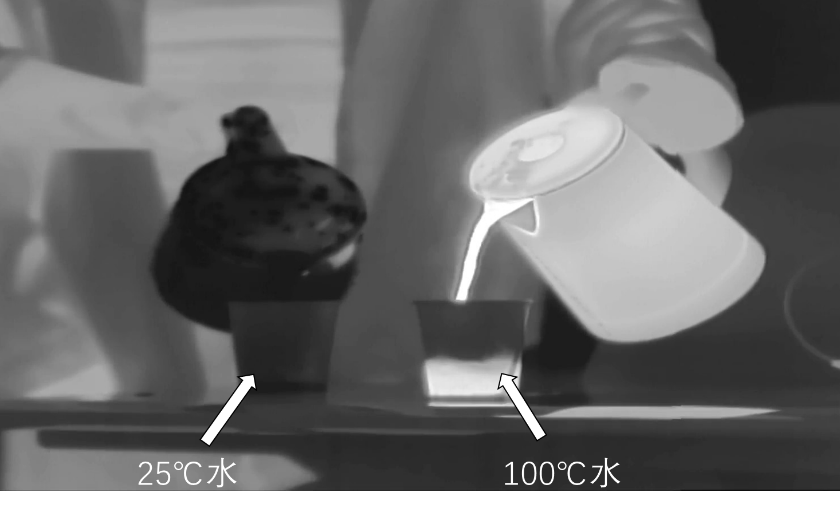
A long-wave infrared camera captures images by detecting the thermal radiation emitted by objects themselves. Water at different temperatures emits different levels of thermal radiation. By using a long-wave infrared camera to photograph hot water and room-temperature water, distinct differences in imaging can be clearly observed.
II. Introduction to Long-Wave Infrared Cameras
2.1 Technical Background
Long-wave infrared (LWIR) cameras, often also referred to as thermal imagers, capture images by detecting the thermal radiation emitted by objects themselves. The peak thermal radiation of objects at room temperature (–20°C to 150°C) falls within the 8–14 μm range, which coincides with the long-wave infrared band.Depending on the differences in thermal radiation emitted by objects, images with varying brightness levels are formed. LWIR cameras are more suitable for everyday applications because they do not rely on sunlight or require supplemental illumination—they can capture images of objects regardless of lighting conditions.Therefore, darkness, shadows, and similar conditions have no effect on them, and they have strong smoke-penetration capabilities. Since most LWIR cameras do not require cooling, they are low-cost, compact, and power-efficient.
2.2 Application Scenarios
LWIR cameras have a wide range of applications, for example:
- Military and Defense: Used for long-range reconnaissance, border patrol, and precision strikes at night.
- Automotive Night Vision: Identifying pedestrians and animals at night or in adverse weather conditions.
- Security Surveillance: Penetrating heavy smoke to locate fire sources in smoky scenes.
- Industrial Inspection: Real-time monitoring of components or equipment for overheating.
When using an LWIR camera to photograph hot water and room-temperature water, the different amounts of thermal radiation emitted by the two result in images with different brightness levels, making it possible to directly observe that hot water and room-temperature water produce distinct images.
III. Test Equipment and Environment
3.1 Test Equipment
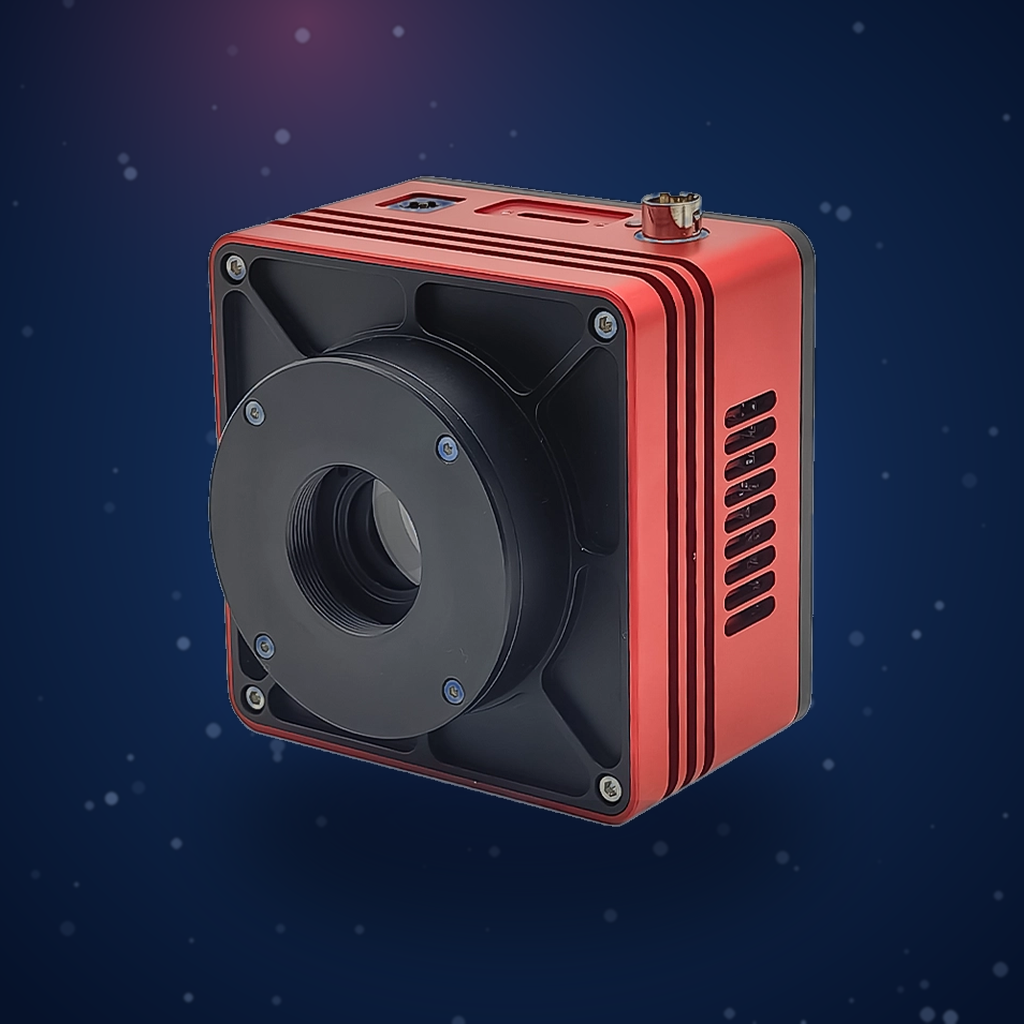
| Camera Model | Attostek LWIR1203VC Long-Wave Infrared Camera |
|---|---|
| Detector Type | Vanadium oxide uncooled infrared focal plane array detector |
| Pixel Pitch | 12 μm |
| Resolution | 640 × 512 |
| NETD | ≤50 mK |
3.2 Test Environment and Conditions
| Hot Water Temperature | 100°C |
|---|---|
| Room-Temperature Water Temperature | 25°C |
| Ambient Temperature | 25°C |
| Shooting Distance | 2 m |
| Lighting Conditions | Ordinary indoor lighting |
IV. Test Procedure
- Secure the LWIR1203VC camera and ensure that the object to be photographed is centered in the lens field of view.
- Manually adjust the camera focus and aperture to obtain a clear image.
- Pour hot water and room-temperature water into paper cups of the same规格, and use the LWIR camera to capture dynamic images of the water stream during the pouring process.
V. Test Results
VI. Result Analysis
Under visible-light camera imaging, both cups of water appear transparent, making it impossible to distinguish the temperature difference.According to the principle of thermal radiation, the higher the temperature of an object, the stronger its radiation energy in the LWIR band, corresponding to higher grayscale values in the image—meaning the image brightness of hot water is higher than that of room-temperature water.During the pouring of hot water, the water stream exhibits a continuous bright trajectory, and dynamic temperature changes can be captured in real time.Although ordinary indoor lighting was present, the LWIR imaging was completely unaffected by the lighting conditions, and the image quality remained stable.
The Attostek LWIR1203VC long-wave infrared camera can clearly distinguish between hot water and room-temperature water, with obvious imaging contrast.This camera can be effectively used for visual detection of liquid temperature differences and maintains stable performance even during dynamic processes.