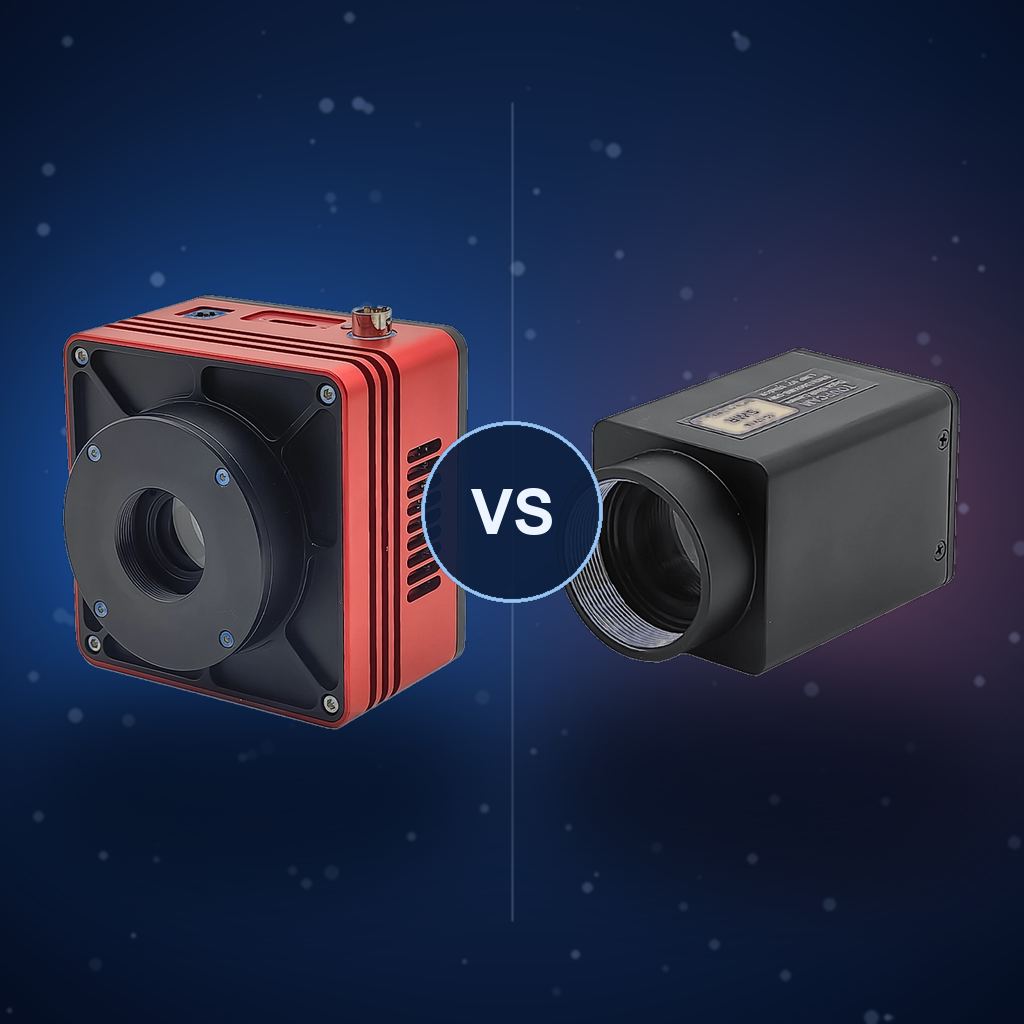
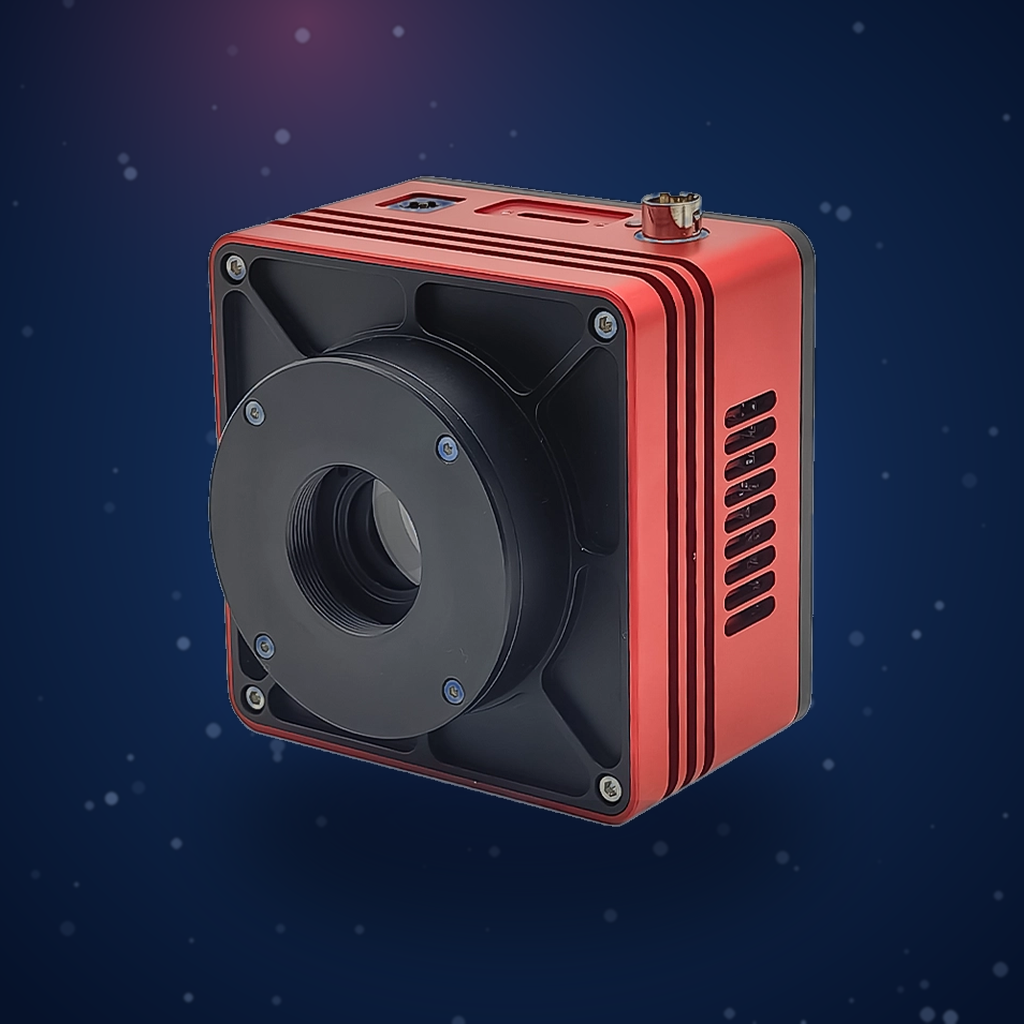
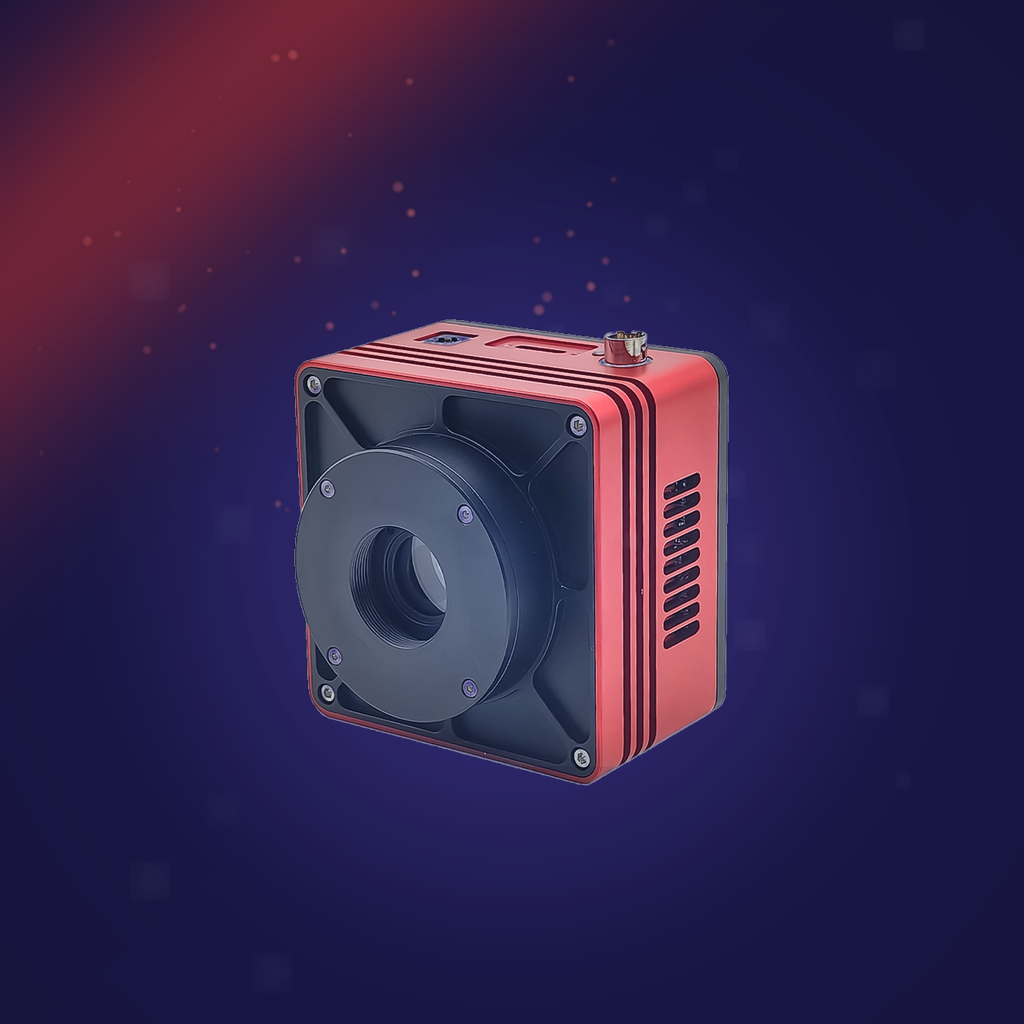
High-speed industrial inspection, microscopic transient scientific experiments, and similar applications require capturing rapidly evolving dynamic processes, imposing stringent demands on the frame rate and sensitivity of imaging equipment. The frame rate of SWIR cameras is constrained by sensor readout speed and data transmission bandwidth. Currently, the full-frame frame rate of most SWIR cameras is maintained at 100–400 fps, making it difficult to meet the imaging requirements of ultra-high-speed dynamic scenes. The Attostek SWIR1503BCL2 SWIR camera achieves ultra-fast imaging at 1000 fps at 640 × 512 resolution, providing a reliable solution for high-speed vision applications.
I. Attostek SWIR1503BCL2 Camera
1. CameraLink Data Interface
To achieve the data throughput of 640 × 512 at 1000 fps, interface bandwidth is critical. The SWIR1503BCL2 camera employs a CameraLink interface, specifically designed for scenarios demanding extreme frame rates. The Full configuration delivers a transmission rate of up to 6.8 Gbps, providing a reliable channel for real-time, stable transmission of massive image data, thereby enabling 1000 fps at full resolution.
2. 15 μm Large Pixel Size
High frame rates typically mean extremely short integration times. The SWIR1503BCL2 camera features a 15 μm large pixel size, capable of collecting more photons, directly enhancing the camera’s sensitivity and low-light imaging capability. Combined with a peak quantum efficiency of 75% at 1350 nm, it offers significant advantages in weak-light signal detection.
3. Low Readout Noise
In low-light high-speed scenarios, readout noise affects imaging signal-to-noise ratio. The SWIR1503BCL2 camera achieves a low readout noise of 16.55 e⁻ while operating at a high speed of 1000 fps, effectively preventing weak signals from being overwhelmed by noise.
4. Global Shutter
The camera employs a global shutter exposure mode, in which all pixels complete exposure and charge readout simultaneously. The global shutter ensures that when capturing high-speed moving objects, images do not suffer from distortion or tearing—the so-called “rolling shutter effect”—which is critical for dynamic target detection and analysis.
II. Typical Application Scenarios
1. Combustion and Plasma Diagnostics
The 1000 fps high frame rate clearly captures the dynamic evolution of transient physical phenomena such as flames and plasmas, fully reproducing instantaneous morphology, and providing continuous, motion-blur-free infrared data for thermofluid and discharge physics mechanism analysis.
2. Cold Atoms and Quantum Optics Microscopic Imaging
The fluorescence signals of atomic clouds in magneto-optical traps are extremely weak and evolve rapidly. The high-sensitivity InGaAs detector captures low-illuminance fluorescence, while the high frame rate enables continuous tracking of atomic cloud distribution and motion trajectories, supporting time-sequential observation in cutting-edge experiments such as cold atom physics and quantum precision measurement.
3. Pulsed Laser Spot Dynamic Monitoring
Spot drift and energy fluctuations during pulsed laser and fiber laser operation are fleeting. The 1000 fps high frame rate clearly freezes instantaneous spot profiles; leveraging high quantum efficiency across 900–1700 nm, it precisely captures weak infrared laser signals, enabling real-time laser performance calibration and closed-loop correction of optical path deviations.
III. Summary
The Attostek SWIR1503BCL2 camera, with its极致 performance of 640 × 512 at 1000 fps, 15 μm large pixel size, and other features, pushes the performance of SWIR area array cameras to new heights. It enables high-speed SWIR imaging without the need for expensive imported custom equipment. For high-speed, high-sensitivity application scenarios, the SWIR1503BCL2 is undoubtedly a model worth close consideration.