I. Product Introduction
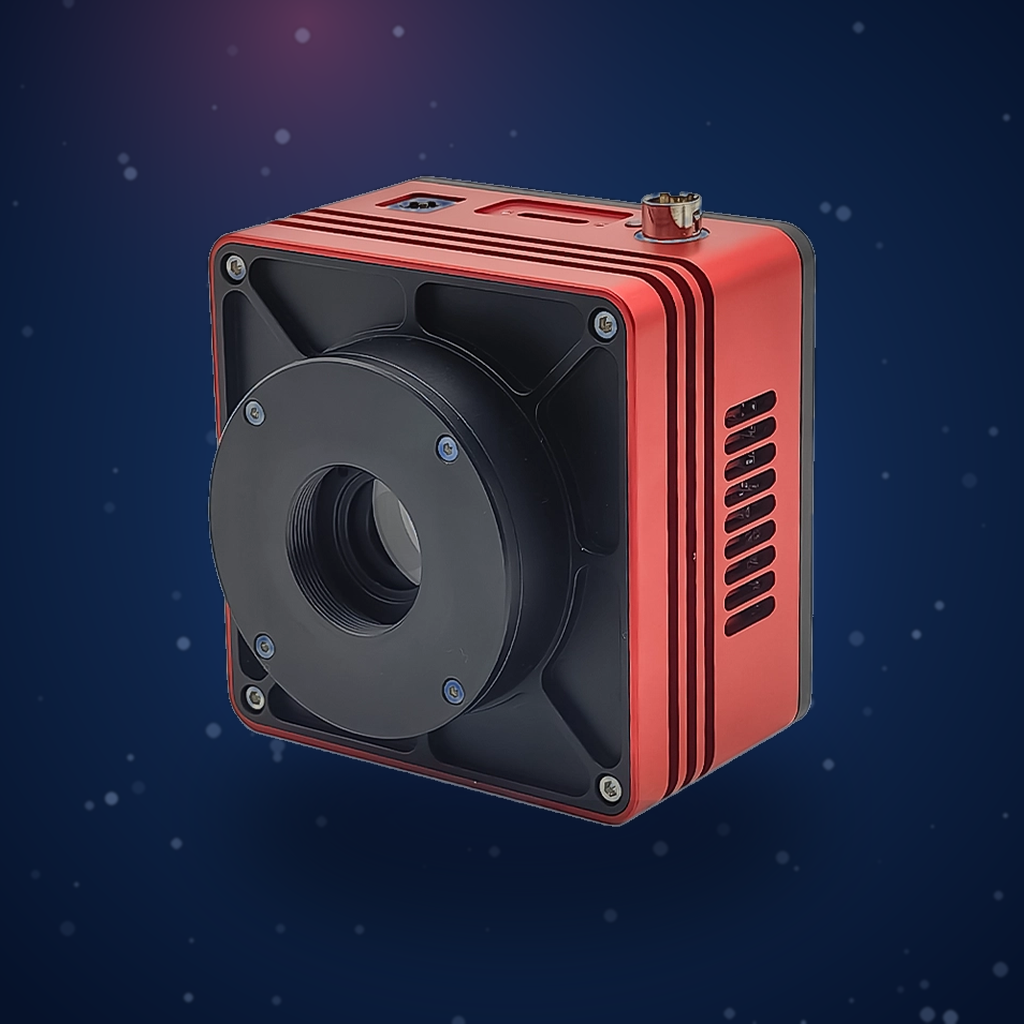
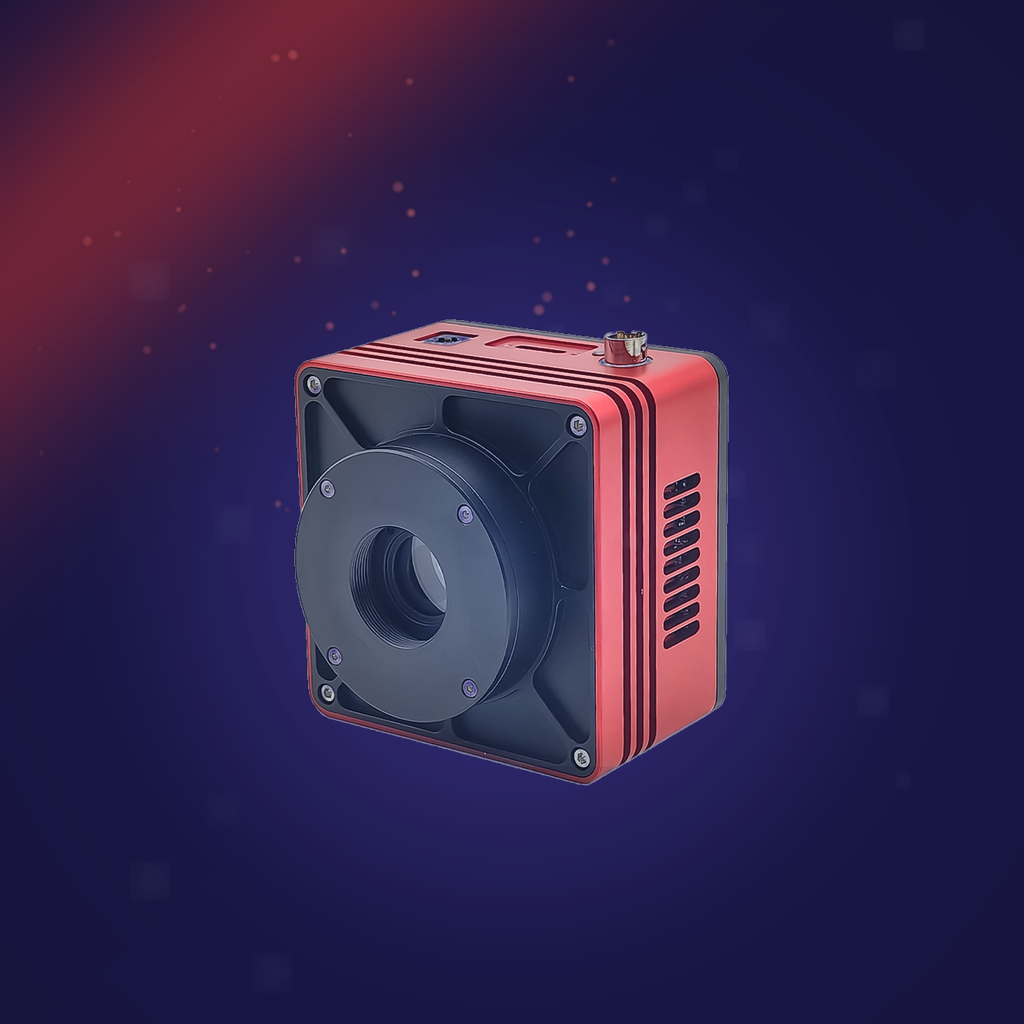
The SWIR1503BU is a short-wave infrared (SWIR) industrial camera based on a high-performance InGaAs CMOS sensor, featuring 0.33 MP resolution and a pixel size of 15 µm. Equipped with a USB3.0 interface, the camera achieves a maximum frame rate of 724 fps and incorporates a TEC cooling module for precise temperature control of ≤ –25°C, ensuring image stability. With a global shutter, it eliminates image tearing in high-speed dynamic scenes. Leveraging its excellent imaging performance, stable temperature control system, and flexible integration options, the SWIR1503BU camera is suitable for applications such as high-speed sorting, process monitoring, laser imaging, and array-based deployment.
II. QE Curve
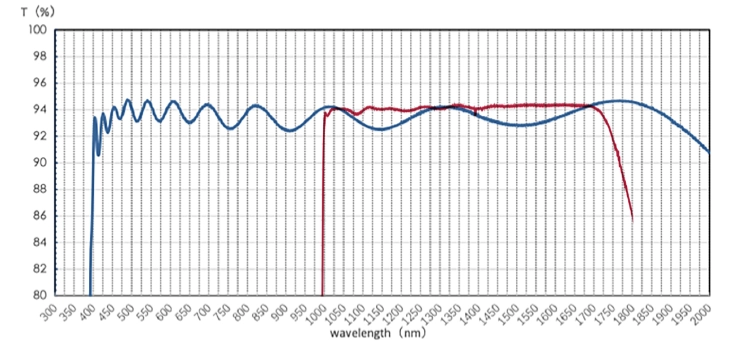
III. Optical Window Transmittance Curve
IV. Camera Specifications
| Parameter | Specification |
|---|---|
| Model | SWIR1503BU |
| Sensor Type | InGaAs CMOS image sensor |
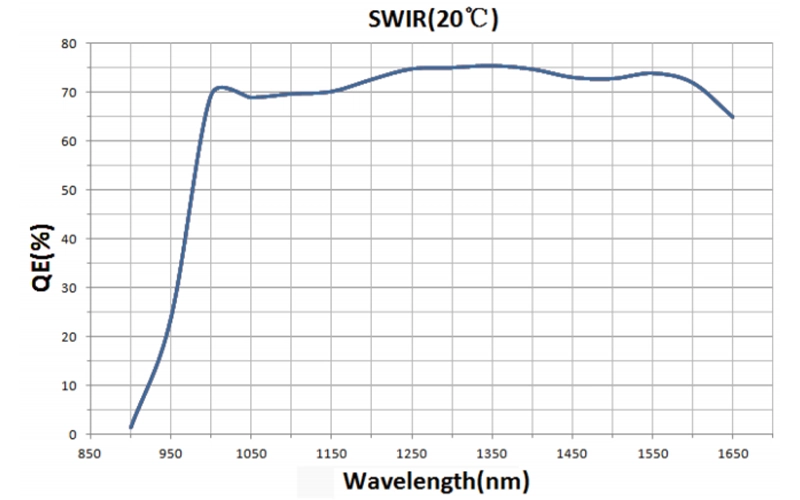
| Spectral Range | 900 nm – 1700 nm |
| Pixel Size | 15 µm × 15 µm |
| Sensor Format | 3/4″ |
| Frame Rate & Resolution | 8-bit: 724 fps @ 640 × 512 Packet12: 724 fps @ 640 × 512 14-bit: 579 fps @ 640 × 512 |
| Hardware Image Buffer | 512 MB |
| Peak Quantum Efficiency | 75% @ 1350 nm |
| Conversion Gain | LG: 138.6 e⁻/ADU; MG: 5.54 e⁻/ADU; HG: 1.2 e⁻/ADU |
| Dynamic Range | LG: 70.59 dB; MG: 67.96 dB; HG: 47.98 dB |
| Readout Noise | LG: 586.82 e⁻; MG: 35.05 e⁻; HG: 68.44 e⁻ |
| Full Well Capacity | LG: 1,986,426.78 e⁻; MG: 87,649.83 e⁻; HG: 17,147.351 e⁻ |
| Maximum SNR | LG: 62.98 dB; MG: 49.43 dB; HG: 42.34 dB |
| Dark Current | 30 fA @ 0.1 V & 18°C |
| Exposure Time Range | 16 µs – 5 s |
| Shutter Mode | Global shutter |
| Data Interface | USB3.0 |
| Digital I/O | 1 opto-isolated input, 1 opto-isolated output, 2 non-isolated I/O ports |
| Data Format | 8-bit / 12-bit |
| Cooling Temperature | –20°C (at 20°C ambient temperature) |
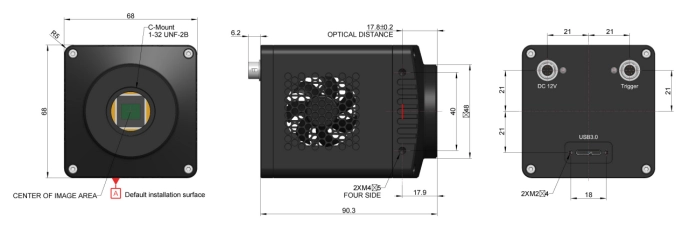
| Optical Interface | C‑mount |
| Optical Window | 400–1800 nm (standard LPF390H); 1030–1800 nm (optional LPF1000H) |
| Power Supply | DC12V 3A |
| Power Consumption | 8.4 W (TEC off) / <16 W (TEC on) |
| Dimensions | 68 mm × 68 mm × 90.3 mm |
| Weight | 485 g |
| Software | AttosView / Complete SDK development package |
| Temperature | Operating: –30~60°C; Storage: –40~85°C |
| Humidity | 20%–80%, non-condensing |
| Certifications | CE, FCC |
V. Dimensions
VI. Package Contents
| Item Name | Specification | Quantity |
|---|---|---|
| A. SWIR Camera | SWIR1503BU | 1 |
| B. USB3.0 Data Cable | 1.5 m USB A‑male to B‑male gold‑plated data cable | 1 |
| C. External Trigger Cable | 2 m 7‑pin female trigger cable | 1 |
| D. Power Cord | Standard power cord (China standard by default) | 1 |
| E. Power Adapter | Input AC 100–240V 50/60Hz, output DC 12V 3A | 1 |
| F. USB Flash Drive | Contains application software, drivers, and user manual | 1 |
VII. Application Cases
The SWIR1503B series SWIR cameras are widely applicable to a variety of industrial and scientific research scenarios. In industrial environments, they excel in medium‑ to high‑speed production line inspection and sorting tasks, enabling rapid process monitoring and real‑time control. In scientific research applications, they meet demanding requirements such as high‑frame‑rate imaging and experimental synchronization. Overall, this series of SWIR cameras provides a robust imaging platform for high‑speed vision and real‑time analysis.
👉 For more technical details, application cases, and specifications, please visit: 0.33 MP, 15 µm Pixel, 900–1700 nm SWIR Camera