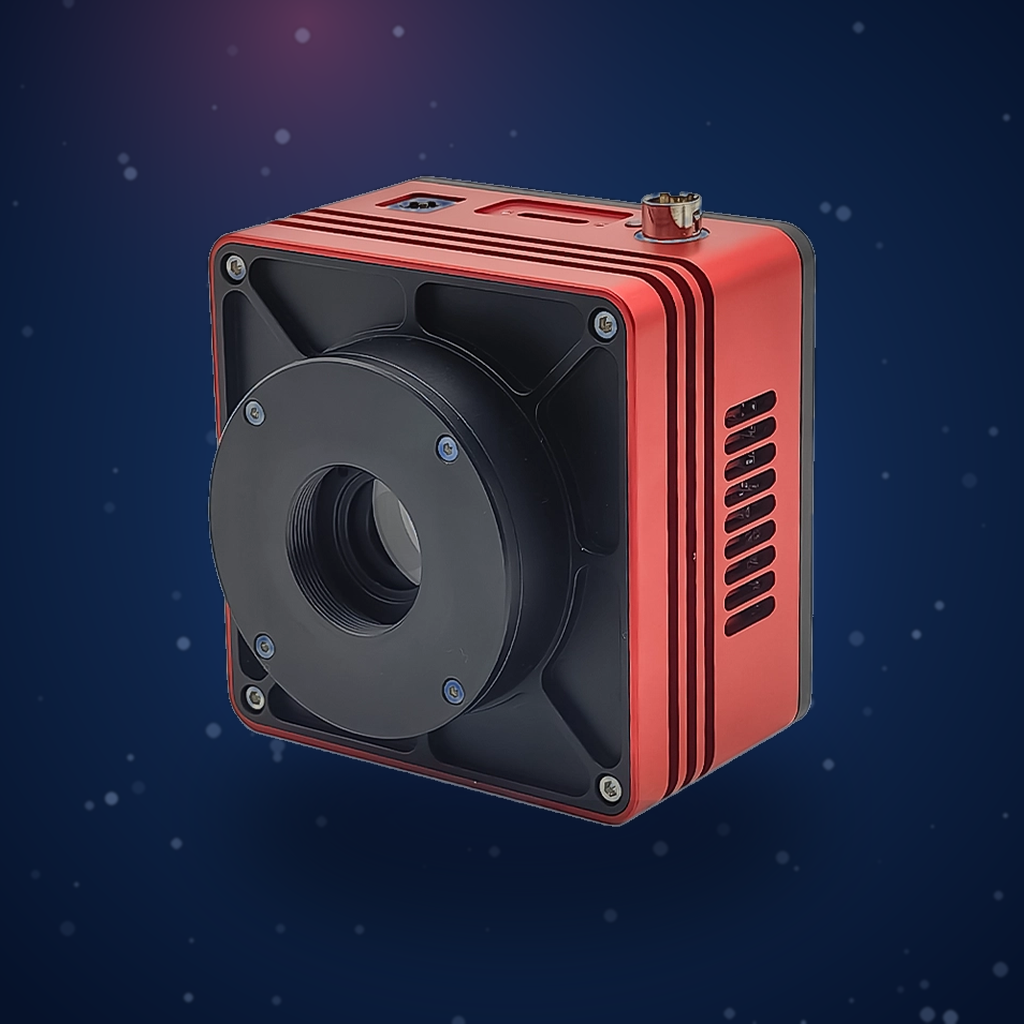
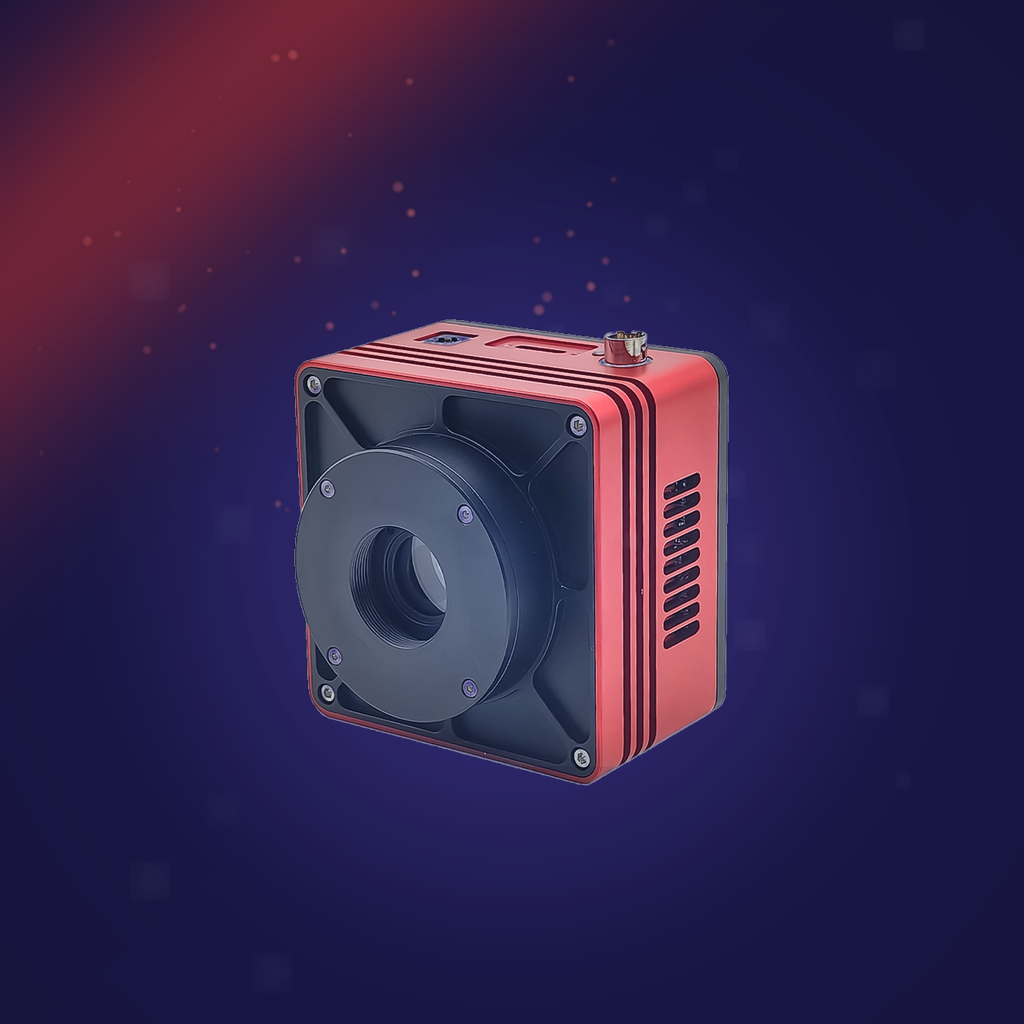
The core component of short-wave infrared (SWIR) imaging is the InGaAs chip, widely used in optical communications, machine vision, spectroscopic analysis, and other fields. Traditional InGaAs detectors generally have a response range of 900 nm to 1700 nm. However, applications such as laser detection, industrial material sorting, and photovoltaic quality inspection have an increasingly urgent need for detection beyond 1700 nm. AttosTek’s SWIR1503CU-1.9 extended-wavelength SWIR camera extends the spectral response range to 900 nm–1900 nm, achieving stable imaging in the 1700 nm–1900 nm band.
I. Why Do Traditional SWIR Cameras Only Detect Up to 1700 nm?
InGaAs (Indium Gallium Arsenide) is currently the most mainstream SWIR sensor material. In a standard lattice-matched structure, InGaAs achieves lattice matching with the InP substrate, and its intrinsic absorption cutoff wavelength is approximately 1700 nm. Infrared photons with wavelengths greater than 1700 nm have insufficient energy to cross the bandgap, so the detector no longer generates photoelectric response and produces no imaging signal. Therefore, the spectral range of most standard SWIR cameras stops at 1700 nm.
II. Why Can the SWIR1503CU-1.9 Camera Detect in the 1700nm-1900nm Band?
1. Adjusting Indium Composition to Extend the Cutoff Wavelength
By adjusting the ratio between indium (In) and gallium (Ga), the material’s band structure can be modified, thereby tuning its intrinsic absorption cutoff wavelength. Increasing the indium composition ratio reduces the bandgap energy of the material, shifting the cutoff wavelength toward longer wavelengths. Through precise compositional engineering design, the response band of InGaAs can be extended from the standard 1700 nm to 1900 nm. The SWIR1503CU-1.9 is based on this technical approach, extending the spectral response range from the traditional 1700 nm to 1900 nm, with a peak quantum efficiency of up to 70% at 1700 nm, ensuring sufficient photosensitivity in the long-wavelength region.
2. TEC Cooling for Optimized Imaging
As the response band is extended, the sensor’s sensitivity to thermally excited carriers also increases, and thermal noise rises significantly with the red-shift of wavelength. The SWIR1503CU-1.9 is equipped with TEC cooling technology, which can cool the sensor to –20°C, effectively suppressing thermal excitation effects. The interference of thermal noise on the image is greatly reduced, ensuring clear imaging across the 900 nm–1900 nm band.
III. Application Examples of the Extended 1700–1900 nm Band
In laser detection and beam analysis scenarios, thulium-doped fiber lasers operate around 1900 nm, which traditional SWIR cameras cannot image. However, the SWIR1503CU-1.9, with its response capability extended to 1900 nm, can accurately capture spot morphology and energy distribution, providing a critical detection tool for laser debugging, quality monitoring, and other applications.
IV. Conclusion
The reason the SWIR1503CU-1.9 can achieve effective detection in the 1700 nm–1900 nm band lies in the precise control of the indium composition in the InGaAs material, extending the intrinsic absorption cutoff wavelength from the traditional 1700 nm to 1900 nm. Combined with –20°C TEC cooling, 15 µm large pixels, and 70% quantum efficiency at 1700 nm, it ensures high quantum efficiency and excellent imaging performance in the extended band, providing a high-performance solution for 900 nm–1900 nm extended-wavelength imaging.