1. Product Introduction
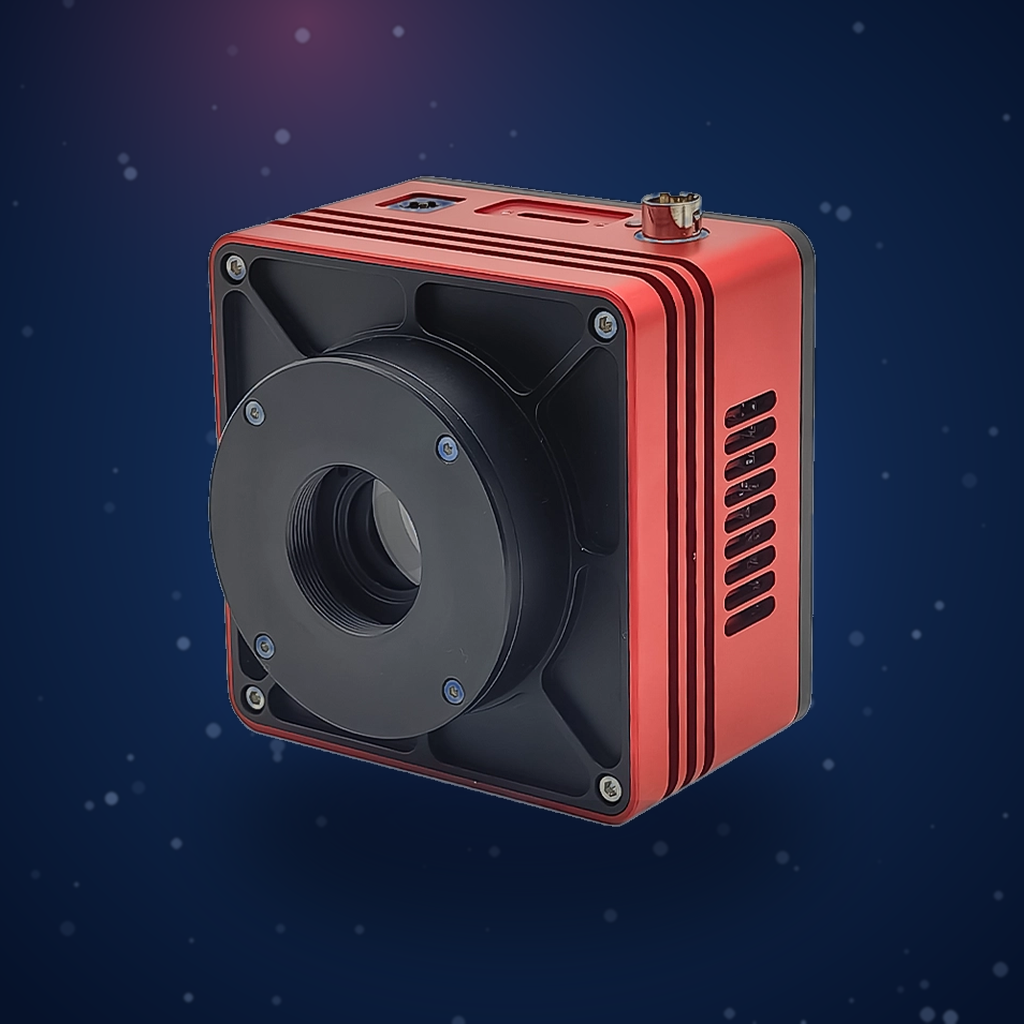
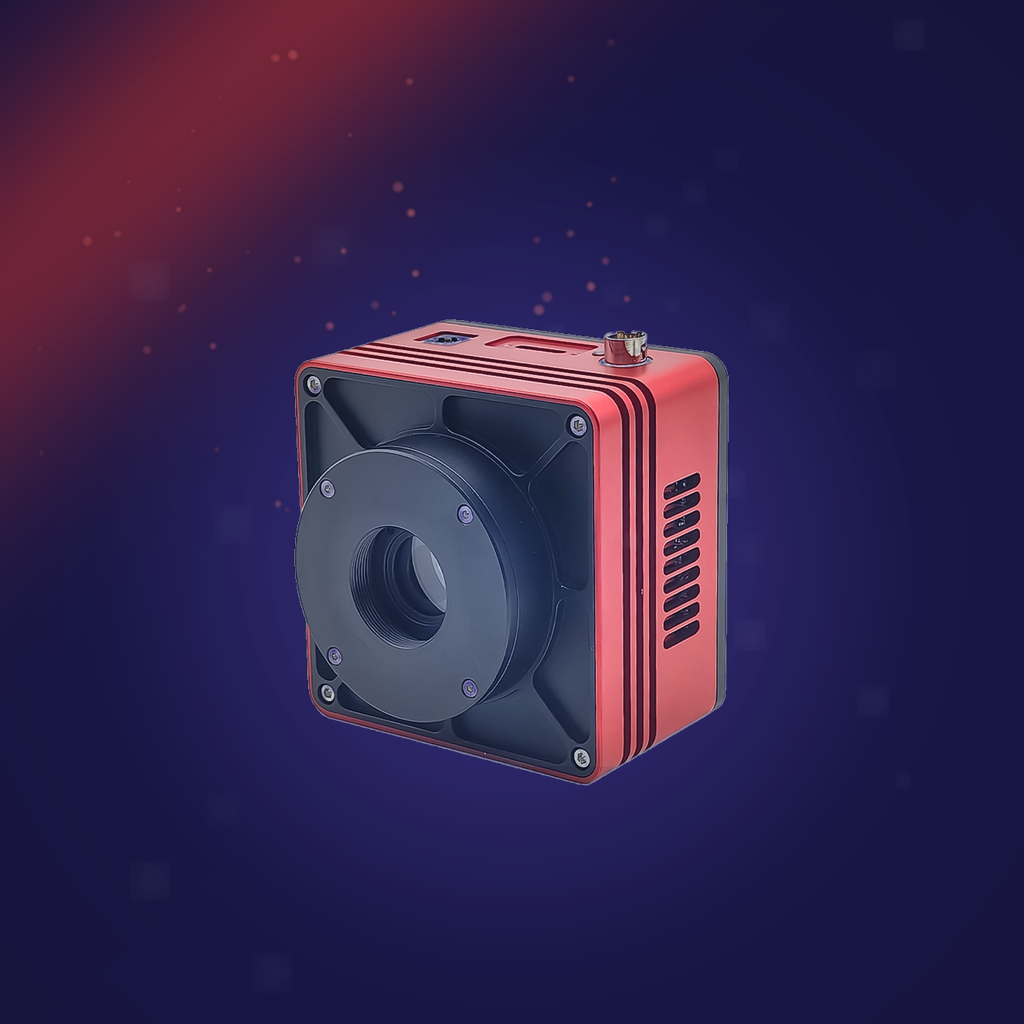
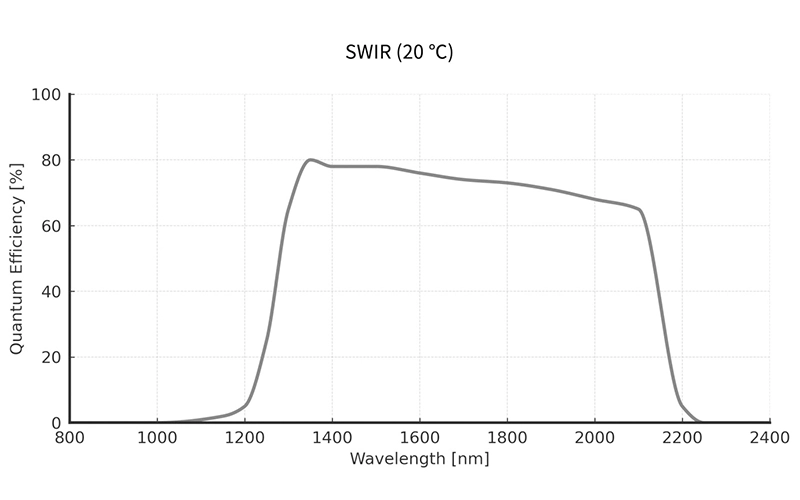
The SWIR1503CU‑2.2 from Beijing AttosTek Co., Ltd. is a short‑wave infrared (SWIR) industrial camera based on a high‑performance InGaAs CMOS sensor. The camera covers a spectral range of 1200–2200 nm, with a peak quantum efficiency of 70% at 1900 nm. It features 0.33 MP resolution and a 15 µm pixel size. Equipped with a USB3.0 interface, the camera achieves a maximum frame rate of 270 fps to meet real‑time imaging requirements. It incorporates a TEC cooling module providing a 70°C temperature differential, and employs a global shutter to eliminate image tearing in high‑speed dynamic scenes. The SWIR1503CU‑2.2 camera is specifically optimized for deep‑infrared applications such as moisture detection, plastic sorting, mineral analysis, and environmental monitoring.
2. Quantum‑Efficiency Plot
3. Camera Specifications
| Parameter | Specification |
|---|---|
| Product Model | SWIR1503CU‑2.2 |
| Sensor Type | InGaAs CMOS |
| Spectral Range | 1200 nm – 2200 nm |
| Pixel Size | 15 µm × 15 µm |
| Sensor Format | 3/4″ |
| Frame Rate & Resolution | 8/12/14‑bit: 270 fps @ 640 × 512 |
| Hardware Image Buffer | 512 MB |
| Peak Quantum Efficiency | 70% @ 1900 nm |
| Conversion Gain | 77.8 e⁻/DN (LG), 6.6 e⁻/DN (MG), 2.0 e⁻/DN (HG) |
| Dynamic Range | 71.4 dB (LG), 63.4 dB (MG), 56.2 dB (HG) |
| Readout Noise | < 50 e⁻ |
| Full Well Capacity | 1.21 Me⁻ (LG), 102 ke⁻ (MG), 28 ke⁻ (HG) |
| Maximum SNR | 60.8 dB (LG), 50.1 dB (MG), 44.5 dB (HG) |
| Dark Current | <25 fA @ 0.1 V & 18°C; 178 ke⁻/pixel/s |
| Exposure Time Range | 16 µs – 5 s |
| Shutter Mode | Global shutter |
| Data Interface | USB3.0 |
| Digital I/O | 1 opto‑isolated input, 1 opto‑isolated output |
| Data Format | 12‑bit / 14‑bit |
| Cooling Temperature | –50°C (at 20°C ambient temperature) |
| Optical Interface | C‑mount |
| Optical Window | 1000–2400 nm (standard) |
| Power Supply | DC12V 3A |
| Power Consumption | 7.1 W (TEC OFF) / <18.2 W (TEC ON) |
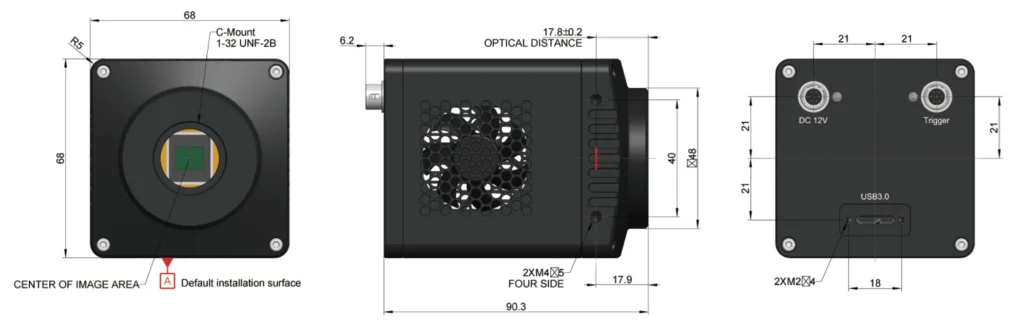
| Dimensions | 68 mm × 68 mm × 90.3 mm |
| Weight | 485 g |
| Software | AttosView / Complete SDK development package |
| Operating System | Win32 / WinRT / Linux / macOS / Android |
| Operating Temperature | –30°C to 60°C |
| Storage Temperature | –40°C to 85°C |
| Operating Humidity | 20%–80%, non‑condensing |
| Storage Humidity | 20%–80%, non‑condensing |
| Certifications | CE, FCC |
4. Outline Dimensions
5. Standard Packing List
| Description | Specification | Qty |
|---|---|---|
| Short‑Wave Infrared Camera | SWIR1503CU‑2.2 | 1 |
| USB3.0 Cable | 1.5 m A‑male to B‑male gold‑plated cable | 1 |
| External Trigger Cable | 2 m 7‑pin female trigger cable | 1 |
| Mains Power Cord | Standard domestic power cord | 1 |
| Power Adapter | Input: AC 100‑240 V, 50/60 Hz Output: DC 12 V, 3 A | 1 |
| USB Flash Drive | Contains application software, drivers and user manual | 1 |
6. Application Cases
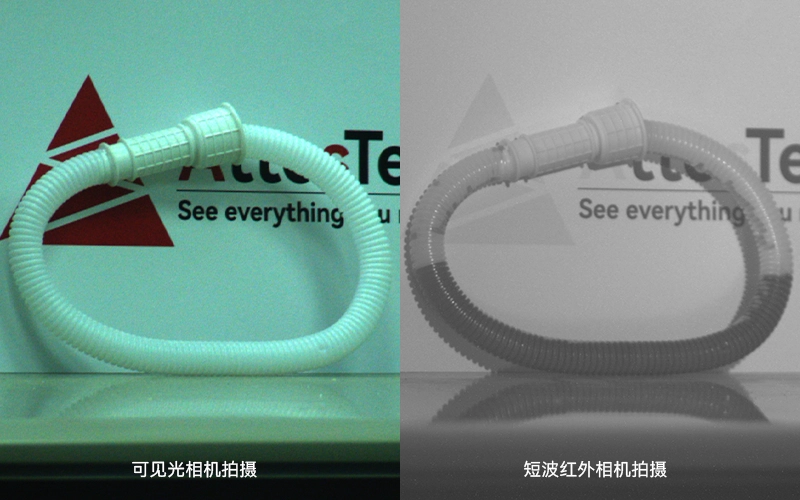
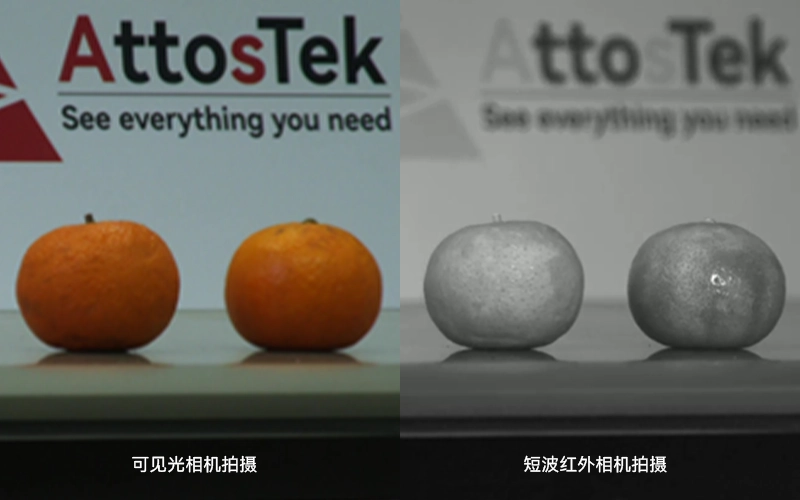
The SWIR1503CU‑2.2 is optimized for applications such as moisture detection, plastic sorting, mineral analysis, and environmental monitoring. It visualizes moisture content with high contrast for agricultural and food quality inspection. In the recycling industry, the camera distinguishes between plastics, cotton, and leather for automated sorting. In geology, it captures clear spectral signatures for efficient mineral analysis. The camera can also detect environmental pollutants that are invisible to visible‑light sensors.