Project Name: Imaging Experiment Report on Same-Color Nuts and Stones Using SWIR033AU SWIR Camera
Test Date: May 2026
I. Test Objective
To verify the imaging capability of the Attostek SWIR033AU SWIR camera in distinguishing organic materials (nuts) from inorganic materials (stones) of similar color, and to compare the results with those of a visible-light camera.
II. Application Background and Principle
2.1 Application Background
In food industries such as nut processing and grain sorting, inorganic impurities like stones are often mixed in during harvesting, drying, or transportation. Traditional manual or visible-light vision sorting systems mainly rely on color and brightness differences for identification. However, when the stones themselves are dark in color or even similar to the outer shell color of nuts (e.g., dark-colored nuts and dark-colored stones), effective distinction under visible light becomes difficult, leading to missed detections of impurities and posing food safety risks. Short-wave infrared (SWIR) imaging technology, based on the chemical composition characteristics of materials, offers a solution to this challenge.
2.2 Detection Principle
The imaging range of SWIR cameras is mostly 400 nm–1700 nm, capturing images through infrared light. Organic nuts and inorganic stones have different absorption levels in the SWIR band. Stones have a higher absorption rate in the SWIR band and appear dark in the image, while nuts absorb less and appear bright, thus allowing the two to be distinguished. An external infrared light source can be added to enhance the reflection intensity difference between different regions.
2.3 Camera Performance Requirements
- High signal-to-noise ratio (SNR)
- High quantum efficiency (QE), especially near 1300 nm
Specifications of the SWIR033AU camera used in this report:
- Maximum SNR at low conversion gain: 48.45 dB
- Quantum efficiency at 1300 nm wavelength: approximately 73%
III. Test Equipment and Parameters
| Equipment/Component | Model/Specification |
|---|---|
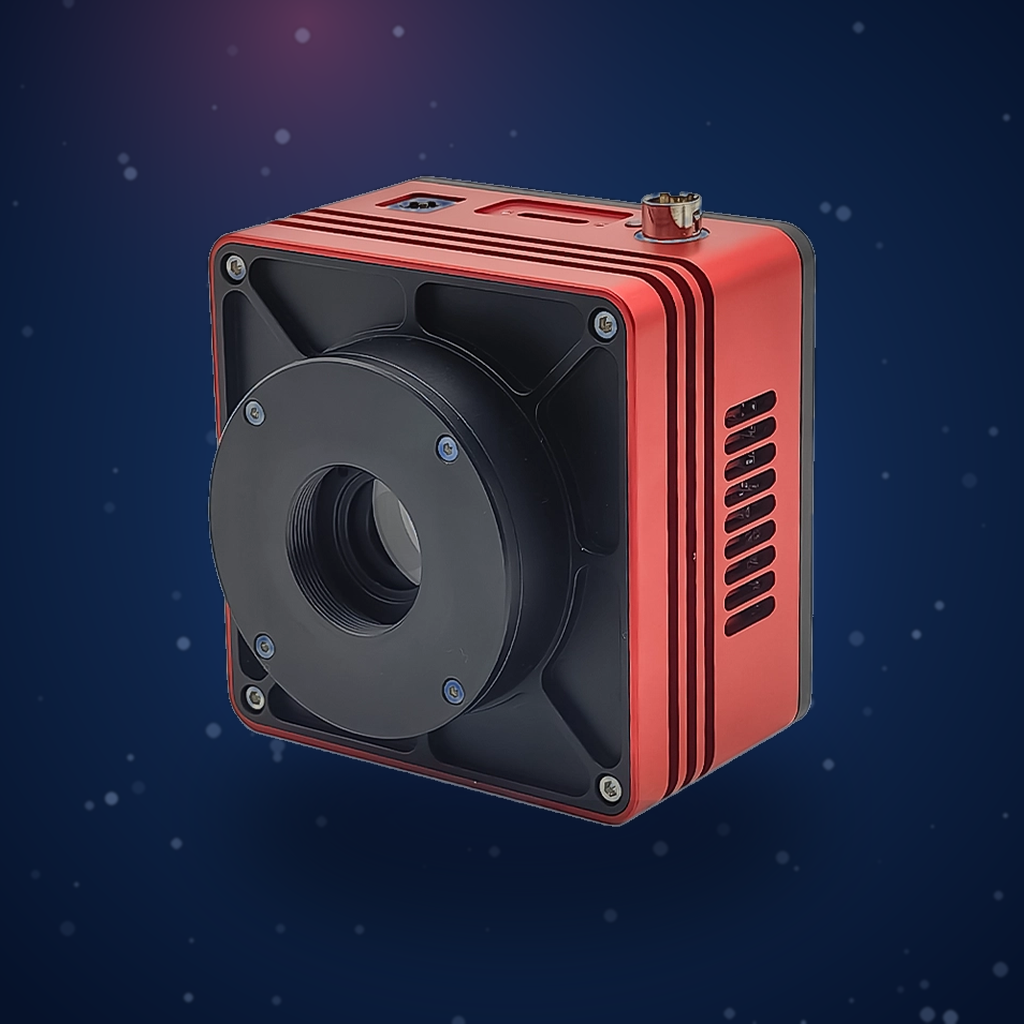
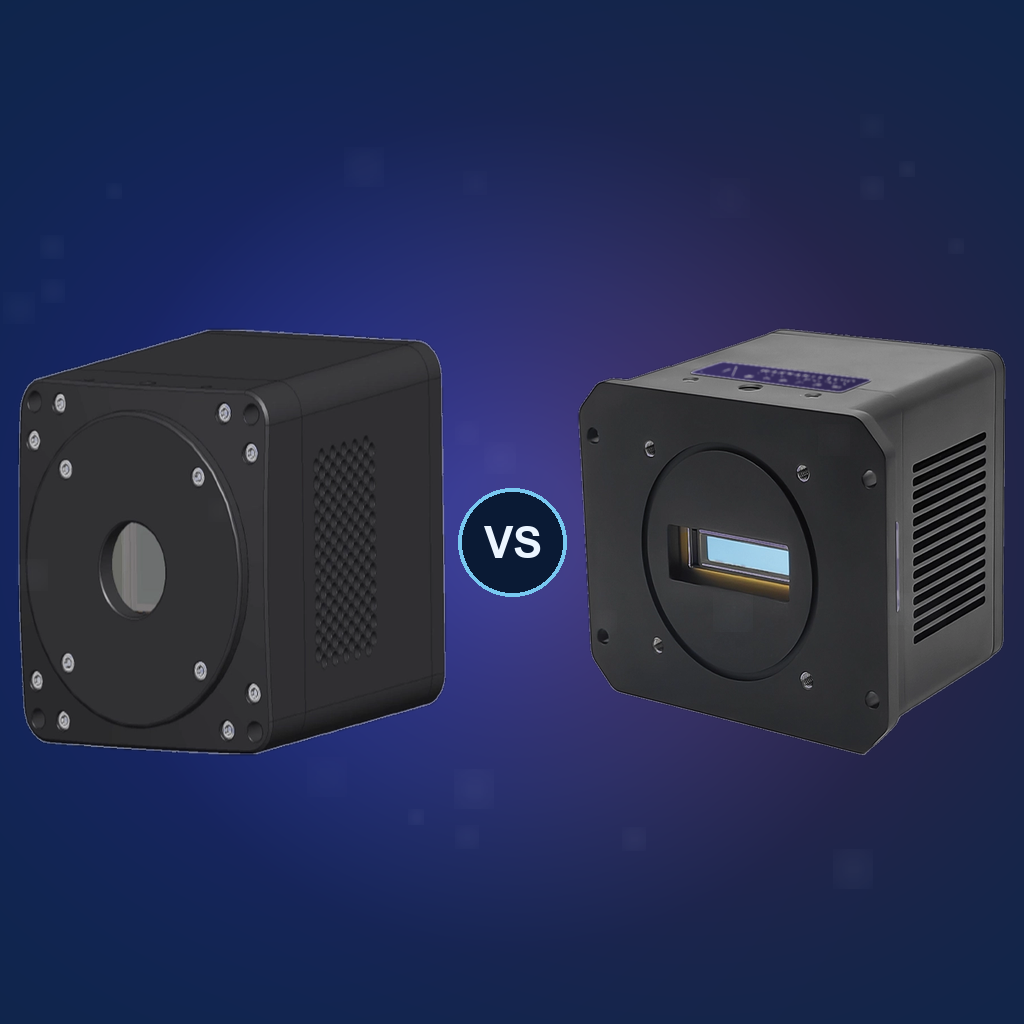
| SWIR Camera | Attostek SWIR033AU |
| Visible-Light Camera | Attostek VIS028CU3.2-NC |
| Light Source | 1300 nm infrared light source |
| Optical Filter | 1300 nm infrared filter |
| Test Samples | Several nuts and small stones of similar color |
IV. Test Procedure
- Mix the nut and stone samples and place them at the center of the SWIR033AU camera’s lens field of view.
- Manually adjust the focus and aperture of the SWIR033AU camera to obtain a clear image.
- Select an appropriate exposure time (manual or automatic mode).
- Capture images with the SWIR033AU camera under the following conditions: no fill light or filter, with 1300 nm light source, and with both 1300 nm filter and light source.
- Compare the imaging differences between nuts and stones under different conditions.
V. Test Results
5.1 Image Observation Results
- Visible-light camera capture: Due to the lack of obvious visual differences, it is difficult to distinguish the same-color stones mixed in with the nuts.
- SWIR033AU direct capture: The imaging difference between nuts and stones can be directly observed and is significant. Stones appear as darker gray areas in the image due to their lower reflectivity in SWIR light, while nuts appear as brighter gray areas due to their lower absorption of infrared light.
- With 1300 nm fill light: Overall image brightness is improved, and the contrast between nuts and stones is enhanced.
- With 1300 nm filter and fill light: The best imaging quality is achieved, with the most obvious contrast between nuts and stones. Stones appear deep black, and the contrast reaches its maximum.
5.2 Quantitative Contrast Analysis
To quantitatively evaluate the discriminative capability, contrast was calculated using the following formula: Contrast = (I_nuts − I_stones) / Gray Scale Range. The 8-bit grayscale mode was used. The contrast values for the captured images are shown in the table below:
| Capture Condition | Nut Gray Value | Stone Gray Value | Calculated Contrast |
|---|---|---|---|
| SWIR033AU direct capture | 130.9 | 93.8 | 0.15 |
| With 1300 nm fill light | 135.2 | 89.2 | 0.18 |
| With 1300 nm filter and fill light | 116.5 | 67.9 | 0.19 |
VI. Result Analysis
The SWIR033AU camera can effectively distinguish between nuts and stones as two different types of materials. In SWIR imaging, the gray value difference between the two is significant. The camera’s high signal-to-noise ratio meets the requirements of this application scenario. When using a 1300 nm infrared light source for fill light, the contrast is higher and the distinction between nuts and stones is more effective. When using both the 1300 nm filter and light source, the contrast is the highest, making it easy to distinguish nuts from stones. In production line applications, it is recommended to use the 1300 nm filter and infrared light source to achieve higher contrast and thereby improve detection stability.
VII. Conclusion
The Attostek SWIR033AU SWIR camera can reliably distinguish organic nuts from inorganic stones, two materials of different natures. In the test, nuts appeared as distinct bright areas in the SWIR band, while stones appeared as dark areas. The clear grayscale contrast between the two demonstrates the good applicability of the SWIR033AU SWIR camera in nut processing and food sorting applications. Under the condition of using 1300 nm filter and light source fill light, the imaging contrast is further optimized.