1. Product Introduction
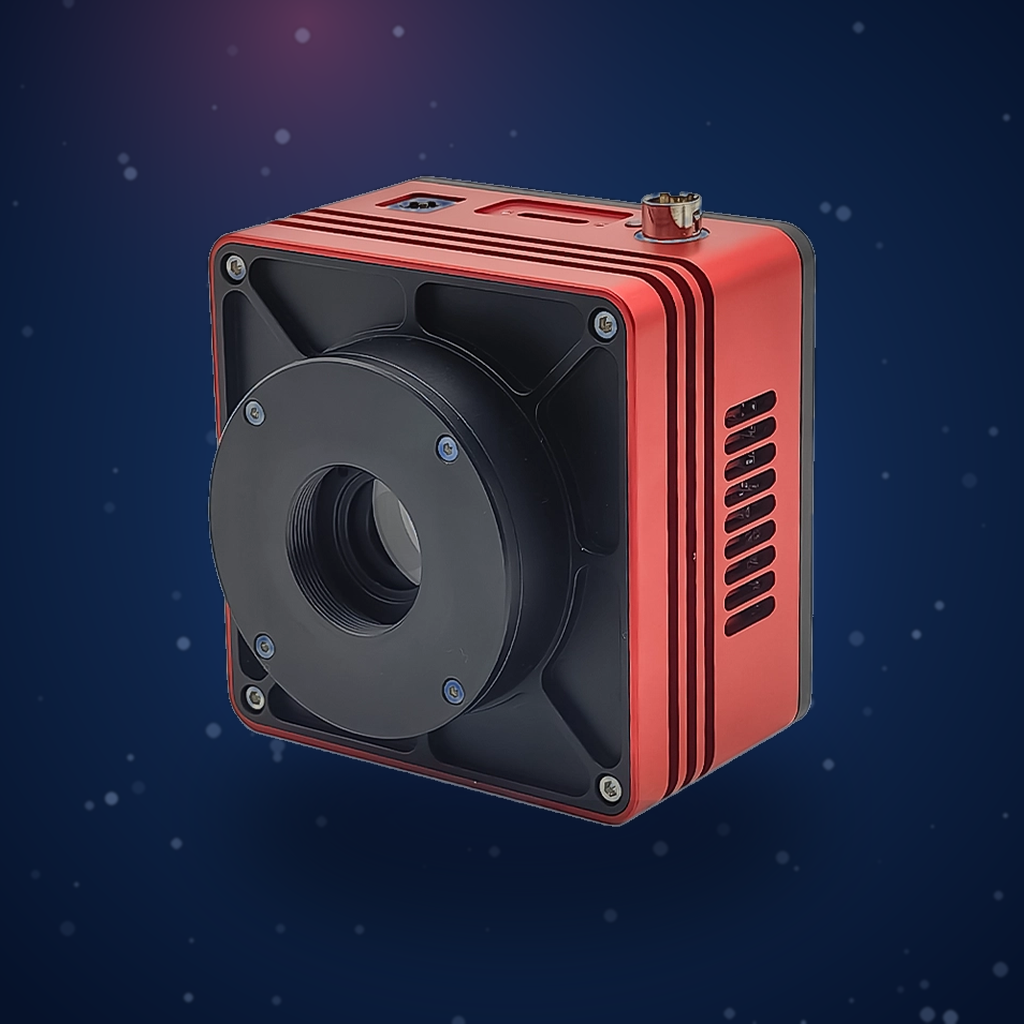
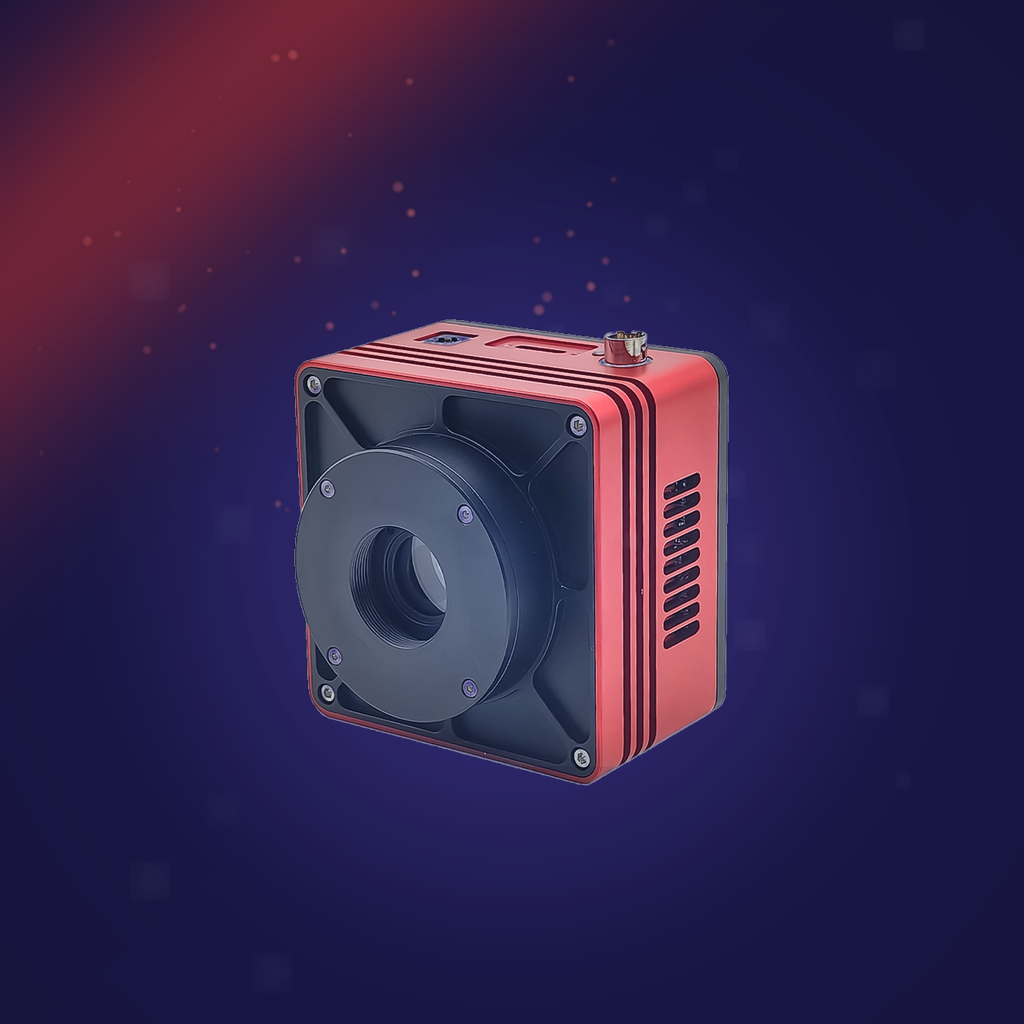
The SWIR1503CU‑1.9 is an industrial short‑wave infrared (SWIR) camera built around a high‑performance InGaAs CMOS sensor. It delivers a resolution of 0.33 MP with a pixel size of 15 µm. Equipped with a USB3.0 interface for stable high‑speed data transmission, the camera achieves a maximum frame rate of 240 fps. It integrates a TEC cooling module to suppress dark current below 100 fA. Featuring a global shutter, it produces tear‑free images for high‑speed dynamic scenarios.
Thanks to outstanding imaging performance, a stable thermal control system and flexible integration capability, the SWIR1503CU‑1.9 is well‑suited for professional applications including fiber‑optic communications, laser inspection and near‑infrared spectral analysis.
2. Quantum‑Efficiency Plot
3. Camera Specifications
| Item | SWIR1503CU‑1.9 |
|---|---|
| Sensor Type | InGaAs CMOS |
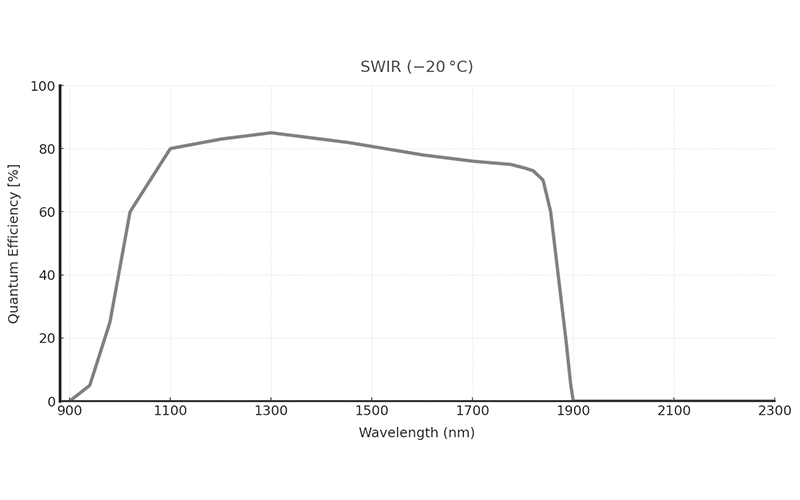
| Spectral Range | 900 nm – 1900 nm |
| Pixel Size | 15 µm × 15 µm |
| Sensor Format | 3/4″ |
| Frame Rate & Resolution | 8/12/14‑bit: 240 fps @ 640 × 512 |
| On‑board Image Buffer | 512 MB |
| Peak Quantum Efficiency | 70 % @ 1700 nm |
| Conversion Gain | TBD |
| Dynamic Range | TBD |
| Readout Noise | < 35 e⁻ |
| Full‑Well Capacity | 1.38 Me⁻ (LG), 118 ke⁻ (MG), 41 ke⁻ (HG) |
| Maximum SNR | TBD |
| Dark Current | < 100 fA @ 0.1 V & 18 °C (fA = 6250 e⁻/s) |
| Exposure Time Range | 16 µs ~ 5 s |
| Shutter Mode | Global Shutter |
| Data Interface | USB3.0 |
| Digital I/O | 1 opto‑isolated input, 1 opto‑isolated output |
| Data Format | 12‑bit / 14‑bit |
| Cooling Temperature | −20 °C (at 20 °C ambient temperature) |
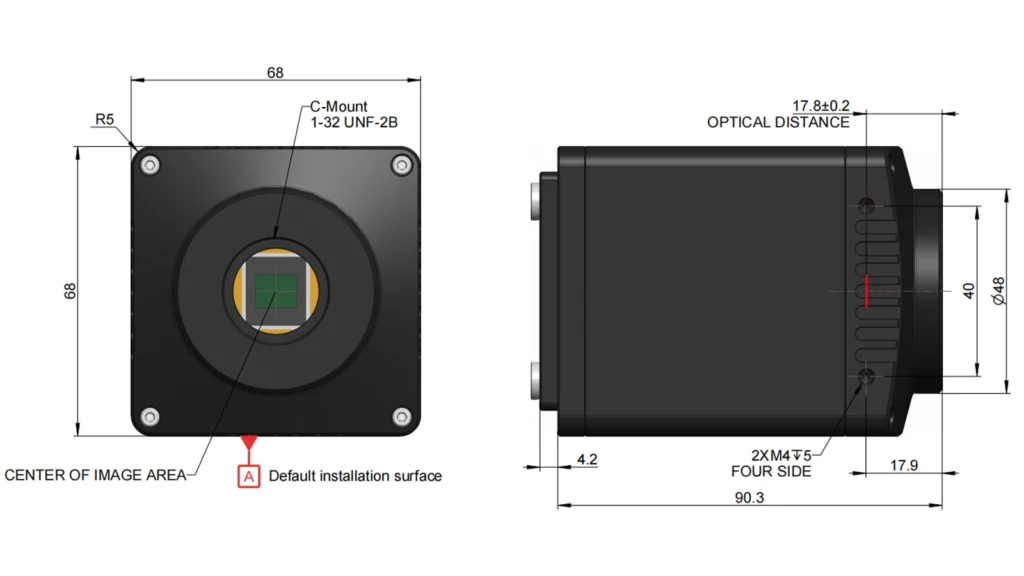
| Optical Mount | C‑mount |
| Power Supply | DC 12 V, 3 A |
| Power Consumption | 8.4 W (TEC OFF) / < 16 W (TEC ON) |
| Dimensions | 68 mm × 68 mm × 90.3 mm |
| Weight | 485 g |
| Software | AttosView / Full SDK Package |
| Supported OS | Win32 / WinRT / Linux / macOS / Android |
| Temperature | Operating: −30 °C ~ 60 °C; Storage: −40 °C ~ 85 °C |
| Humidity | Operating: 20 %‑80 % (non‑condensing); Storage: 20 %‑80 % (non‑condensing) |
| Certifications | CE, FCC |
4. Outline Dimensions
5. Standard Packing List
| Description | Specification | Qty |
|---|---|---|
| Short‑Wave Infrared Camera | SWIR1503CU‑1.9 | 1 |
| USB3.0 Cable | 1.5 m A‑male to B‑male gold‑plated cable | 1 |
| External Trigger Cable | 2 m 7‑pin female trigger cable | 1 |
| Mains Power Cord | Standard domestic power cord | 1 |
| Power Adapter | Input: AC 100‑240 V, 50/60 Hz Output: DC 12 V, 3 A | 1 |
| USB Flash Drive | Contains application software, drivers and user manual | 1 |
6. Application Cases
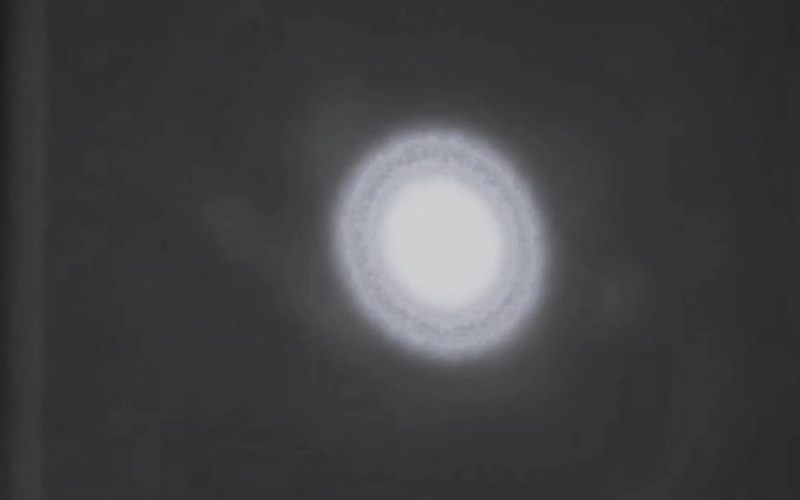
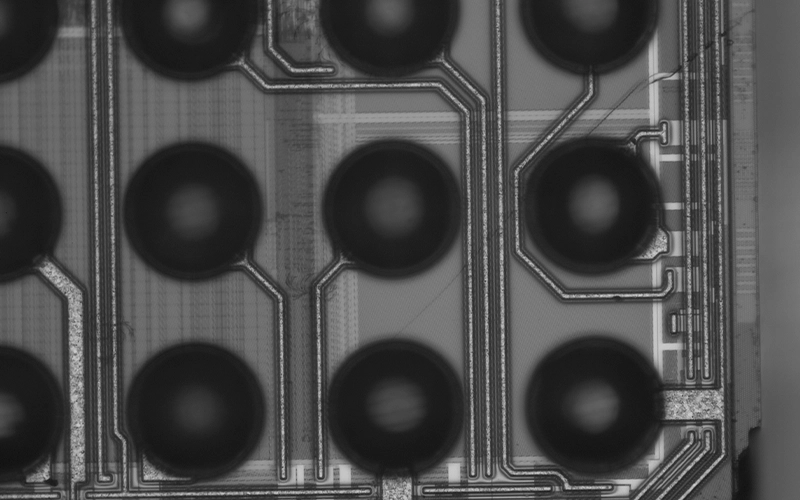
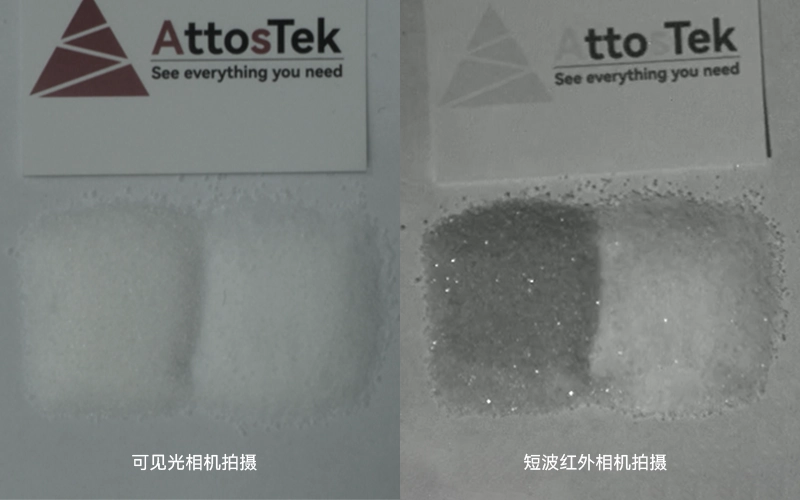
The SWIR1503CU‑1.9 is ideal for scientific and industrial use cases. It enables precise material characterization and semiconductor defect inspection, including wafer alignment and internal defect analysis. It serves as a powerful tool for fiber‑optic component alignment and laser‑beam quality analysis. Additionally, it is widely deployed in food‑processing, semiconductor manufacturing, material sorting and other sectors.