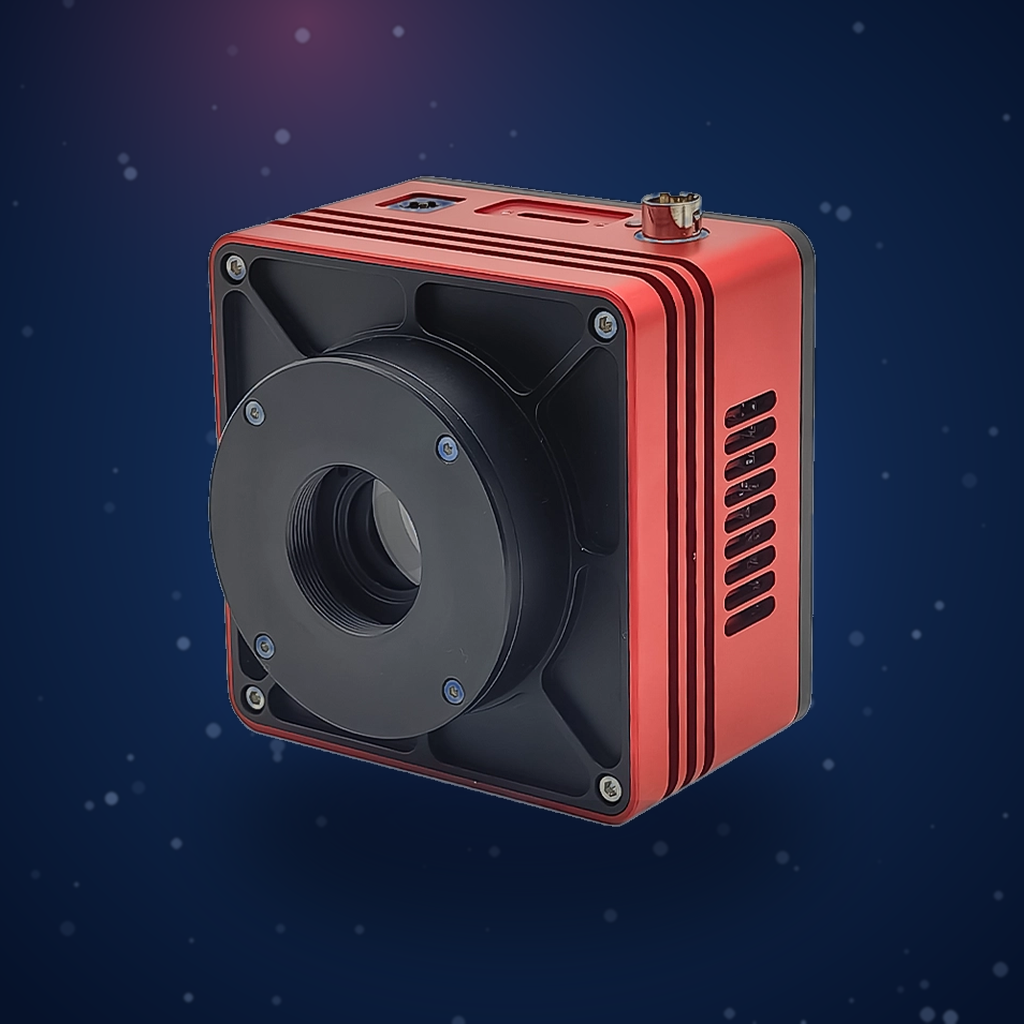
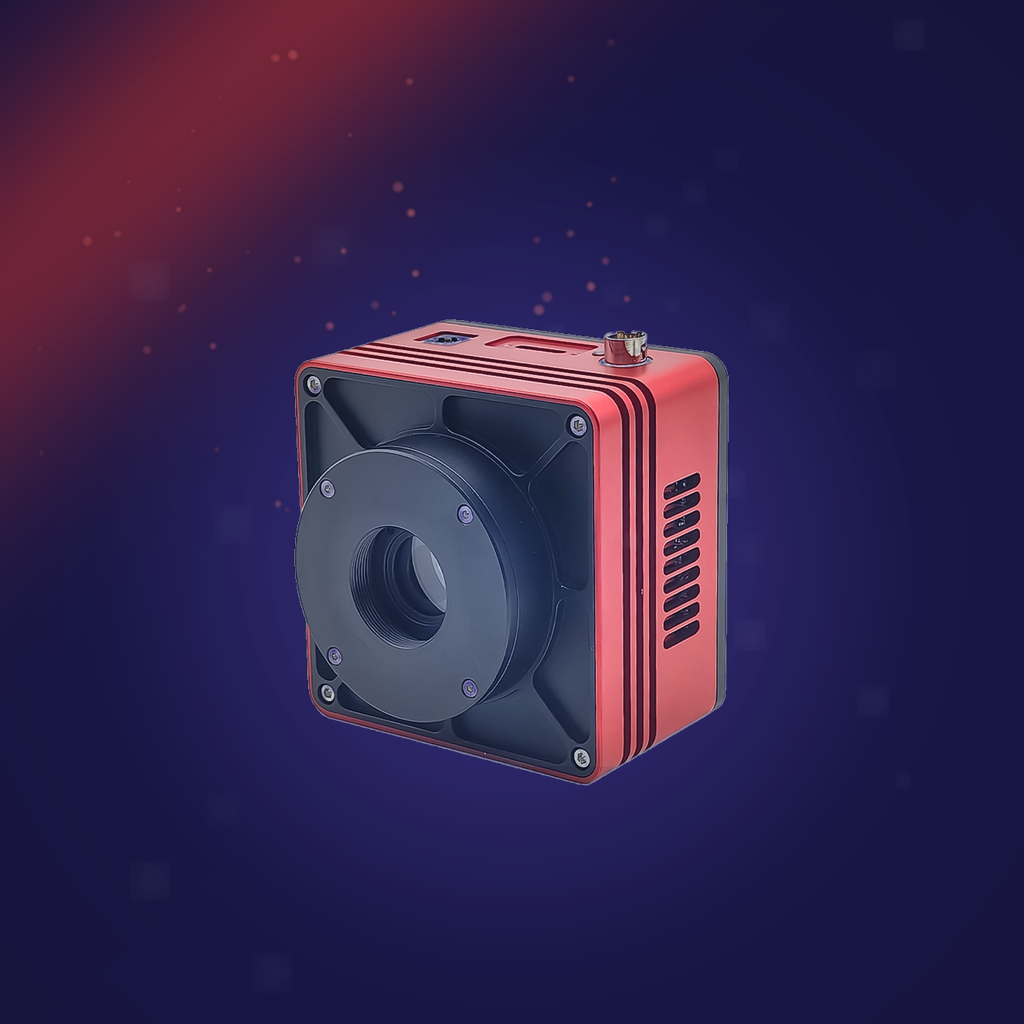
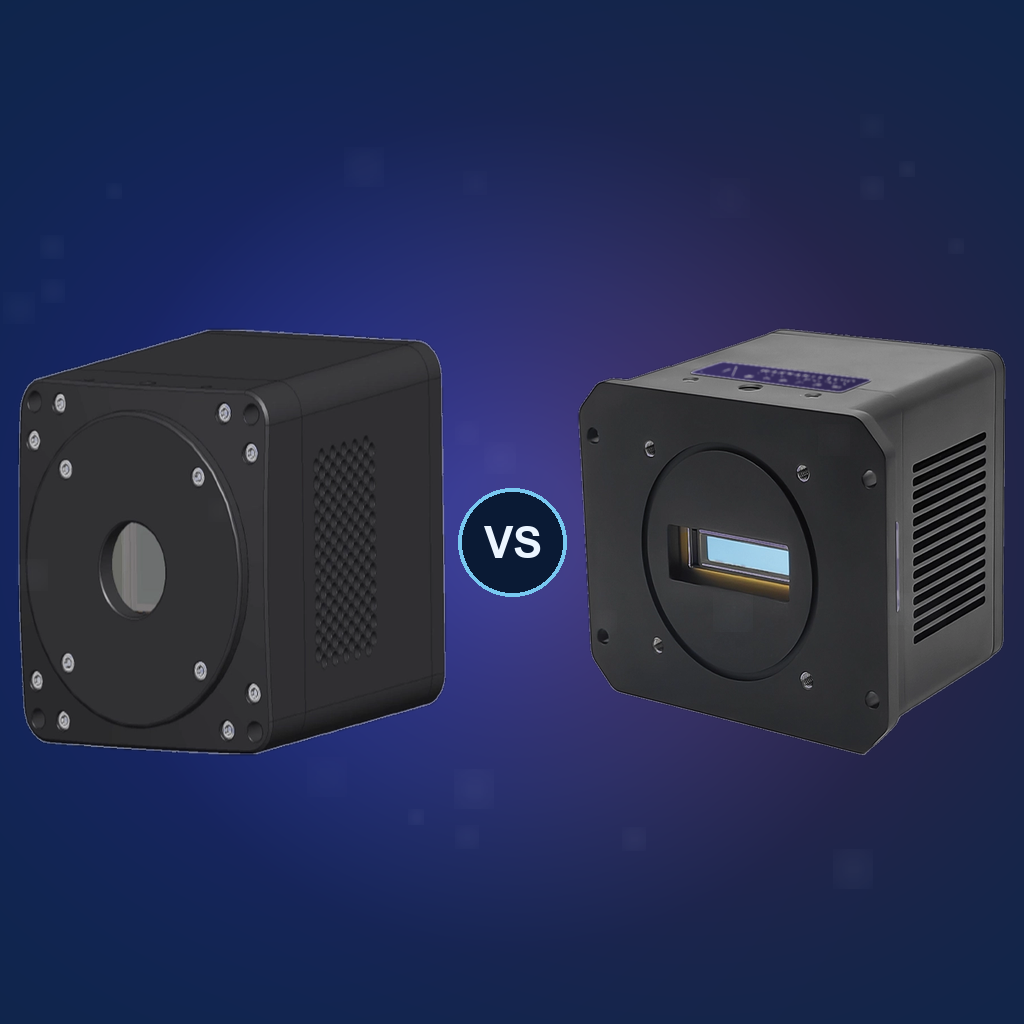
For fiber lasers, solid‑state lasers, ultra‑stable cavity coupling, beam‑quality diagnostics and other applications, the spatial distribution and energy concentration of laser beams serve as core metrics for evaluating laser performance. In airborne optoelectronic systems, optical communications and scientific‑research fields, spot diameters may reach several millimetres or even centimetres, requiring large‑format short‑wave infrared cameras for imaging and analysis. Attostek’s large‑format SWIR camera SWIR151BU features a 1.5‑inch sensor area of 18.7 × 14 mm, suitable for experimental imaging and analysis of large‑aperture laser spots.
I. AttosTek Large‑Format SWIR Camera SWIR151BU
1. Sensor Format and Resolution
The 1.5‑inch sensor of Attostek SWIR151BU delivers 1280 × 1024 resolution, four times the pixel count of 640 × 512 cameras with the same 15 μm pixel size. It can fully capture the complete profile of a large‑aperture laser spot in a single exposure.
2. Pixel Size and Quantum Efficiency
Its large 15 μm pixels provide ample light‑sensing area. Combined with peak quantum efficiency ≥ 70 %, the camera substantially boosts low‑light detection capability and signal‑to‑noise ratio, producing crisp images even under low‑illumination conditions. It is well‑suited for imaging faint peripheral signals from high‑power laser spots.
3. Frame Rate and Shutter Mode
The SWIR151BU achieves 200 fps at full resolution with a global shutter, enabling precise capture of pulsed‑laser outputs. During real‑time monitoring, automated testing or dynamic experiments, it captures transient spot images reliably to deliver trustworthy data for subsequent analysis.
4. Full‑Well Capacity and Dynamic Range
Boasting a high full‑well capacity of 1.9 Me⁻ and a dynamic range of 70.59 dB, the camera accurately records peak signals at the spot centre while preserving faint edge signals, reconstructing the authentic two‑dimensional energy distribution of the laser beam.
5. Professional Software Support
Beyond the bundled AttosView imaging software, the camera supports dedicated laser‑spot analysis software. Users can extract critical parameters including 2D/3D beam‑energy distribution, spot diameter, centroid coordinates and beam divergence angle, furnishing objective metrics for beam‑quality diagnostics.
II. Typical Application Scenarios
1. High‑Power Laser Beam Analysis
In high‑power laser systems, output beams after beam expanders often have large apertures. This camera performs comprehensive spatial‑quality analysis of large‑aperture beams to assess beam uniformity and stability.
2. Optical‑Communication Spot Imaging
Free‑space optical‑communication systems generate large‑diameter far‑field spots. The camera characterises beam profile and energy distribution of transmitted light, evaluates alignment errors in optical assemblies, and safeguards coupling efficiency for long‑range communication links.
3. Scientific‑Research Diffraction‑Pattern Imaging
Optical laboratories at universities and research institutes frequently work with extended diffraction spots featuring multiple‑order diffraction rings. This camera supports coupling‑efficiency calibration, high‑order transverse‑mode identification and spot‑evolution observation for mainstream SWIR lasers such as 1064 nm, 1187 nm and 1542 nm.
III. Summary
Attostek’s large‑format SWIR camera SWIR151BU is perfectly matched to large‑aperture laser‑spot inspection workflows. Together with its dedicated beam‑analysis software, it accomplishes spot imaging, data acquisition and quantitative analysis in one workflow. It represents the preferred imaging instrument for measuring large‑aperture short‑wave‑infrared laser spots.