I. High-Sensitivity and High-Speed sCMOS Cameras
sCMOS scientific-grade cameras, with ultra-low readout noise, ultra-high quantum efficiency, wide dynamic range, and high-speed imaging capability, have become key imaging devices for extremely weak optical signal detection. They are now widely used in cold atom physics experiments, quantum research, plasma transient process diagnostics, super-resolution microscopy, magnetic domain microscopy, semiconductor wafer micro-defect inspection, Raman spectroscopy, and other low-light scenarios. Their industry application value and demand continue to grow.
II. Core sCMOS Parameters
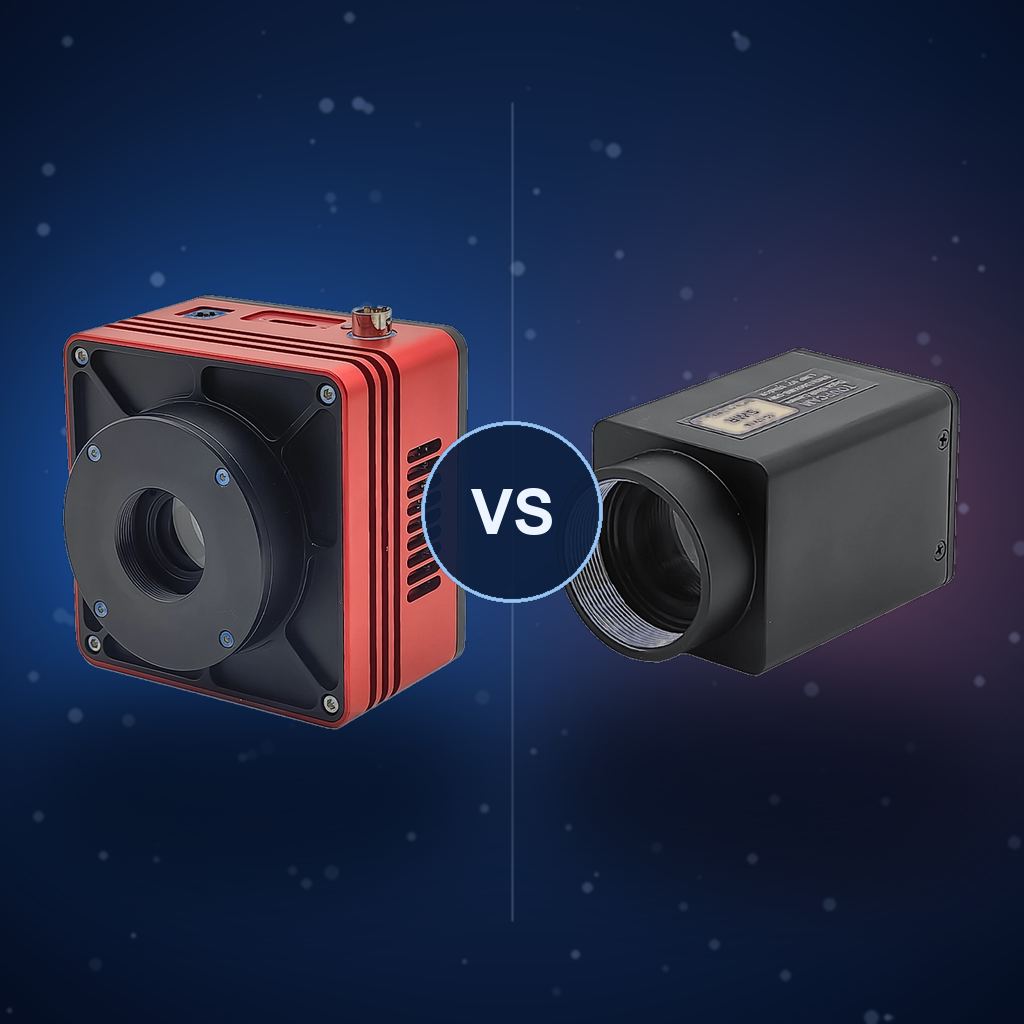
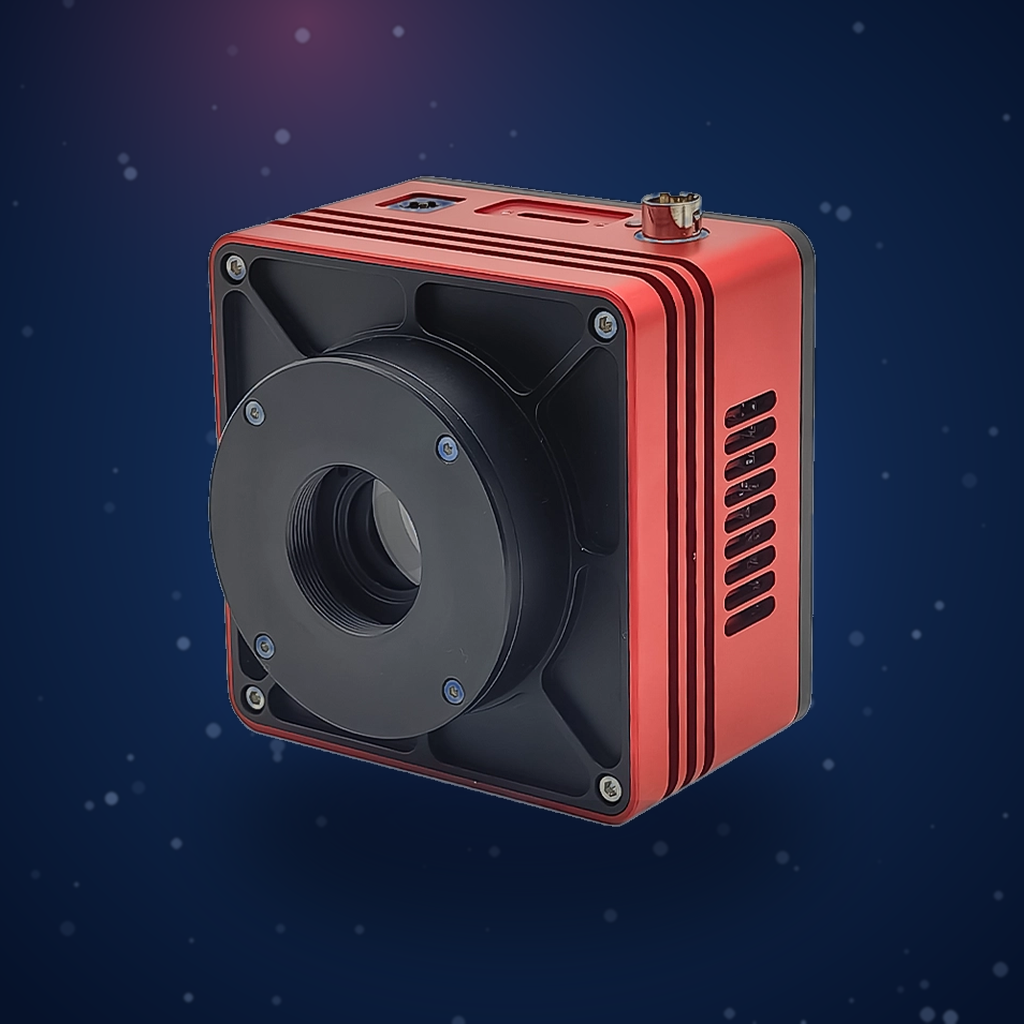
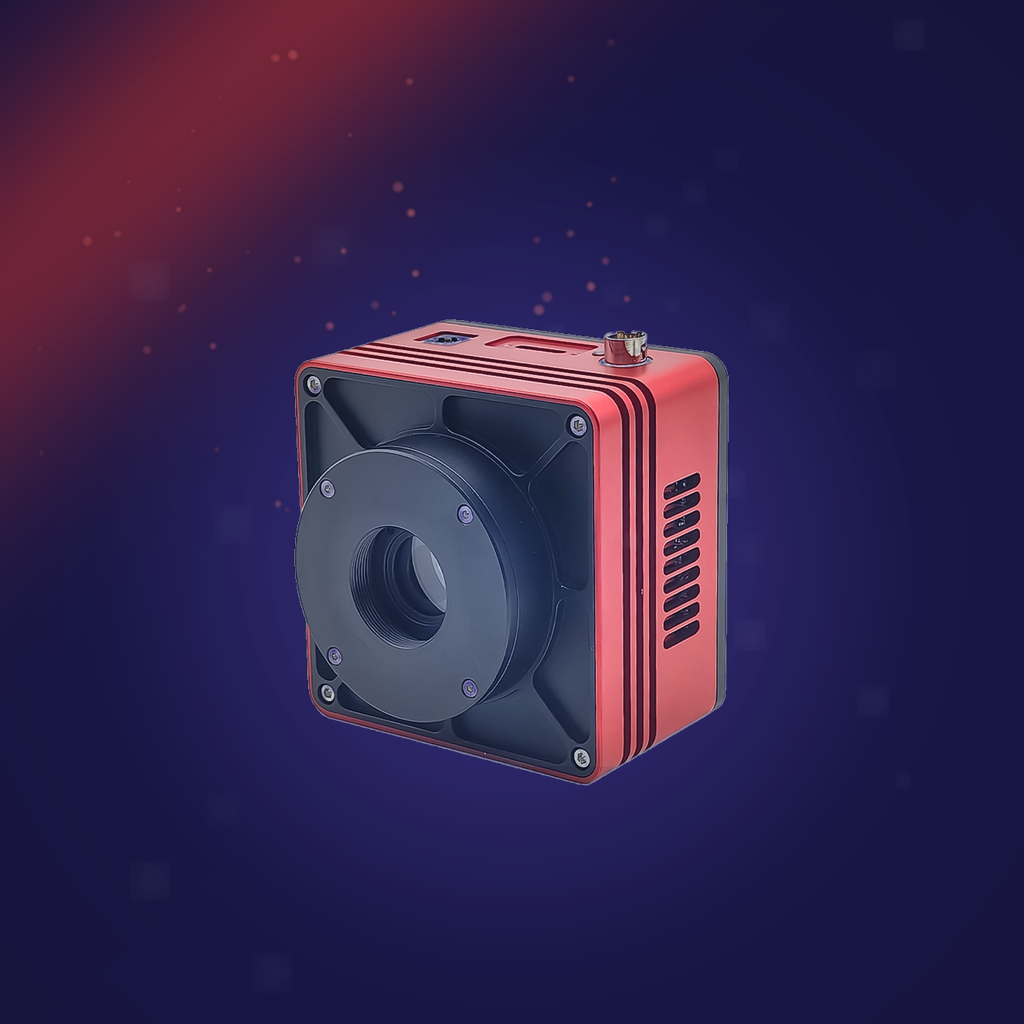
We have selected camera brands including Hamamatsu, TELEDYNE, Andor, PCO, and AttosTek, with core parameters listed below for users to choose from.
| Brand | Hamamatsu | TELEDYNE | Andor | PCO | AttosTek |
|---|---|---|---|---|---|
| Product | ORCA-Quest IQ | Prime 95B | CB2 High Res | pco.edge 4.2 bi | UVISI064BU10G |
| Spectral Range | 300-1100 nm | 200-1100 nm | 400-1000 nm | 400-900 nm | 200-1100 nm |
| Pixel Size | 4.6 μm × 4.6 μm | 11μm ×11 μm | 2.74 μm ×2.74 μm | 6.5 μm × 6.5 μm | 6.5 μm × 6.5 μm |
| Resolution | 4096 x 2304 | 1200 x 1200 | 5328 x 4608 | 2048 x 2048 | 2048 x 2048 |
| Full Frame Rate | 7.19 fps | 81 fps | 30 fps | 40 fps | 270 fps |
| Peak QE | 85% | 95% | 90% | 95% | 95% |
| Readout Noise | 0.3 e⁻ | 1.8 e⁻ | 1.4 e⁻ | 1.9 e⁻ | 0.9 e⁻ |
| Dynamic Range | 23000:1 | 94 dB | 32000:1 | 88.5 dB | 83.4 dB |
| Full Well Capacity | 7 ke⁻ | 8 ke⁻ | 9.5 ke⁻ | 4.8 ke⁻ | 13.4 ke⁻ |
| Dark Current | 0.012 e⁻/pix/s | 0.5 e⁻/pix/s | 0.043 e⁻/pix/s | 0.2 e⁻/pix/s | 0.01 e⁻/pix/s |
| Cooling Temperature | -25°C | -25°C | -40°C | -25°C | -25°C |
| Key Advantages | Low readout noise | Large pixel size, high dynamic range | 24.5 MP high resolution | High quantum efficiency, high dynamic range | High frame rate, low dark current |
| Suitable Applications | Single-molecule fluorescence imaging, live-cell low-light imaging | Hyperspectral imaging | High-throughput screening | Fluorescence microscopy imaging | Neuroscience imaging, preferred for long exposures |