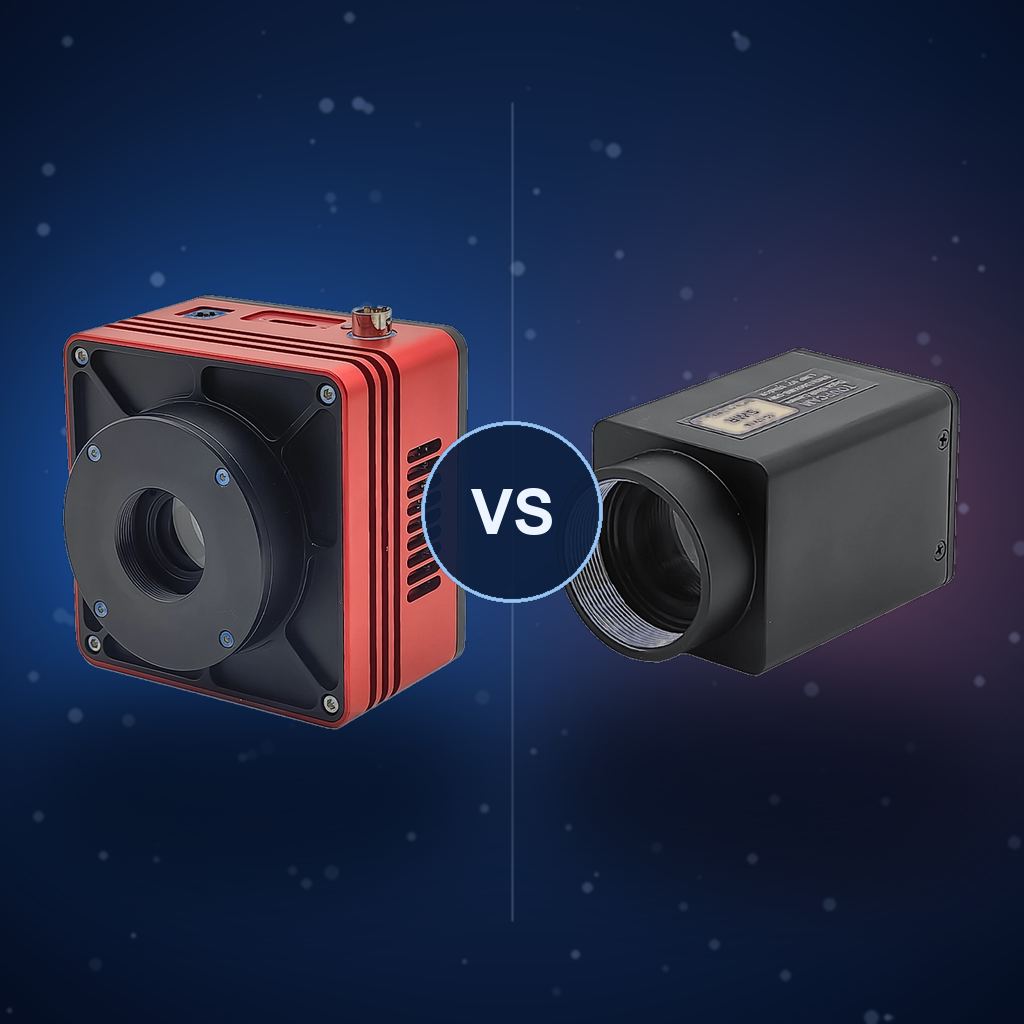
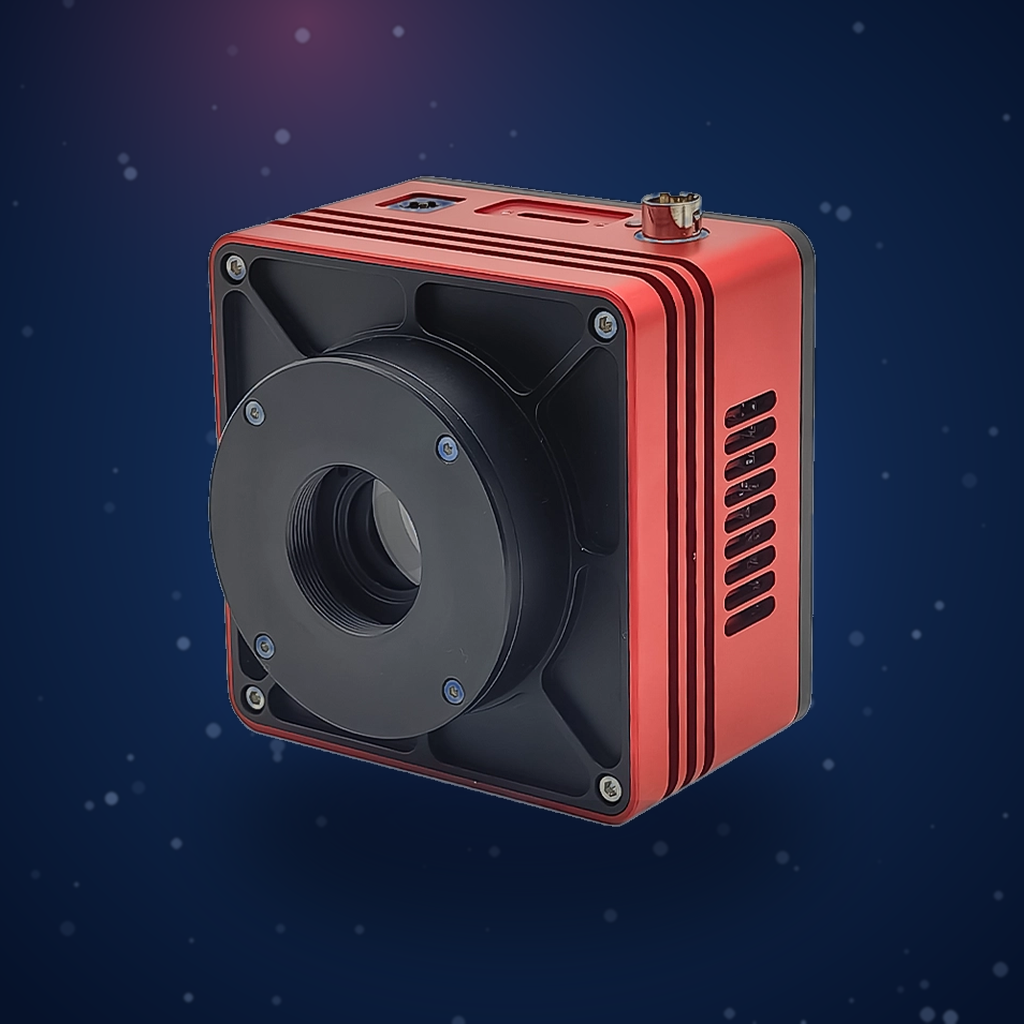
Single-photon cameras are imaging devices capable of capturing extremely weak signals at the single-photon level, playing a vital role in fields such as cold atom experiments and single-molecule fluorescence microscopy. After years of technological development, multiple technical approaches have been established, multiple technical approaches have been established,
Below is a comprehensive comparison of the five single-photon imaging technologies:
| Technology Type | Working Principle | Representative Brands / Models | Reference Price | Core Advantages | Core Disadvantages |
|---|---|---|---|---|---|
| 1. Superconducting Nanowire Single-Photon Detector (SNSPD) | Utilizes the photoelectric response of superconducting materials to single photons, featuring ultra-high sensitivity and ultra-low dark count rates. | Photon Technology, Single Quantum(Netherlands) | Extremely high approx $148,000 – $445,000 | Ultra-high detection efficiency, excellent time resolution, ultra-low dark noise. | Prohibitive cost; requires complex cryogenic cooling systems; incapable of photon number resolution. |
| 2. Intensified Charge-Coupled Device (ICCD) | Amplifies optical signals via an image intensifier equipped with MCP, then couples the amplified signal to CCD/sCMOS for readout. | Teledyne PI-MAX4, PCO.dicam | Relatively high approx $59,000 – $148,000 | Picosecond ultra-fast gating capability for time-resolved imaging; ideal for transient physics and combustion diagnostics. | Image intensifiers introduce extra noise and spatial distortion; relatively low quantum efficiency; limited service life and high maintenance costs. |
| 3. Electron-Multiplying Charge-Coupled Device (EMCCD) | Achieves signal multiplication via high voltage on readout registers, with readout noise below 1 electron. | Andor iXon Ultra Series, Teledyne PI Series | Relatively high approx $44,000 – $88,000 | Mature technology; delivers true single-photon sensitivity with superior spatial resolution. | Restricted dynamic range, prone to saturation under strong light; relatively high cost; generally slower frame rate than sCMOS. |
| 4. High-Performance Scientific CMOS (sCMOS) | Delivers high signal-to-noise ratio through large pixels, ultra-high quantum efficiency (QE >95%) and ultra-low readout noise (<0.9 e⁻). | Attostek UVISI1605BU, UVISI064BU10G | Cost-effective approx $8,000 – $30,000 | High cost-performance ratio; combines high resolution, large field of view, high frame rate and wide dynamic range, suitable as a replacement for EMCCD. | Under extreme low-light conditions (only a few incident photons), its signal-to-noise ratio is slightly inferior to SNSPD products. |
| 5. Single-Photon Avalanche Diode (SPAD) | Semiconductor PN junctions operate in Geiger mode under high reverse bias voltage, amplifying single-photon signals via avalanche multiplication effect. | Thorlabs | Low cost approx $1,500 | High time resolution, compact size, low power consumption, easy integration with CMOS circuits and viable for 2D array fabrication; relatively low cost. | Mostly single discrete detectors, scarce array products; inherent high noise, strong temperature sensitivity and narrow dynamic range. |