Project Name: Liquid Level Imaging in Opaque Containers Using SWIR051AU Camera
Test Date: May 2026
I. Test Objective
To verify the capability of the Attostek SWIR051AU SWIR camera to detect liquid level inside opaque plastic bottles using SWIR imaging technology, and to compare the results with those of a visible-light camera, while evaluating the effectiveness of supplementary light sources and optical filters in improving imaging contrast.
II. Application Background and Principle
2.1 Application Background
Plastic spray bottles and cleaning agent containers are common items in daily life. Such packaging often uses light-blocking or opaque designs to protect the stability of the contents. However, this also prevents consumers and production line quality inspectors from determining the remaining liquid volume or whether filling is qualified through the naked eye or ordinary cameras.
2.2 Detection Principle
Most plastics that are opaque in visible light (such as HDPE and PP) have good transmittance in the short-wave infrared band (SWIR, 900–1700 nm). Water can absorb infrared light at wavelengths around 1450 nm. A SWIR camera can image the liquid inside the bottle to determine the liquid content. Areas with liquid appear as dark regions due to strong absorption of light by water molecules and weak reflected signals; areas without liquid appear as bright regions. The liquid level height can be clearly determined by the boundary between bright and dark areas, enabling non-contact, non-destructive real-time detection. In addition, infrared light sources or infrared filters can be used to enhance the reflection intensity difference between different regions.
2.3 Camera Performance Requirements
- High signal-to-noise ratio (SNR)
- High quantum efficiency (QE), especially near 1450 nm
Specifications of the SWIR051AU camera used in this report:
- Maximum SNR: 52.6 dB
- Quantum efficiency at 1450 nm wavelength: approximately 72%
III. Test Equipment and Parameters
| Equipment/Component | Model/Specification |
|---|---|
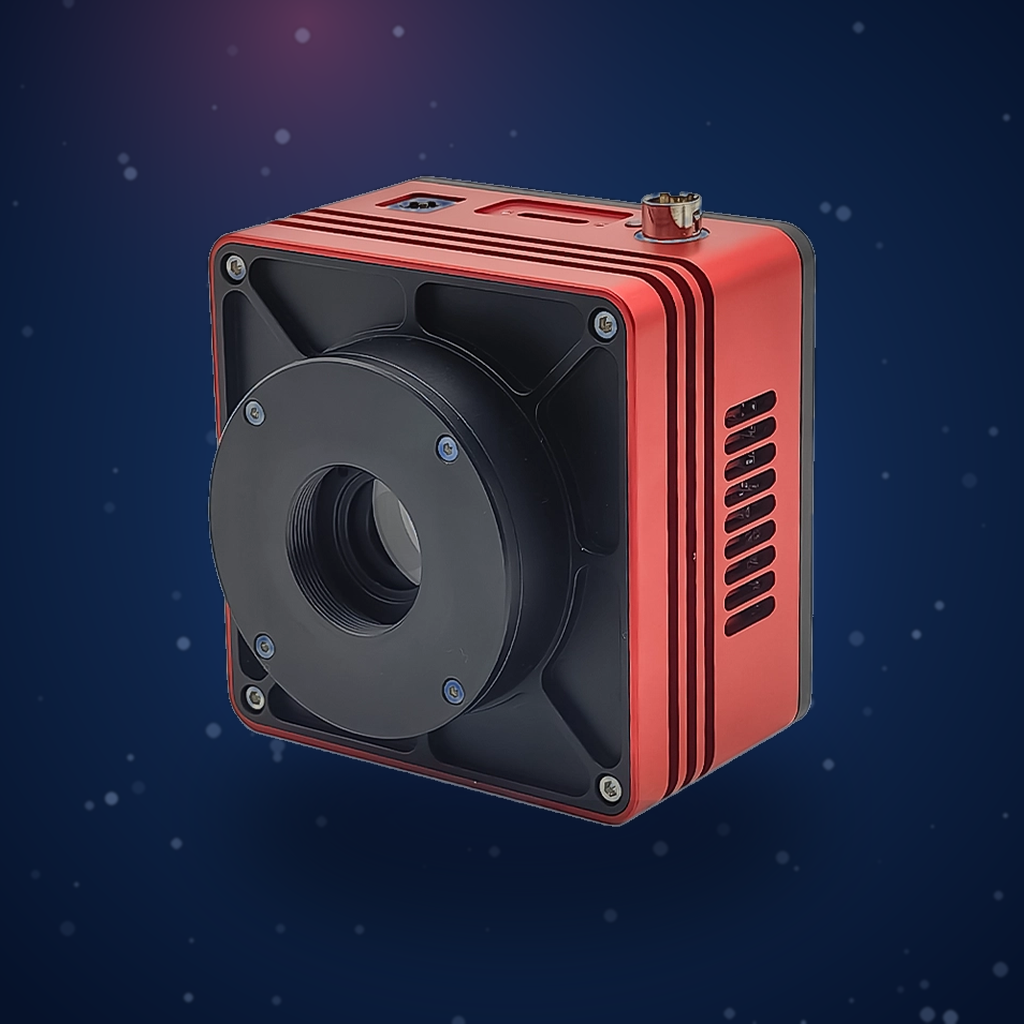
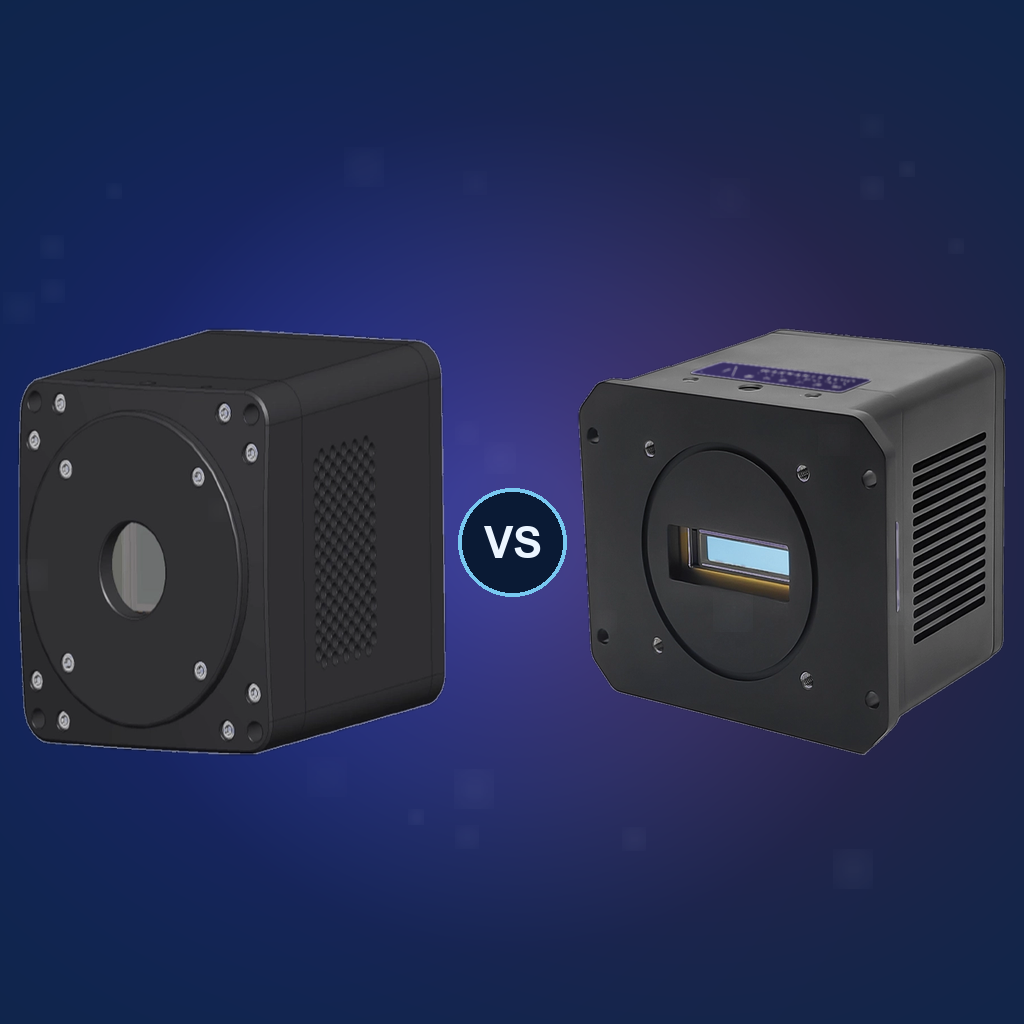
| SWIR Camera | Attostek SWIR051AU |
| Visible-Light Camera | Attostek VIS028CU3.2-NC |
| Light Source | 1300 nm infrared light source |
| Optical Filter | 1300 nm infrared filter |
| Test Sample | Opaque plastic bottle containing cleaning fluid |
| Environmental Conditions | Indoor environment, no special light source except experimental fill light, temperature 25°C |
IV. Test Procedure
- Fix the SWIR051AU camera and adjust the position of the plastic bottle so that it is centered in the lens field of view.
- Manually adjust the camera focus and aperture to obtain a clear image.
- Select an appropriate exposure time (manual or automatic mode).
- Capture images with the SWIR051AU camera under the following conditions: no filter or fill light, with 1300 nm fill light, with 1300 nm filter, and with both 1300 nm filter and fill light.
- Capture a reference image using a visible-light camera (VIS028CU3.2-NC) from the same position.
V. Test Results
5.1 Image Observation Results
- Visible-light camera capture: The plastic bottle is completely opaque; the internal liquid cannot be seen, and the image shows only the bottle surface.
- SWIR051AU direct capture: The liquid area inside the bottle is clearly visible as a dark region, while the area without liquid (the top of the bottle) appears as a bright region. The liquid level boundary is clearly distinguishable.
- With 1300 nm fill light: Overall image brightness is improved, and the contrast between bright and dark areas is enhanced.
- With 1300 nm filter: Light outside the 1300 nm wavelength is filtered out, enhancing the contrast between bright and dark areas.
- With filter + fill light: The best imaging quality is achieved, with a clean background and the most distinct liquid level boundary.
5.2 Quantitative Contrast Analysis
To quantitatively evaluate the discriminative capability of liquid level imaging, contrast was calculated using the following formula:
Contrast = (I_max − I_min) / Gray Scale Range
where I_max and I_min are the average gray values of the liquid-free area and the liquid area, respectively, and the gray scale range is 255 for 8-bit images.
| Capture Condition | Calculated Contrast |
|---|---|
| SWIR051AU direct capture | 0.10 |
| With 1300 nm fill light | 0.15 |
| With 1300 nm filter | 0.16 |
| With 1300 nm filter and fill light | 0.18 |
VI. Result Analysis
- Function verification: The SWIR051AU camera can effectively penetrate the opaque plastic bottle, clearly image the liquid inside, and accurately display the liquid level height.
- Performance: The camera has high signal-to-noise ratio, a clean image background, and stable bright-dark boundaries at the liquid level, meeting industrial quality inspection requirements.
- Optimization recommendation: In practical applications, it is recommended to use both the 1300 nm filter and a fill light of the same band simultaneously to achieve the highest contrast, thereby improving detection stability.
VII. Conclusion
Combining imaging effects and data test results, the Attostek SWIR051AU SWIR camera can efficiently achieve non-contact liquid level detection in opaque plastic containers. Paired with a 1300 nm infrared light source and a filter of the same band, it achieves the best liquid level image contrast, maximizing detection accuracy.
Combining equipment features and detection capabilities, this product can be widely deployed in industrial scenarios across multiple industries:
- Daily chemical and personal care production lines: Online filling inspection of spray bottles, cleaning agent bottles, and opaque skincare product packaging; sorting of defective products such as underfilled or missing bottles
- Food and beverage industry: Liquid level spot checks and filling accuracy control for opaque light-proof beverage and sauce containers
- Fine chemical and reagent industry: Liquid level monitoring and quality inspection of light-proof chemical reagent bottles and laboratory consumable bottles
- Pharmaceutical packaging: Filling level inspection of medicinal light-proof plastic bottles and topical preparation bottles, ensuring compliance in pharmaceutical production