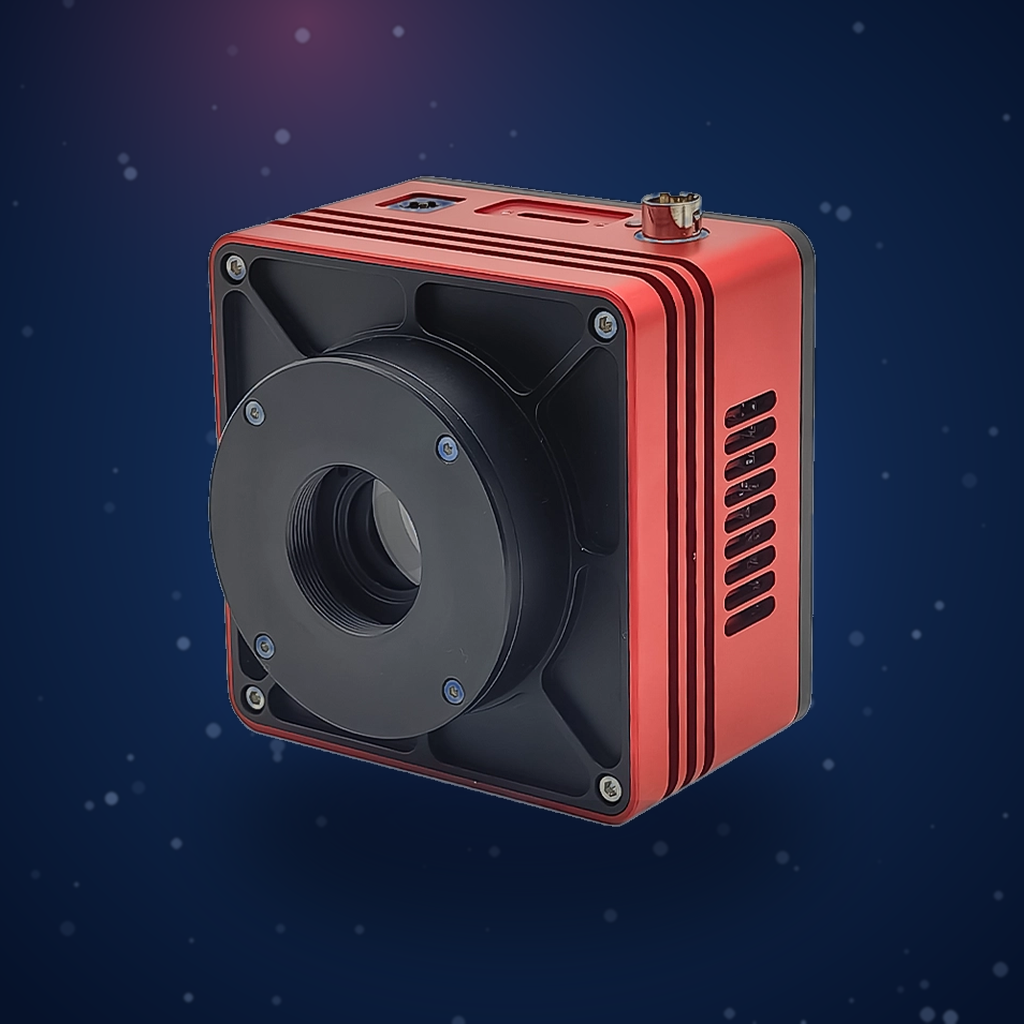
Project Name: Orange Damage Imaging Using SWIR051AU Camera
Test Date: May 2026
I. Test Objective
To verify the capability of the Attostek SWIR051AU camera in detecting fruit (orange) damage. Based on the distinguishing ability of short-wave infrared imaging, water absorbs SWIR light, and the damaged area of an orange has a higher water content. The SWIR camera was used to photograph healthy and damaged oranges, and the results were compared with those of a visible-light camera.
II. Application Background and Principle
2.1 Application Background
Oranges are a very common fruit in our daily lives, rich in various vitamins and beneficial to human health. However, during transportation and storage, subcutaneous bruises caused by squeezing, bumping, and other impacts are often hidden beneath the bright peel and are difficult to detect with the naked eye. If these early-stage damages are not screened out in time, they not only affect eating quality but may also lead to mold growth, causing batch losses.
2.2 Detection Principle
The local tissue cells at the bruised area of an orange rupture, and juice penetrates into the peel, resulting in a higher water content in the damaged area. Water can absorb infrared light near the 1450 nm wavelength. Therefore, by using a SWIR camera to photograph oranges, the damage status and location can be determined: healthy areas absorb less 1450 nm infrared light and appear as bright areas; damaged areas, due to juice accumulation and enhanced light absorption, appear as dark areas. This enables early bruise detection that cannot be achieved by traditional visible light methods.
In addition, external infrared fill light and optical filters can be used to enhance the difference in reflected light intensity between healthy and damaged parts of the orange captured by the camera.
2.3 Camera Performance Requirements
- High signal-to-noise ratio (SNR)
- High quantum efficiency (QE), especially near 1450 nm
Specifications of the SWIR051AU camera used in this report:
- Maximum SNR: 52.6 dB
- Quantum efficiency at 1450 nm wavelength: approximately 72%
III. Test Equipment and Parameters
| Equipment/Component | Model/Specification |
|---|---|
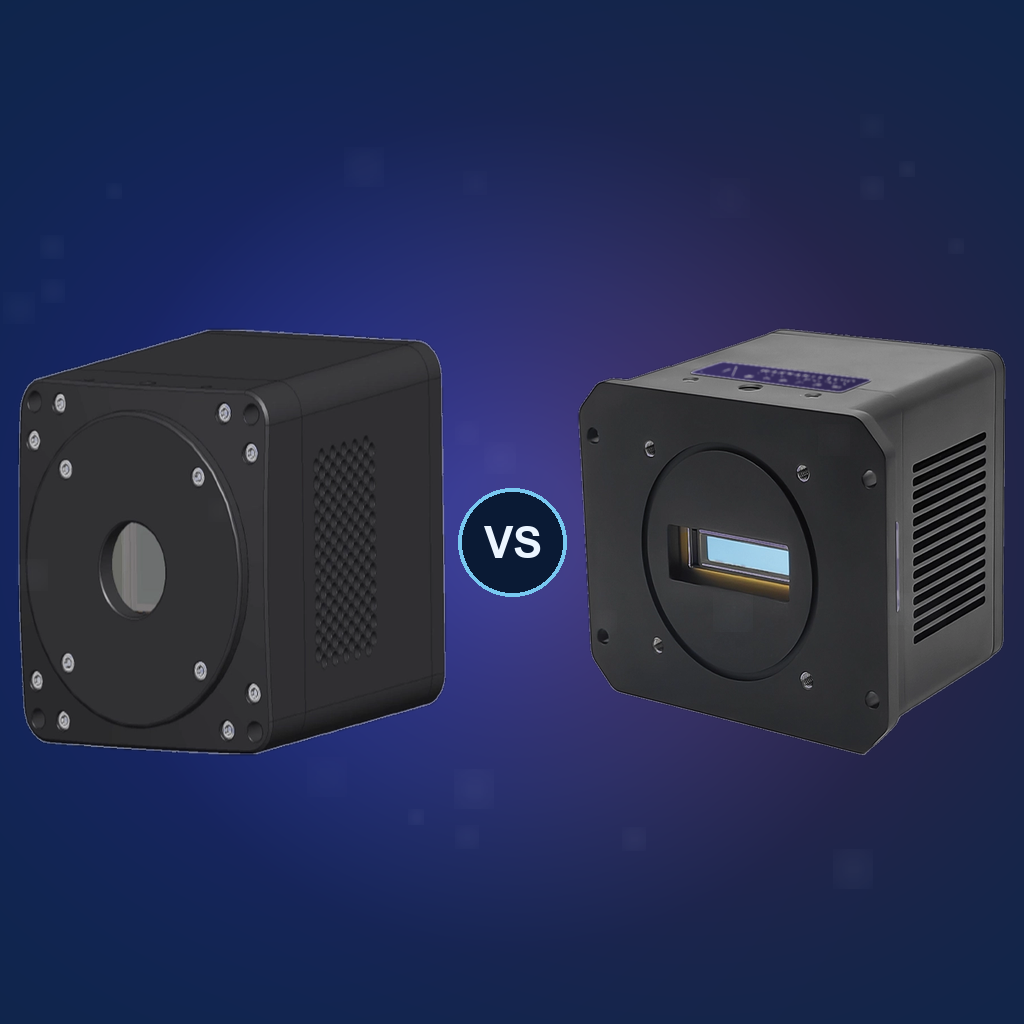
| SWIR Camera | Attostek SWIR051AU |
| Visible-Light Camera | Attostek VIS028CU3.2-NC |
| Light Source | 1300 nm infrared light source |
| Optical Filter | 1300 nm infrared filter |
| Test Samples | One damaged orange and one healthy orange |
| Environmental Conditions | Indoor environment, no special light source except experimental fill light, temperature 25°C |
IV. Test Procedure
- Fix the SWIR051AU camera and adjust the position of the plastic bottle so that it is centered in the lens field of view.
- Manually adjust the camera focus and aperture to obtain a clear image.
- Select an appropriate exposure time (manual or automatic mode).
- Capture images with the SWIR051AU camera under the following conditions: no filter or fill light, with 1300 nm fill light, with 1300 nm filter, and with both 1300 nm filter and fill light.
- Capture a reference image using a visible-light camera (VIS028CU3.2-NC) from the same position.
V. Test Results
5.1 Image Observation Results
- Visible-light camera capture: The orange peel appears bright and colorful, but it is not possible to distinguish whether the orange is damaged or the location of the damage.
- SWIR051AU direct capture: A clear and distinct contrast between healthy and damaged oranges can be observed, with a clean background. In addition, areas with higher contrast were observed in the damaged orange, indicating more severely damaged areas.
- With 1300 nm filter: Light outside the 1300 nm wavelength is filtered out, enhancing the contrast between bright and dark areas.
- With 1300 nm fill light: Overall image brightness is improved, and the contrast between bright and dark areas is enhanced.
- With filter + fill light: The best imaging quality is achieved, with a clean background and the most clearly visible damaged areas of the orange.
5.2 Quantitative Contrast Analysis
To quantitatively evaluate the discriminative capability between healthy and damaged oranges, contrast was calculated using the following formula:
Contrast = (I_max − I_min) / Gray Scale Range
where I_max and I_min are the average grayscale values of healthy and damaged oranges respectively, and the gray scale range is 255 for 8-bit images.
| Capture Condition | Healthy Orange Grayscale Value | Damaged Orange Grayscale Value | Calculated Contrast |
|---|---|---|---|
| SWIR051AU direct capture | 73.3 | 47.8 | 0.10 |
| With 1300 nm fill light | 154.8 | 97.5 | 0.22 |
| With 1300 nm filter | 87.3 | 58.5 | 0.11 |
| With 1300 nm filter and fill light | 206.7 | 103.7 | 0.40 |
VI. Result Analysis
- Function verification: The SWIR051AU SWIR camera can effectively detect orange quality. Damaged oranges and healthy oranges can be clearly distinguished, and the damaged areas can be precisely located.
- Phenomenon summary: Compared with direct SWIR camera capture, the combination of 1300 nm filter and fill light provides the highest contrast, increasing it by a factor of 4.
- Performance: The camera has high signal-to-noise ratio, a clean image background, and clear contrast between healthy and damaged oranges, meeting the requirements of this application scenario.
VII. Conclusion
The Attostek SWIR051AU SWIR camera can be reliably applied to orange quality inspection. When paired with a 1300 nm infrared light source and a filter of the same band, it maximizes image contrast and accurately identifies invisible subsurface bruises beneath the peel. With its high signal-to-noise ratio and quantum efficiency, the camera is reliable and meets the industrial inspection standards for fresh fruit quality control.
With its detection capabilities, this solution can be widely applied in fruit and vegetable processing enterprises, fresh produce sorting production lines, and supermarket fresh produce quality inspection, enabling online fruit sorting, defective product removal, and incoming inspection, helping companies reduce fruit loss and control product quality. It can also be extended to quality screening of various bruise-prone fruits such as apples, pears, and peaches.