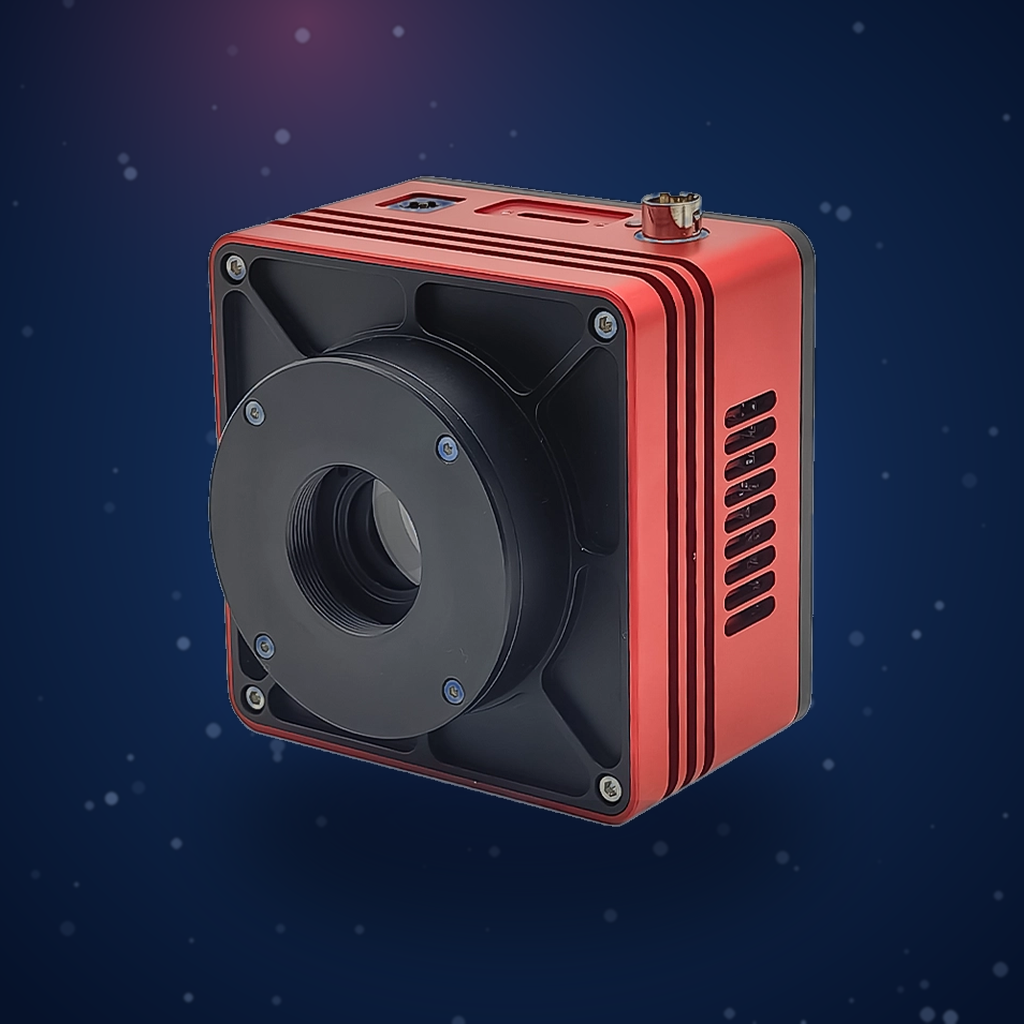
Project Name: Imaging Experiment on Distinguishing Same-Color White Sugar and Salt Using SWIR1503B10G SWIR Camera
Test Date: May 2026
I. Test Objective
To verify the imaging capability of the Attostek SWIR1503B10G SWIR camera in distinguishing white granular materials with highly similar appearance—sugar and salt—to evaluate the feasibility of material identification based on short-wave infrared spectral characteristics, and to compare the results with those of a visible-light camera.
II. Application Background and Principle
2.1 Application Background
Sugar and salt are essential daily necessities, providing taste and energy and serving as indispensable elements. However, under visible light conditions, both appear as white or colorless transparent crystals, making it difficult for the naked eye to distinguish between them. This can easily lead to production mixing, packaging errors, and other issues. Short-wave infrared cameras operate in different spectral bands and can effectively differentiate materials with different chemical compositions.
2.2 Detection Principle
At the microscopic level, sugar and salt have different crystal structures, making them easy to distinguish. Due to these structural differences, they exhibit different absorption spectra in the infrared band: sugar absorbs infrared light, while salt absorbs almost none. Based on this phenomenon, an infrared camera can capture reflected light of different intensities, producing images with distinct brightness differences.
Since the absorption differences between sugar and salt occur in the infrared range, using an infrared filter on the camera eliminates visible light interference and enhances the brightness contrast of the image. Similarly, when an external infrared light source is used to illuminate the sugar and salt, the difference in their reflected light intensities is further amplified.
2.3 Camera Performance Requirements
- High signal-to-noise ratio (SNR)
- High quantum efficiency (QE), especially near 1450 nm
Specifications of the SWIR1503B10G camera used in this report:
- Maximum SNR: 62.98 dB
- Quantum efficiency at 1300 nm wavelength: approximately 75%
III. Test Equipment and Parameters
| Equipment/Component | Model/Specification |
|---|---|
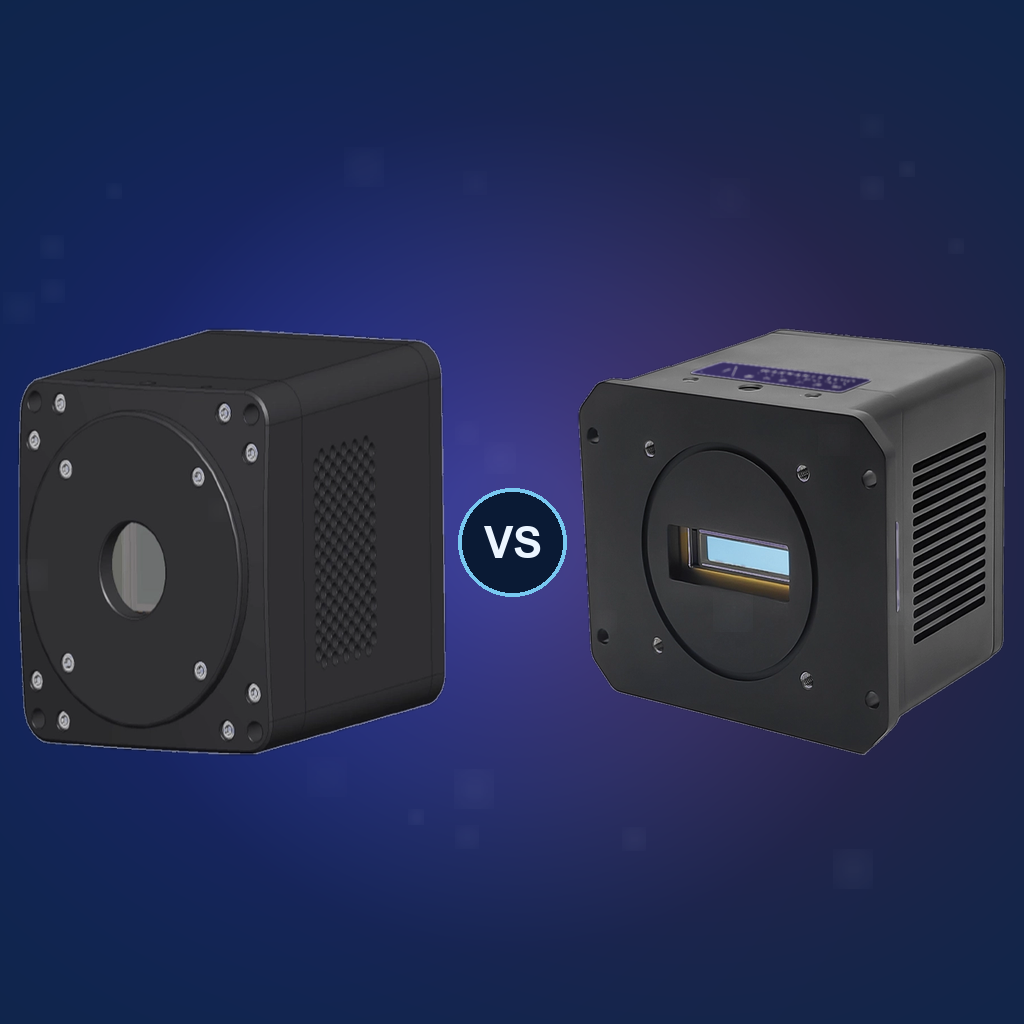
| SWIR Camera | Attostek SWIR1503B10G |
| Visible-Light Camera | Attostek VIS028CU3.2-NC |
| Light Source | 1300 nm infrared light source |
| Optical Filter | 1300 nm infrared filter |
| Test Samples | White sugar and table salt |
| Environmental Conditions | Indoor environment, no special light source except experimental fill light, temperature 25°C |
IV. Test Procedure
- Place equal amounts of white sugar and salt together, fix the SWIR1503B10G camera, and adjust the positions of the sugar and salt so that they are centered in the lens field of view.
- Manually adjust the camera focus and aperture to obtain a clear image.
- Select an appropriate exposure time (manual or automatic mode).
- Capture images with the SWIR1503B10G camera under the following conditions: no filter or fill light, with 1300 nm fill light, with 1300 nm filter, and with both 1300 nm filter and fill light.
- Capture a reference image using a visible-light camera (VIS028CU3.2-NC) from the same position.
V. Test Results
5.1 Image Observation Results
- Visible-light camera capture: Both white sugar and salt appear as white particles with similar brightness, making them difficult to distinguish.
- SWIR1503B10G direct capture: The sugar area appears as a distinct dark region, while the salt area appears as a distinct bright region. The grayscale contrast between the two is significant and can be easily distinguished.
- With 1300 nm filter: Light outside the 1300 nm wavelength is filtered out, enhancing the contrast between bright and dark areas.
- With 1300 nm fill light: Overall image brightness is improved, and the contrast between bright and dark areas is further enhanced.
- With filter + fill light: The best imaging quality is achieved, with the sugar area appearing dark gray and the salt area appearing bright white, providing the clearest distinction between the two.
5.2 Quantitative Contrast Analysis
To quantitatively evaluate the discriminative capability, contrast was calculated using the following formula:
Contrast = (I_max − I_min) / Gray Scale Range
where I_max and I_min are the average grayscale values of salt and sugar respectively, and the gray scale range is 255 for 8-bit images.
| Capture Condition | Salt Grayscale Value | Sugar Grayscale Value | Calculated Contrast |
|---|---|---|---|
| SWIR1503B10G direct capture | 114.4 | 67.4 | 0.18 |
| With 1300 nm fill light | 139.8 | 83.3 | 0.22 |
| With 1300 nm filter | 132.4 | 81.2 | 0.20 |
| With 1300 nm filter and fill light | 149.1 | 87.4 | 0.24 |
VI. Result Analysis
- Function verification: The SWIR1503B10G SWIR camera can effectively distinguish same-color white sugar and salt, with sugar appearing as dark areas and salt as bright areas, showing clear contrast between light and dark.
- Phenomenon summary: Compared with direct SWIR camera capture, the combination of 1300 nm filter and fill light provides the highest contrast, increasing it to 0.24.
- Performance: The camera has high signal-to-noise ratio, a clean image background, and clear contrast between sugar and salt, meeting the requirements of this application scenario.
VII. Conclusion
The Attostek SWIR1503B10G SWIR camera can efficiently distinguish sugar and salt, which have different chemical compositions. Under 1300 nm filter and fill light, the grayscale contrast between sugar and salt is the highest. With its high SNR and high quantum efficiency, this camera can meet the needs of online identification of white powdered materials in food processing, seasoning packaging, pharmaceutical, and other industries, offering a low-cost, non-contact, and high-efficiency inspection solution. In practical applications, it is recommended to use a 1300 nm filter and a fill light of the same band to achieve the best imaging contrast.