Astronomical observation is the foundation of astronomy. It is not merely about collecting data, but also a window for humanity to explore the universe and understand its own origins. Astronomical observation has an ultimate pursuit of weak signal detection capability. Starlight from distant galaxies is often extremely faint. Whether these photons can be efficiently captured directly determines the depth and breadth of astronomical observation.
I. Core Principles of Astronomical Imaging
The entire imaging process can be simplified into three key steps: light collection, photosensing and recording, and image processing.
First, it is necessary to collect as much faint light as possible from distant celestial bodies. The collected light is projected onto the camera’s detector, which converts optical signals into electrical signals and then digitizes them into image data. The raw image data contains various noises and artifacts and must undergo a series of complex image processing steps before it can be used. Processing includes noise removal, pixel defect correction, and stacking multiple images to improve the signal-to-noise ratio, ultimately restoring clear and true celestial images.
II. Requirements for Camera Sensors
Camera sensors used for astronomical observation are subject to extremely stringent requirements. The core requirement is to achieve high sensitivity, low noise, and high-precision imaging under extremely low light conditions. To meet this goal, the sensor must reach top-tier performance across multiple key indicators. The key parameters and their importance are as follows:
- Pixel Size and Sensor Format: Pixel size affects sensitivity. Large pixels (e.g., 15 μm) have strong light-gathering capability. Sensor format determines the field of view. A large sensor format enables wide-field imaging.
- Quantum Efficiency: Measures the efficiency with which the sensor converts photons into electrons. The higher the QE, the higher the sensitivity and the stronger the capability to detect weak signals.
- Read Noise: Noise generated by the circuitry during signal readout. The lower the read noise, the better the ability to detect faint celestial objects.
- Dark Current: Charge generated by thermal effects in the absence of light. Dark current accumulates with exposure time and forms background noise.
- Dynamic Range: The ratio between the strongest and weakest signals that the sensor can simultaneously detect. A high dynamic range is crucial for observing targets where bright stars and faint nebulae coexist.
III. Introduction to Astronomical Observation Cameras
3.1 Attostek VIS0916BUCL Series Camera Introduction
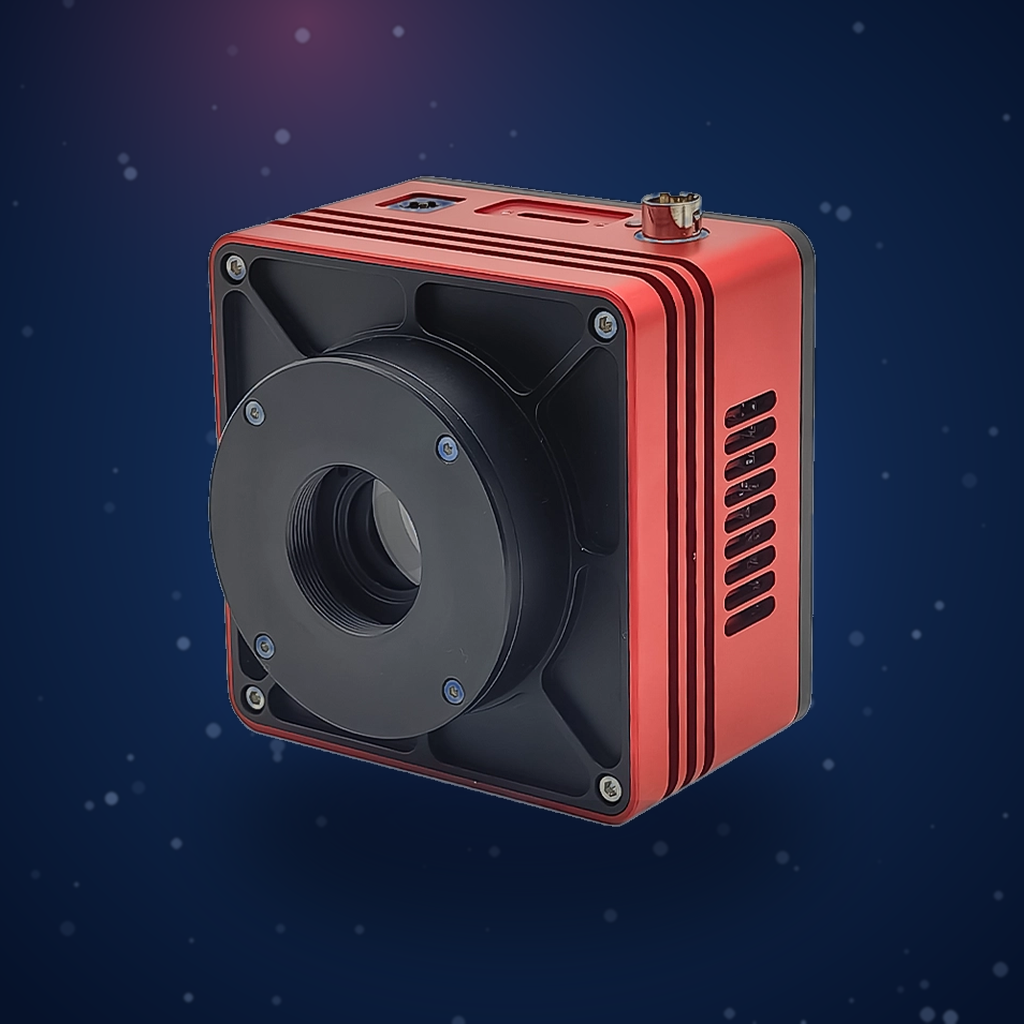
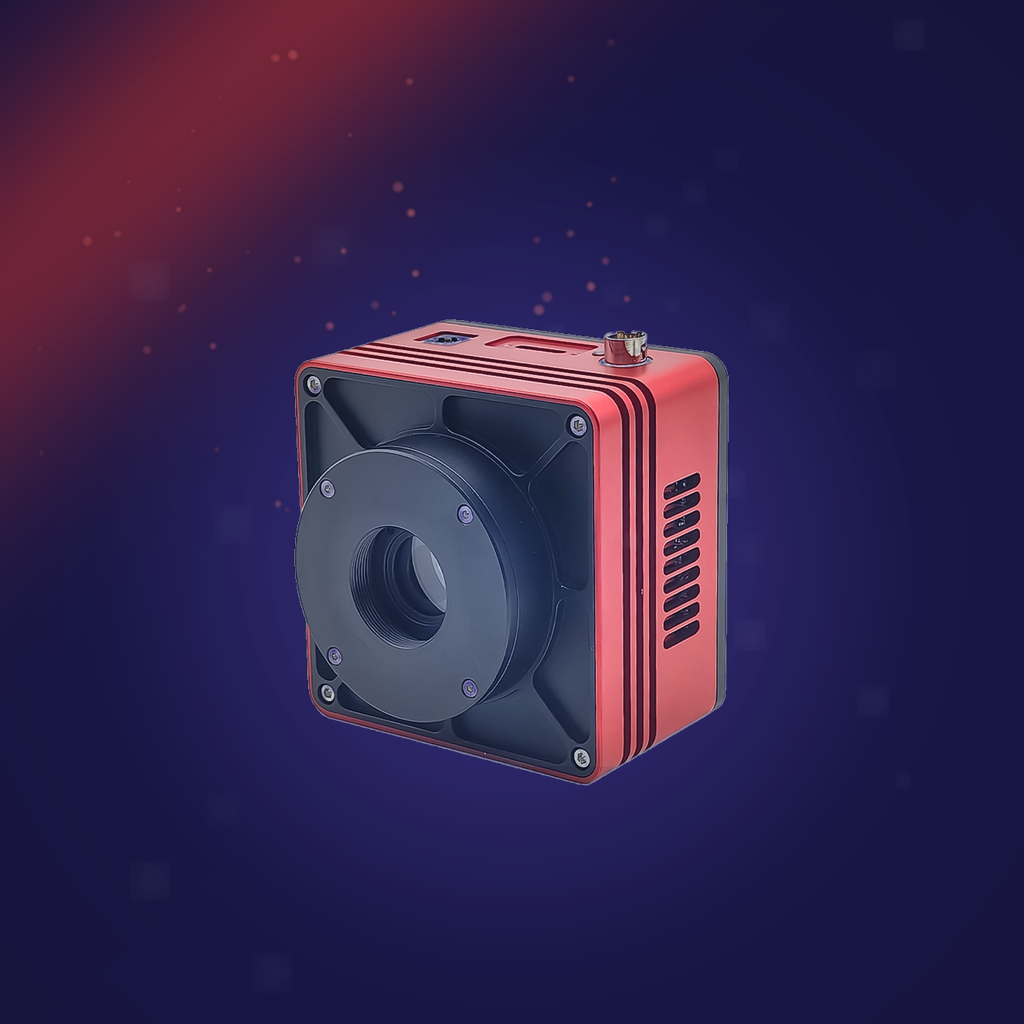
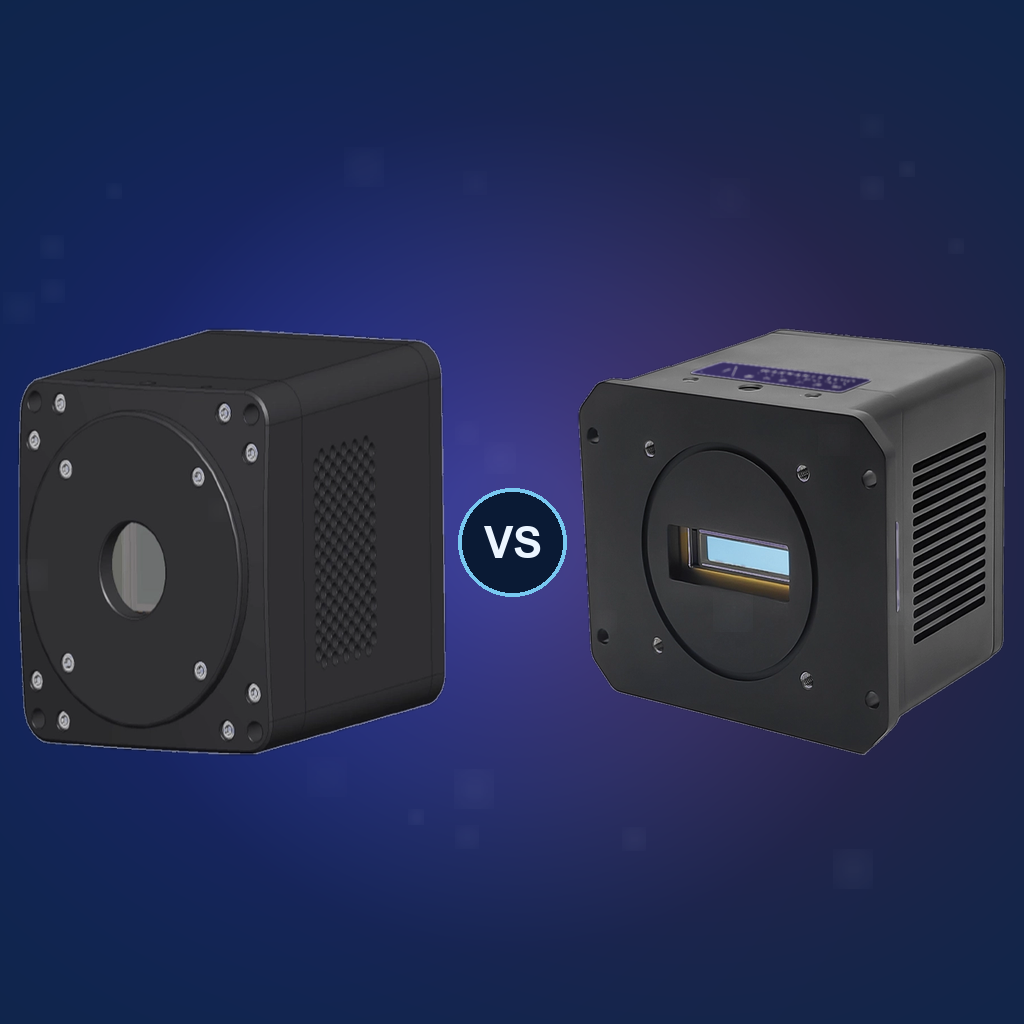
The Attostek VIS0916BUCL series camera is a camera suitable for astronomical observation. This series uses the GSENSE4040BSI sensor. The GSENSE4040BSI sensor is a scientific-grade back-illuminated CMOS sensor. This sensor features a large format and high resolution, with a 4096 × 4096 resolution and a 3.2″ large sensor format. The large format design enables it to cover a wider field of view, better meeting the demands of astronomical imaging.
The back-illuminated structure of this camera sensor improves photon capture efficiency and provides a higher peak quantum efficiency, reaching 90% at 550 nm wavelength. This means the sensor can efficiently convert 90% of incident photons into electronic signals, significantly enhancing the capability to detect faint deep-space objects.
In addition, the VIS0916BUCL series camera features extremely low read noise, dark current, and high dynamic range. In low-light detection, read noise limits the faintest object the camera can observe. The lower the read noise, the lower the brightness of the faintest celestial body that astronomical observation can detect. Low read noise, dark current, and high dynamic range enable the simultaneous clear presentation of the rich layers of observed celestial bodies and the faint details of background stars.
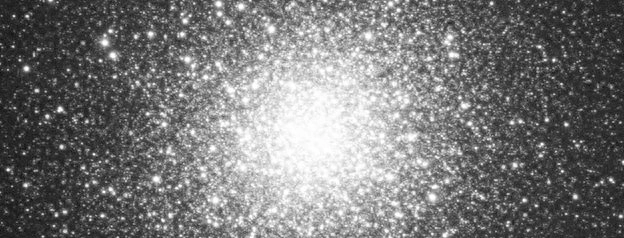
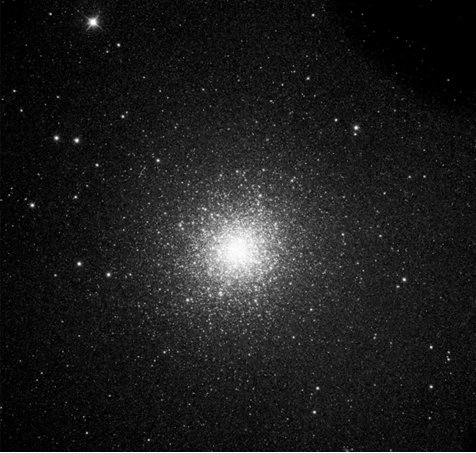
The performance of the GSENSE4040BSI sensor in astronomical observation has been verified. The test team installed the camera on an Alluna RC20 reflecting telescope with an aperture of approximately half a meter and successfully captured the famous M13 globular cluster with just a 5-second single-frame exposure in an extremely short time. The camera with this sensor outperforms previously used CCD cameras, improving the imaging results of astronomical observation.
3.2 Attostek VIS0916BUCL Series Camera Specifications
| Product Model | VIS0916BUCL,VIS0916BUCL-GPS |
| Sensor | GSENSE4040BSI |
| Spectral Range | 200nm-1100nm |
| Pixel Size | 9um×9um |
| Sensor Format | 3.2’’ |
| Frame Rate & Resolution | 20 fps4096×4096 |
| Peak QE | 90%@550nm |
| Read Noise | 4.06e- |
| Dynamic Range | 55.0dB |