Physical Science

描述
聚焦公司最新动态,追踪光电行业前沿资讯。
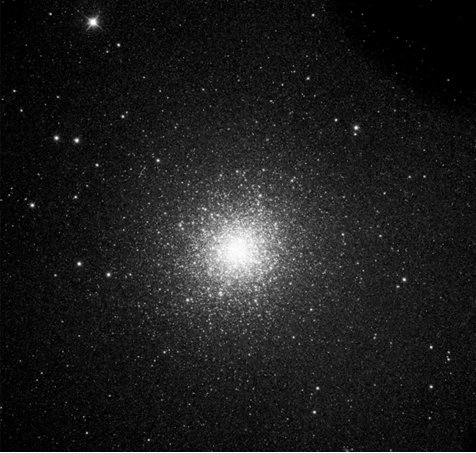
天文观测成像图

High-Sensitivity Visible Cameras for Astronomical Imaging Applications

Astronomical observation is the foundation of astronomy. It is not merely about collecting data, but also a window for humanity to explore the universe and understand its own origins. Astronomical observation has an ultimate pursuit of weak signal detection capability. Starlight from distant galaxies is often extremely faint. Whether these photons can be efficiently captured directly determines the depth and breadth of astronomical observation. I. Core Principles of Astronomical Imaging The entire imaging process can be simplified into three key steps: light collection, photosensing and recording, and image processing. First, it is necessary to collect as much faint light as possible from distant celestial bodies. The collected light is projected onto the camera's detector, which converts optical signals into electrical signals and then digitizes them into image data. The raw image data contains various noises and artifacts and must undergo a series of complex image processing steps before it can be used. Processing includes noise removal, pixel defect correction, and stacking multiple images to improve the signal-to-noise ratio, ultimately restoring clear and true celestial images. II. Requirements for Camera Sensors Camera sensors used for astronomical observation are subject to extremely stringent requirements. The core requirement is to achieve high sensitivity,…
06/13/2026
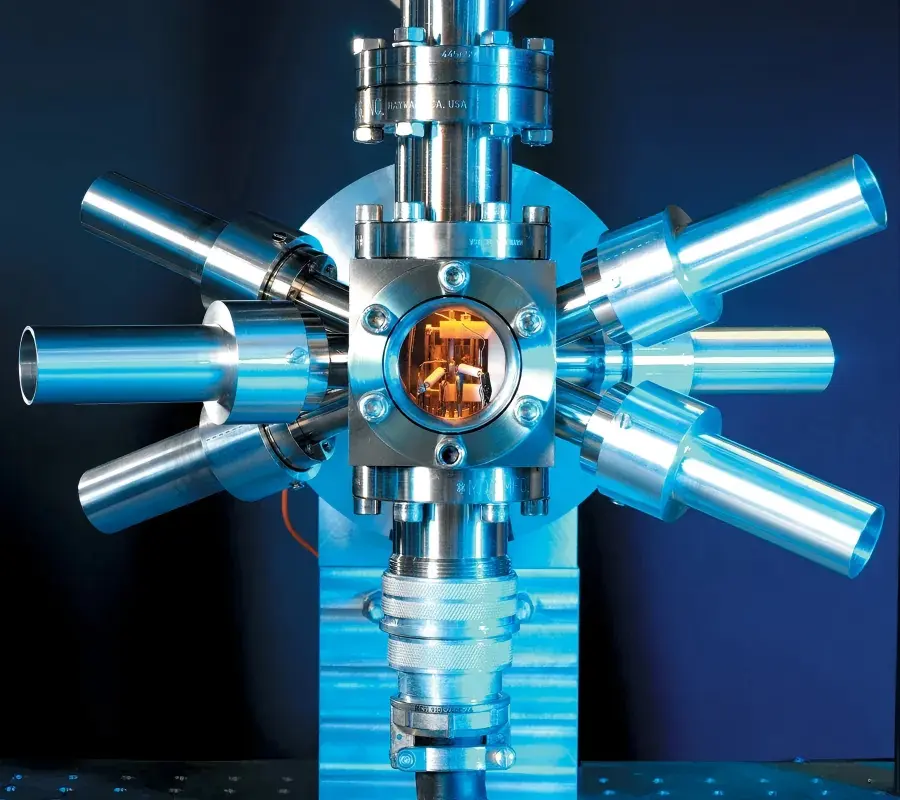
低温单离子光学原子钟

Experimental Report on Calcium Ion Fluorescence Imaging

The Attostek UVISI1605BU camera delivers the sensitivity, quantum efficiency, and SNR required for cutting-edge quantum metrology and ion optical clock development. Its calcium ion fluorescence imaging capability makes it a reliable imaging solution for advanced physics laboratories.
05/23/2026
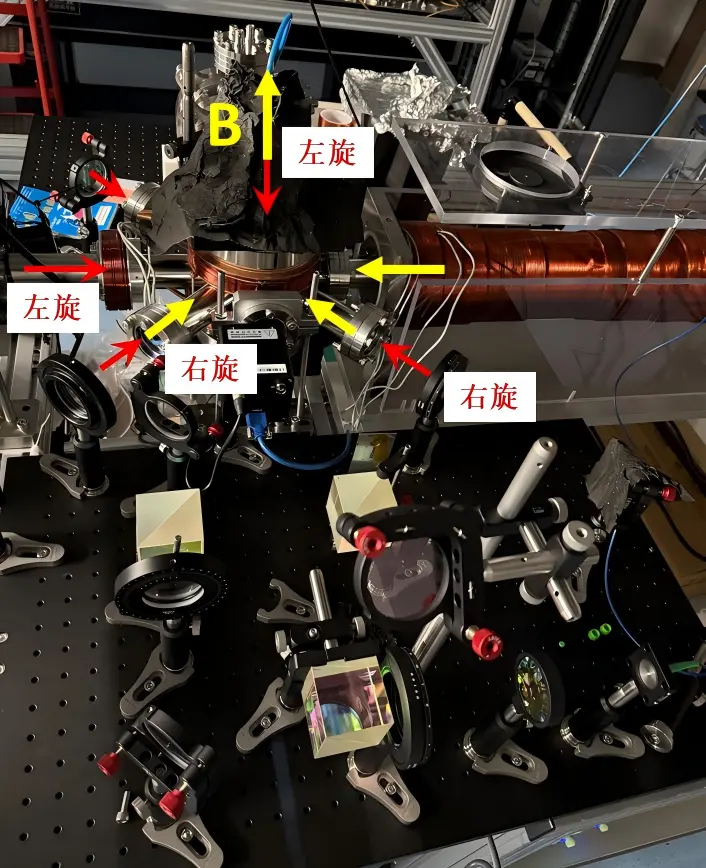
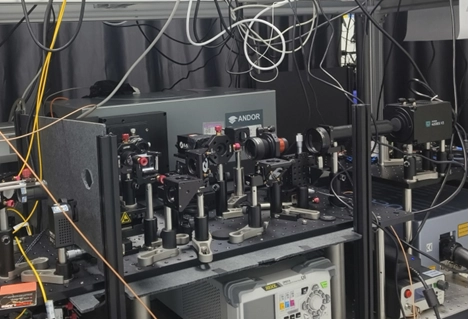
实际光路照片

Experimental Report on Attostek SWIR1503BU Camera Capturing Images of Metastable Helium Atoms Trapped in a Magneto-Optical Trap

A SWIR1503BU InGaAs camera was used to image metastable helium atoms trapped in a magneto-optical trap (MOT). The camera clearly captured a bright, stable elliptical spot with low background noise, confirming effective trapping.
05/23/2026
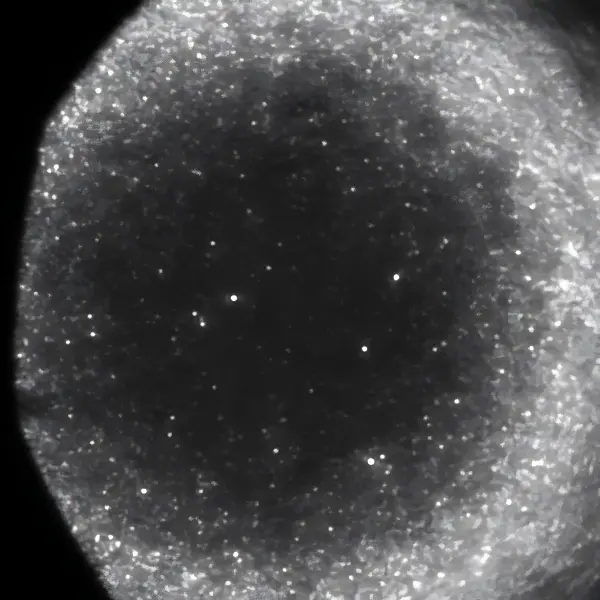
单分子荧光成像

Single-Molecule Fluorescence Imaging Experiment Report Based on the Attostek UVISI064BU High-Sensitivity Visible-Light Camera

Experiment Name: Single-Molecule Fluorescence Imaging Using the UVISI064BU High-Sensitivity CameraExperiment Date: November 2023 I. Application Background and Practical Significance Single-molecule fluorescence imaging is a revolutionary technology in modern life sciences, nanotechnology, and materials science. It enables direct observation of biomolecular behavior, dynamic processes, and nanoscale structures by detecting fluorescence signals at the single-molecule level. Super-resolution microscopy techniques based on single-molecule localization (such as PALM/STORM) have broken the diffraction limit of traditional optical microscopy, pushing spatial resolution to the nanometer scale. Technical Challenges: Single-molecule fluorescence signals are extremely weak, with each molecule emitting only a limited number of photons (typically a few hundred to a few thousand) per imaging cycle, and the molecules are constantly undergoing photophysical changes (such as blinking and photobleaching). Therefore, achieving high signal-to-noise ratio and high temporal resolution single-molecule detection places extreme demands on the core detector of the imaging system—the scientific-grade camera: extremely high quantum efficiency, ultra-low read noise, and fast, distortion-free electronic readout capability. Significance of This Experiment:This experiment aims to evaluate the actual performance of the Attostek UVISI064BU high-sensitivity camera in the critical application scenario of single-molecule fluorescence imaging. By observing the single-molecule fluorescence patterns and dynamic blinking of the classic fluorescent probe Rhodamine…
05/23/2026
Image (2)

Interference Signal Imaging Experiment Using the UVISI114BU High-Sensitivity Visible-Light Camera

中国科学院精密测量院采用阿秒科技UVISI1605BU相机完成钙离子荧光成像测试,验证该相机在光钟场景的高信噪比与高灵敏度。
08/20/2025
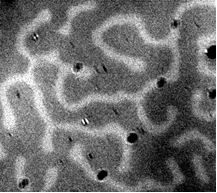
磁畴成像实验结果(300K零磁场磁畴成像)

Magnetic Domain Imaging Experiment Report Using the Attostek UVISI064BU High-Sensitivity Visible-Light Camera

Experiment Name: Wide-Field Magneto-Optical Kerr Microscopy Imaging Based on White Light Source and High-Sensitivity CameraExperiment Date: April 2024 I. Application Background and Practical Significance of the Experiment Magnetic domains are regions within a magnetic material where the spontaneous magnetization is uniformly oriented, and they serve as the physical foundation for understanding material magnetic properties such as coercivity, magnetic anisotropy, and magnetization reversal dynamics. Direct observation of magnetic domain structures is a key method for studying magnetic interactions, domain wall dynamics, the origin of magnetic noise, and novel magnetic effects such as skyrmions and magnetic vortices. Limitations of Traditional Methods: Classical magneto-optical Kerr microscopes typically rely on highly coherent laser light sources and precision optical platforms, making the systems complex and costly. Moreover, laser speckle effects can degrade image quality. At the same time, the requirements for camera sensitivity are extremely stringent, particularly when observing weak magneto-optical signals (e.g., in samples with low perpendicular anisotropy) or during dynamic observations, where the imaging signal-to-noise ratio becomes a bottleneck. Task Description: Using a wide-field magneto-optical Kerr microscopy optical path, observe the static magnetic domain structure (labyrinth domains) of a magnetic thin film sample with weak perpendicular magnetic anisotropy at zero field and room…
04/30/2024