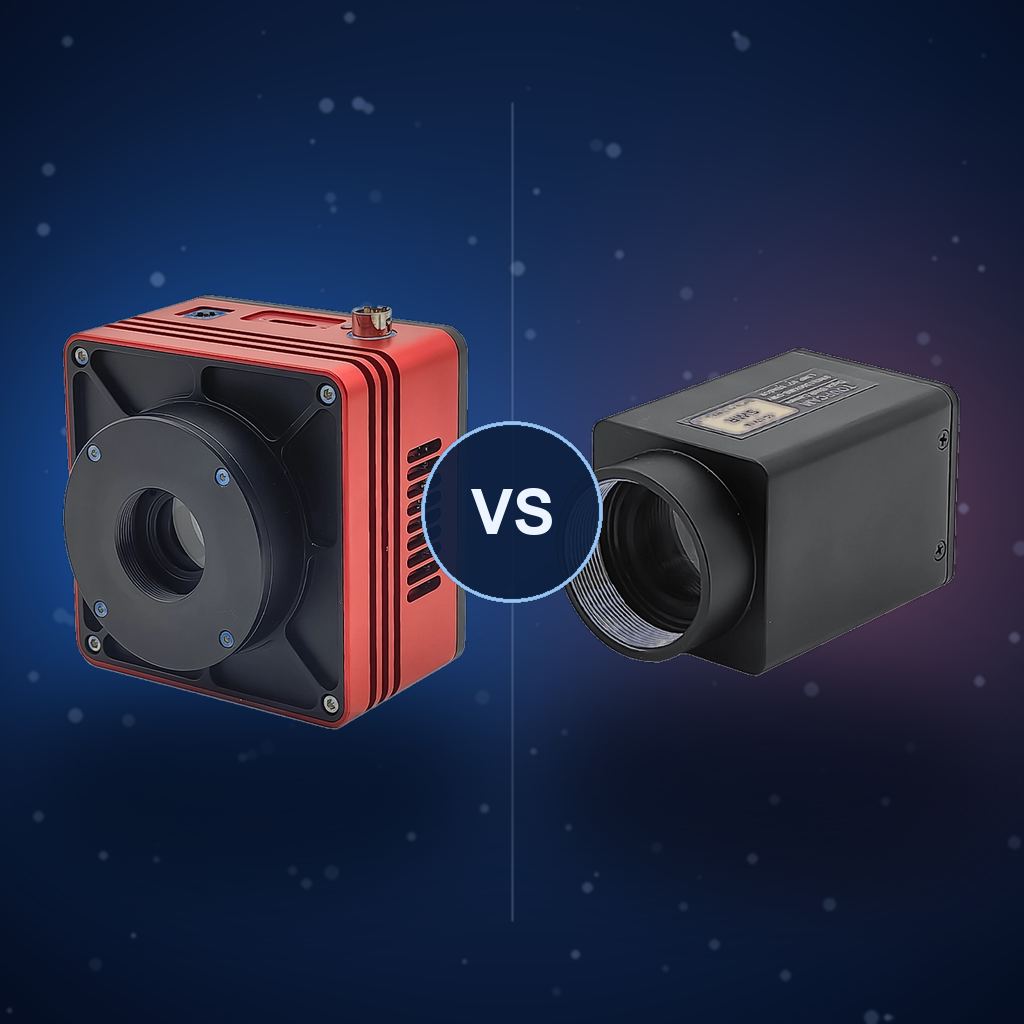
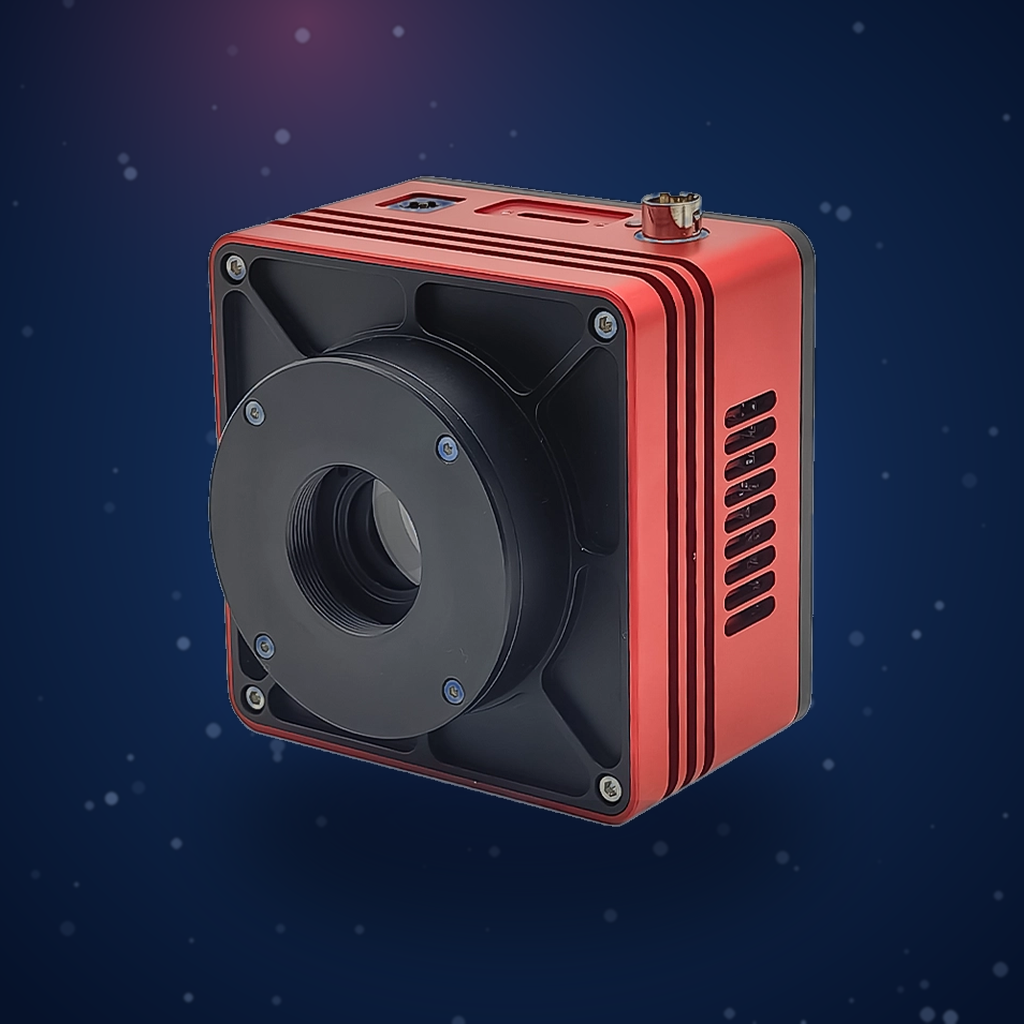
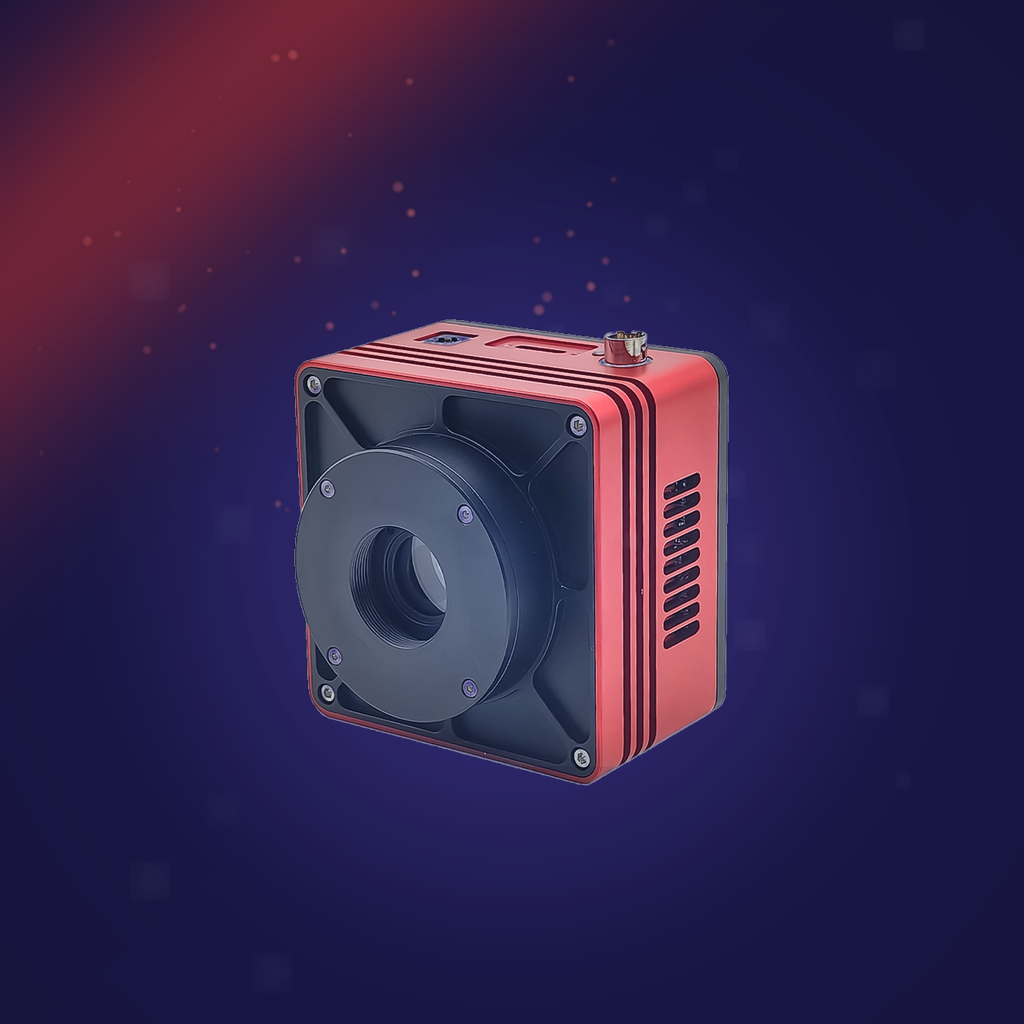
AttosTek’s SWIR1503BU-DCL scientific-grade SWIR camera employs a four-stage TEC cooling system, combined with a vacuum-sealed chamber and water-cooling heat dissipation technology, enabling deep cooling to –80°C with temperature control accuracy of ±0.1°C.
I. Four-Stage TEC Cooling
The AttosTek SWIR1503BU-DCL camera is equipped with four-stage TEC cooling, achieving a temperature differential of up to 100°C, which provides the foundation for reaching the ultra-low temperature of –80°C at the chip level. The principle of TEC semiconductor cooling is based on the Peltier effect. A single-stage TEC can achieve a maximum temperature differential of only 50°C, which is insufficient to meet the demands of deep cooling. Therefore, the industry generally adopts multi-stage TEC cooling, utilizing a stacked series configuration to achieve stepwise temperature reduction. However, multi-stage TEC stacking can introduce thermal stress and reduce cooling efficiency. To address these issues, our company has selected Bi-Te-based semiconductor materials with high thermoelectric figure of merit to improve cooling efficiency.
II. Fully Vacuum Metal Sealing
To solve the problem of condensation due to cooling, the mainstream solutions are inert gas sealing and fully vacuum metal sealing. Since the SWIR1503BU-DCL is equipped with four-stage TEC cooling, the various cooling stages generate a significant temperature differential during operation, continuously producing thermal stress. Therefore, this camera adopts an all-metal sealing structure with greater mechanical strength. Compared to conventional inert gas sealing, all-metal sealing involves higher processing difficulty and stricter process standards. Its superior airtightness ensures that the detector chamber remains in a dust-free and oxygen-free environment for extended periods.
III. Water-Cooling Heat Dissipation
The four-stage TEC can lower the cold side to extremely low temperatures, but at the same time, a large amount of heat accumulates on the hot side. If this heat cannot be rapidly dissipated, the cooling efficiency of the TEC will decline, making it impossible to maintain the set low temperature. The SWIR1503BU-DCL employs a water-cooling heat dissipation system to address this issue. Compared to air cooling, water cooling offers higher heat capacity and thermal conductivity, continuously and stably removing heat from the TEC hot side. Water cooling has distinct advantages in long-duration continuous imaging scenarios, ensuring that the TEC hot side temperature remains within a stable range and that the sensor temperature does not fluctuate due to heat accumulation.
IV. Summary
The –80°C deep cooling of the SWIR1503BU-DCL camera reduces dark current to 131.561 e⁻/s/pixel. Combined with a peak quantum efficiency of 75% and a 15 µm large pixel size, it delivers exceptional low-light detection capability and high-sensitivity imaging. This camera provides reliable imaging performance for low-noise applications such as astronomical observation and near-infrared fluorescence imaging.
👉 For more technical details, application cases, and specifications of the SWIR1503BU-DCL SWIR camera, please visit: 0.33 MP 15 μm Pixels, -80°C Cooled, 900-1700nm SWIR Camera