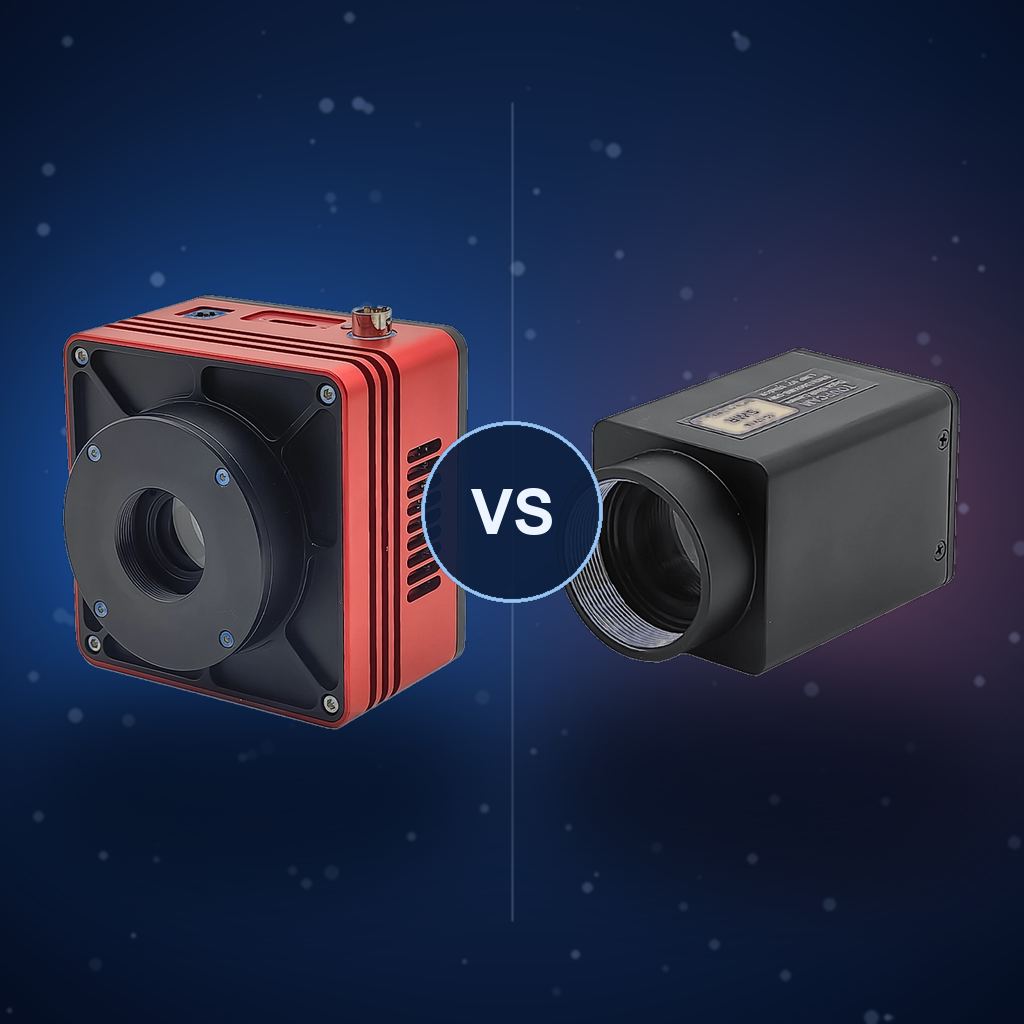
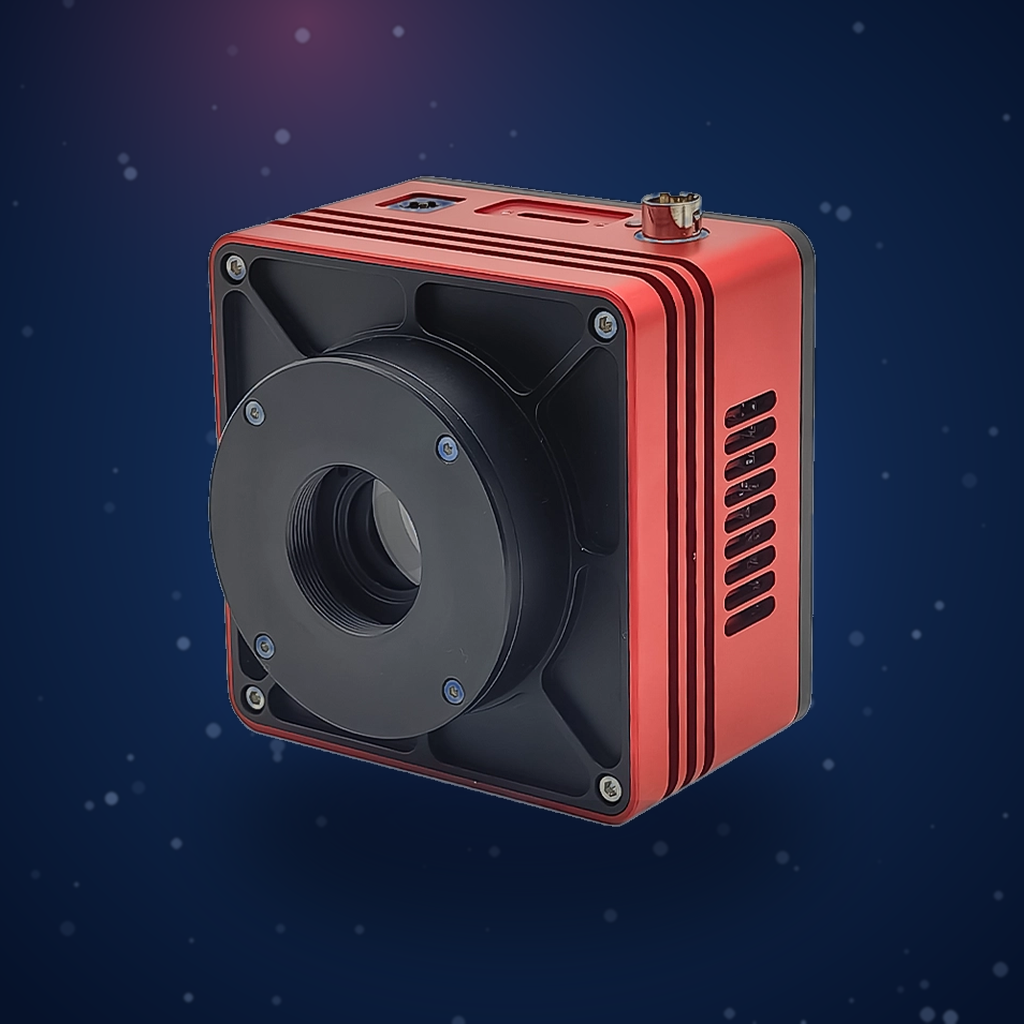
Choose MWIR when your targets are hot, distant, or seen through long humid paths — its 3–5 μm window delivers strong thermal contrast on engines, plumes, and industrial furnaces. Choose LWIR when you monitor room-temperature objects such as electrical equipment, buildings, or people, where the 8–14 μm window carries most of the ambient thermal radiation and uncooled cameras keep cost and complexity low. The practical rule is not about which band is “better”: it is about the temperature of your scene, the distance you must cover, and the operating budget your program can sustain.
Key Takeaways
- Target temperature decides the band before any camera spec does. A 300 K scene radiates with its peak near 9.7 μm (LWIR), while an 800 K scene peaks near 3.6 μm (MWIR) — pick the window your targets actually emit in.
- MWIR cameras detect hot targets up to 2.5× farther than LWIR under clear conditions, with sharper contrast on engine exhausts and plumes; LWIR instead reads room-temperature scenes that would give MWIR very little signal.
- Cooled MWIR cores are not power hogs. A Type-II superlattice core such as the AttosTek MWIR1503TCL holds steady consumption below 12 W, reaches full cooldown in 7 minutes, and carries a 10,000 h cryocooler MTTF rating.
- Uncooled LWIR (VOx) removes the cryocooler entirely — no cooldown wait and a lower entry cost, which is why utility inspection and surveillance programs usually start there.
- Do not buy on wavelength alone. Humidity, working distance, temperature-measurement accuracy, and total cost of ownership change the right answer more than the band label itself.
What Are the Core Differences Between LWIR vs MWIR?
Mid-wave infrared (MWIR) cameras image the 3–5 μm band, and long-wave infrared (LWIR) cameras image the 8–14 μm band. The two windows come from different regions of the blackbody curve, which is why each one sees a different type of scene. Objects near room temperature emit most of their thermal energy at wavelengths above 8 μm, so LWIR is the natural window for passive imaging of buildings, vehicles at ambient temperature, people, and electrical components. As an object heats up, its emission peak shifts toward shorter wavelengths — an 800 K furnace opening peaks around 3.6 μm — which moves the scene into the MWIR window and gives MWIR cameras a strong signal advantage on high-temperature targets.
Detector technology follows the physics. LWIR systems commonly use uncooled vanadium oxide (VOx) microbolometers for low-cost, low-power products, or cooled MCT and Type-II superlattice detectors for higher performance. High-sensitivity MWIR cameras almost always use cooled detectors — MCT, InSb, or Type-II superlattice (T2SL) camera cores — because cooling suppresses dark current and enables the low noise needed at shorter wavelengths. MWIR cameras also deliver superior atmospheric range: under the same conditions a cooled MWIR system can detect a target roughly 2.5 times farther than a LWIR system, which is why long-range surveillance favors the mid-wave band.
| Dimension | MWIR (3–5 μm) | LWIR (8–14 μm) |
| Best for | Hot targets, long range, high thermal contrast | Room-temperature scenes, broad area coverage |
| Typical detectors | MCT, InSb, T2SL (cooled) | VOx (uncooled), MCT, T2SL, HOT (cooled) |
| Cooling | Stirling cryocooler on most high-sensitivity models | None needed on uncooled models |
| Example resolution | 640×512, 1280×1024 | 640×512, 1024×768, 1280×1024 |
| Example NETD | ≤22 mK on cooled T2SL cores | Higher on uncooled, improves with cooling |
| Typical users | Defense and industrial long-range programs | Utilities, building diagnostics, fire and rescue |
How Do Atmospheric Conditions Affect LWIR vs MWIR Performance?
Both bands sit inside infrared atmospheric windows, but the two windows attenuate differently. Water vapor is the dominant absorber in the infrared, and its absorption lines are denser in the long-wave window. Over a long, humid path, the MWIR window therefore tends to hold transmission better, which is one reason thermal imaging systems built for coastal or tropical operation often favor MWIR cameras. The trade-off appears in haze, smoke, and dust: because particle scattering decreases as wavelength increases, LWIR frequently delivers a cleaner image through smoke and heavy aerosols, making it a common choice for firefighting and search operations.
Range and magnification change the calculation as well. A LWIR camera with a wide field of view can survey a large industrial site or a substation yard in a single frame, which suits detection and monitoring. When the task becomes identifying a specific hot component at several kilometers, the diffraction limit favors the shorter MWIR wavelength — a given telescope aperture resolves more detail at 4 μm than at 10 μm, and the higher thermal contrast of hot targets extends useful range further. If your program mixes both tasks, MWIR motorized zoom lenses let one optical path switch between wide-area search and pinpoint inspection.
Which Industries Favor LWIR or MWIR Cameras?
Patterns in industry adoption track the physics above. Utility and energy programs — substation, distribution, and transmission monitoring — overwhelmingly start with LWIR because the equipment being measured sits near ambient temperature and the workload favors uncooled units that run 24/7 without cooldown management. AttosTek’s LWIR camera lineup is used for transformer bushings, control cabinets, drone line patrols, and low-power tower monitors, where long unattended operation matters more than nanokelvin-level sensitivity.
Defense and industrial applications that must detect hot, distant, or fast-moving objects gravitate to MWIR systems. Engine exhausts, missile plumes, furnaces, and high-temperature manufacturing processes all emit strongly in the 3–5 μm band, and MWIR cameras there produce the sharp thermal contrast that visible and LWIR imagers cannot match. The MWIR band is also the workhorse for long-range air defense observation, thermal sights, and UAV payloads, where MWIR cameras offers a detection-range advantage over LWIR under favorable conditions.
| Industry | Band usually chosen | Reason |
| Power utilities, electrical inspection | LWIR | Room-temperature targets, uncooled uptime, low cost per node |
| Fire and rescue, search operations | LWIR | Better penetration through smoke |
| Defense surveillance, thermal sights | MWIR | Hot targets, long range, high contrast |
| Industrial furnace and process control | MWIR | High-temperature emission peaks inside 3–5 μm |
| Autonomous driving, night vision | LWIR | Cost-sensitive, room-temperature scenes |
5 Questions to Ask Before Choosing LWIR or MWIR Cameras
Work through these five questions in order, and the band usually selects itself.
- What is the temperature of the target? Above roughly 400 °C, the emission peak enters the MWIR window and mid-wave imaging gains contrast. Near-ambient targets belong to LWIR.
- What distance must the system cover? For long detection ranges, MWIR cameras hold the advantage — under clear conditions roughly 2.5× the range of LWIR for the same optics.
- Can the platform carry and power a cryocooler? Handheld, small-UAV, or solar-powered nodes usually cannot; that pushes the design toward uncooled LWIR or a compact cooled core rated below 12 W steady state.
- Is the task detection, or accurate temperature measurement? Absolute radiometry on large warm surfaces is an LWIR strength; high-contrast detection of small hot features favors MWIR.
- What is your program timeline and budget? Uncooled LWIR has the shortest path to deployment; cooled MWIR buys performance in exchange for cooldown time, power, and a higher unit price.
Is There a Third Path? When to Consider Broadband Infrared
Some programs cannot commit to a single band because the mission profile spans multiple scene types — a platform that must find a hot engine plume and then inspect a warm, diffuse structure in the same sortie is a classic example. For these cases, system integrators and OEMs increasingly evaluate broadband infrared (BBIR) coverage or a multi-sensor stack that pairs a mid-wave camera with a visible or long-wave channel. A true single-aperture broadband solution is rarely the cheapest option, but it removes the risk of choosing the wrong window before the program matures.
The practical third path for most buyers is a supplier that can cover the whole spectrum, so the decision can evolve without re-sourcing. AttosTek builds cameras and matched optics from the visible band across SWIR, MWIR, and LWIR — a spectral footprint spanning roughly 1 to 14,000 nm . When the requirement itself is still moving, buying from a full-spectrum partner is a hedge that single-band vendors cannot offer.
How Do Material Choices and Supply Chain Affect the LWIR vs MWIR Decision?
The band choice propagates into every optical component in the chain. MWIR lenses are typically built from germanium and chalcogenide glasses with high-efficiency anti-reflection coatings, while LWIR designs frequently use germanium, zinc selenide, and zinc sulfide elements tuned for 8–14 μm transmission. A lens optimized for one window will not simply “also work” at the other: spectral transmittance, coating design, and chromatic behavior all change, so the lens lineup must match the camera decision rather than follow it.
Supply-chain maturity differs between the bands as well. Uncooled VOx microbolometers benefit from a large commercial base, which keeps lead times short for LWIR builds. High-performance MWIR detectors — MCT, InSb, and T2SL — depend on a smaller pool of epitaxial and foundry capacity, so MWIR systems reward earlier purchasing decisions and stronger supplier relationships. For OEMs integrating thermal imaging into a product, the practical checklist is the same in both bands: confirm the detector supply, check the lens mount and flange compatibility with the chosen camera core, and clarify the small-batch and delivery terms before committing. AttosTek supports this directly with camera cores, matched lens series, and customization services that accept small prototype quantities.
Total Cost of Ownership: What LWIR vs MWIR Means for Your Program Budget
Unit price is only the first line of a longer ledger. An uncooled LWIR camera has a lower purchase price, no cooldown wait, and minimal consumables, which makes it attractive for fleets of fixed monitoring nodes. But if the application actually needs long-range detection of hot targets, an under-specified LWIR purchase can force larger optics, more nodes, or an early re-buy — and that program-level cost usually exceeds the difference in camera price. Cost modeling should therefore start with the detection requirement, then add power, integration, and maintenance.
The running-cost items differ by band. Cooled MWIR cores draw steady power below 12 W in modern designs such as the AttosTek MWIR1503TCL, yet they still need cooldown time at startup and periodic service tied to the cryocooler’s mean time to failure (10,000 h MTTF on that core). Uncooled LWIR eliminates that line entirely, at the price of lower sensitivity per pixel. When comparing quotes, ask what the CIF price actually includes: AttosTek quotes cost, insurance, and freight to the destination airport, with duties and local charges handled by the buyer, so the landed-cost comparison stays transparent across bands. If your requirement sits between the two windows, a full-spectrum supplier can quote both architectures and let the total cost of ownership — not the datasheet alone — make the final call.
Frequently Asked Questions: LWIR vs MWIR
Q: For outdoor perimeter and facility monitoring, should I start with LWIR or MWIR?
Start with uncooled LWIR for short-to-medium-range monitoring of room-temperature scenes such as fence lines, yards, and building exteriors. It offers lower cost, instant startup, and no cryocooler maintenance. Move to MWIR cameras when you must detect small hot targets at long range or through humid air, where the mid-wave band’s detection-range advantage justifies the higher unit price.
Q: Do all MWIR cameras require cooling?
Nearly all high-sensitivity MWIR cameras use cooled detectors — MCT, InSb, or Type-II superlattice — paired with a Stirling cryocooler, because cooling suppresses dark current and enables NETD values at or below 22 mK. Cooling brings startup time and power draw, so budget for cooldown and for the cryocooler’s rated lifetime when planning a cooled MWIR system.
Q: What is included in an AttosTek CIF quotation?
AttosTek quotations are CIF (cost, insurance, and freight) to your destination airport, covering international shipping and insurance. They exclude import duties, taxes, VAT, and any local charges at the destination country. Shipping is arranged via DHL, FedEx, or another qualified carrier after payment, so the comparison between LWIR and MWIR quotes stays on the same basis.
Q: Can I order a small number of MWIR or LWIR units for prototyping?
Yes. AttosTek supports flexible customization and small-batch orders, so you can validate an MWIR core or an uncooled LWIR camera before scaling production. The customization process runs through four steps — requirements analysis, solution design and quotation, development and testing, then delivery with ongoing support — which suits prototype-stage engineering teams.
Q: Are AttosTek thermal cameras certified, and what support is included?
All AttosTek products are 100% factory-tested and carry CE and FCC certification. Software support includes the AttosView acquisition application, an SDK for C/C++, C#, Python, and Java, and compatibility with LabVIEW, MATLAB, and other third-party tools. Pre-sales and after-sales engineers provide 7×24 support for integration questions.